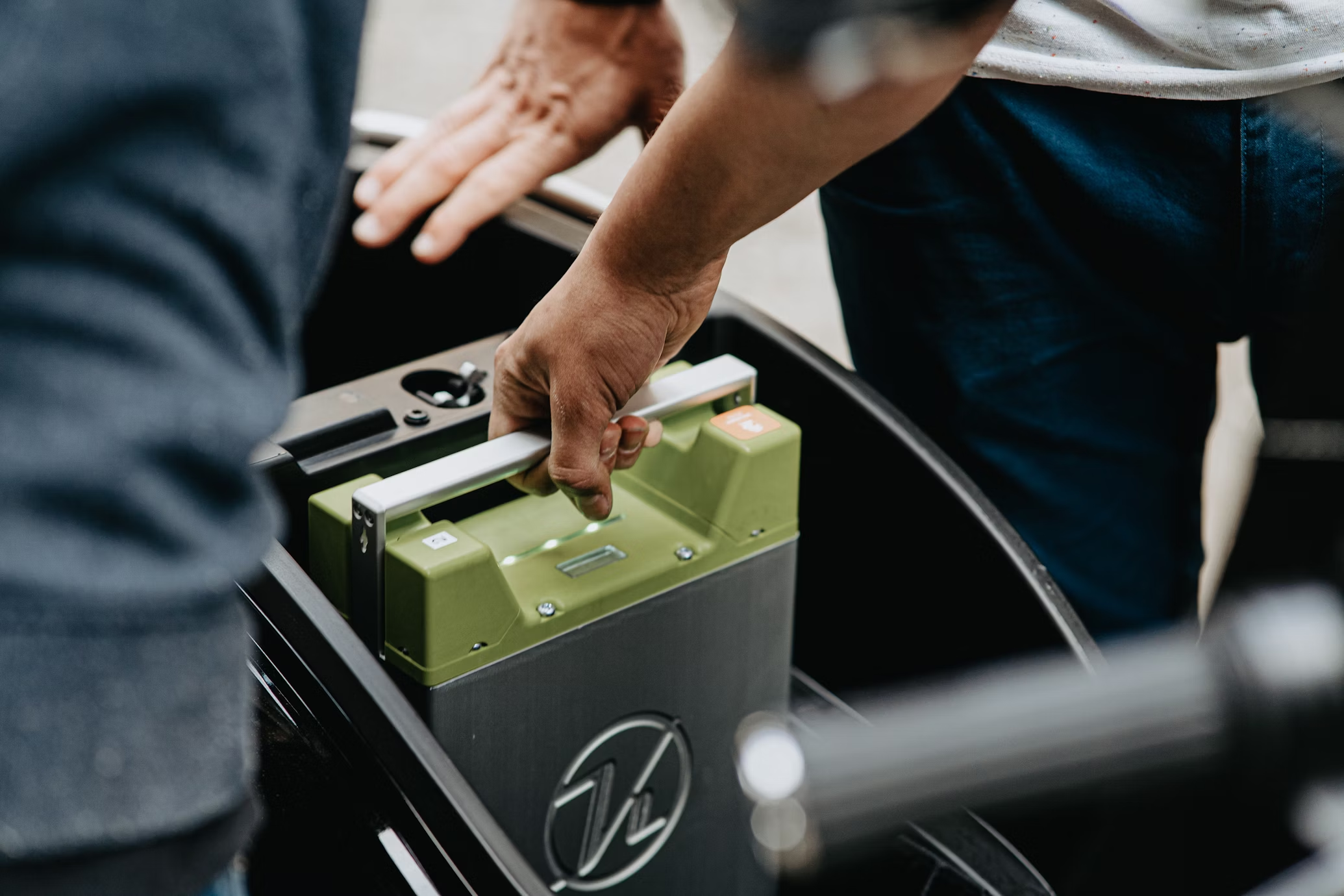

We get this question from a few different directions. Someone with a heavily shaded roof. Someone in a heritage-style home who doesn't want panels on the street side. Someone who's just sat through a three-day storm outage and wants the lights to stay on next time. They all want to know the same thing: can you put in a home battery without solar panels?
Yes, technically. A home battery can be installed without solar and charged from the grid, either to keep power on during outages or to buy electricity at cheaper times and use it at expensive ones. But a battery with no solar is not eligible for the federal Cheaper Home Batteries rebate: the Clean Energy Regulator states that batteries must be installed with an existing or new rooftop solar system. Without the rebate and without free solar to store, the financial case is much weaker, so for most homes a battery-only install is a backup decision, not a savings decision.
Here's how it works, and when it makes sense.
How does a home battery work without solar panels?
A battery doesn't care where its energy comes from. With solar, it charges from your surplus during the day. Without solar, it charges from the grid.
To do that it still needs an inverter. In a battery-only install that's typically a battery inverter (or an all-in-one battery with the inverter built in) connected to your switchboard, the same arrangement as an AC-coupled battery retrofitted next to an existing solar system, just without the solar half.
That setup can do three useful things:
- Backup power. If it's specified and wired for backup, the battery keeps your nominated circuits running when the grid goes down.
- Tariff shifting. On a time-of-use plan, the battery charges when power is cheaper and runs the house when it's expensive.
- VPP participation. Some Virtual Power Plant programs pay batteries to export or reduce demand at peak times. Whether a particular program accepts a battery with no solar is up to that program, so check its rules directly.
What it can't do is make energy. Every kilowatt-hour it delivers, you bought from the grid first, plus a bit extra to cover conversion losses on the way in and out.
Is a battery without solar eligible for the federal rebate?
No. This is the part that matters most for your budget.
The Clean Energy Regulator, which runs the Cheaper Home Batteries Program, says plainly on its solar battery page that solar batteries "must be installed with either an existing or new rooftop solar system". A battery on its own, with no panels at the property, doesn't qualify.
The other eligibility conditions, as we summarise them on our solar battery rebate QLD page, are that the battery is:
- new, not second-hand or refurbished
- between 5 and 50 kWh of usable capacity
- VPP-ready, meaning capable of being managed by a Virtual Power Plant operator (joining one is optional)
- installed by an accredited installer (the CER names Solar Accreditation Australia accreditation with a battery endorsement) and on the approved battery list
It's one rebate per property, it's not means-tested, and retrofits to existing solar qualify. Since 1 May 2026 it's worth roughly $252 per usable kWh for the first 14 kWh, which is about $2,520 on a 10 kWh battery. A battery-only install forgoes all of that.
Program rules can change, so we confirm eligibility on every quote rather than relying on what was true last month.
The money: why battery-only is a harder sell
With solar, a battery stores energy that would otherwise be exported for roughly 3 to 12 cents per kWh, then uses it in place of grid power that costs roughly 25 to 35 cents at peak. That gap, on energy you generated for free, is where the savings come from.
Without solar, there's no free energy. The battery's only financial lever is the difference between the price you charge it at and the price you'd otherwise pay, minus the losses in between. That depends entirely on your tariff: how cheap the cheap period is, how expensive the peak is, and whether your retailer offers a time-of-use plan that suits you. We don't quote a saving for a battery-only install without seeing your actual tariff, because there's no honest general number.
Put that together with no rebate, and a battery-only system generally takes much longer to pay for itself than the 7 to 12 years we model for a solar-paired battery on the Sunshine Coast. For most homes, it may never pay back on bill savings alone.
That doesn't make it a bad idea. It means you should buy it for the right reason.
When a battery without solar makes sense
When backup is the point
If your main concern is keeping the fridge, lights, internet and maybe a bore pump running through an outage, a battery does that whether or not there are panels on the roof. Hinterland and rural properties at the end of long lines, and anyone who's sat through a storm-season outage, often value this more than the bill saving.
The catch: without solar, a battery can't recharge itself during a long outage. Once it's flat, it's flat until the grid comes back. With solar, an islanded system recharges through the day, which turns a few hours of backup into multi-day resilience. If long outages are your worry, that difference is significant.
Backup also has to be specified and wired properly. Not every battery install includes it, and the circuits you want backed up need to be on an essential-loads sub-board.
When solar genuinely isn't possible yet
Heavy shading, a roof that needs replacing first, or a renovation that's still a year away are all real reasons to put the battery in first. In that case, choose an inverter that can take panels later. When the solar goes on, the system works the way it should.
Bear in mind the rebate is claimed when the battery is installed, and the rule is that the battery goes in with an existing or new solar system. Don't assume a battery installed before the panels becomes eligible once they go on. Confirm how the timing affects eligibility before you commit.
When you're on a tariff with a big gap between cheap and peak
Some time-of-use plans have a wide enough spread that grid-charging a battery returns something. It's worth running the numbers with your actual bill. Just go in with realistic expectations.
When it doesn't make sense
- You have a usable roof. If panels can go on, adding even a modest array alongside the battery usually changes the economics completely: free energy to store, plus rebate eligibility. Doing them together also avoids paying twice for switchboard and network paperwork.
- You want bill savings and nothing else. Without solar or the rebate, savings are slim and slow.
- You're relying on a VPP payment you haven't confirmed. Check the program's rules and approved-device list first.
Battery only vs solar and battery
| Battery only | Solar and battery | |
|---|---|---|
| Charges from | Grid only | Your own solar surplus, grid as backup |
| Federal battery rebate | Not eligible | Eligible (about $252 per usable kWh since 1 May 2026, tiered) |
| Panel STC discount | Not applicable | Applies to the panels |
| Backup in an outage | Yes, if specified, until the battery is flat | Yes, if specified, and solar recharges it during the day |
| Bill savings | Depends entirely on your tariff spread | Typically $1,000 to $1,500 a year for a battery added to existing solar |
| Best for | Backup-first households, roofs that can't take panels yet | Most homes |
What about joining a VPP without solar?
A Virtual Power Plant pools home batteries and pays owners for letting the operator draw on them at peak times. It's a reasonable extra income stream for a battery, but every program sets its own rules about which batteries it accepts and on what terms. Some may accept grid-only batteries; others won't. Ask the program directly, in writing, before you factor VPP income into the decision. Our guide to VPPs in Queensland explains how they work and what to check.
What we'd suggest
If you're thinking about a battery without solar, start with the question: what do I actually want it for?
- Backup: a battery-only install can work, but consider whether even a small array could go on, because recharging during a long outage is the difference between hours and days.
- Savings: add solar, or wait until you can. The rebate and free energy to store are what make a battery pay.
- Both, but the roof isn't ready: install a battery-ready setup and plan the solar as stage two, understanding the rebate implications of the timing.
Our solar battery installation service covers all three. Send us a recent bill and tell us what you're trying to achieve, and we'll tell you honestly whether a battery on its own is worth it for you.
Frequently asked questions
Can I have a home battery without solar panels?
Yes. A battery can charge from the grid and supply your home during outages or expensive peak periods. It needs an inverter and a proper network application like any battery. It just can't generate energy of its own, and it isn't eligible for the federal battery rebate.
Does the federal battery rebate require solar panels?
Yes. The Clean Energy Regulator states that solar batteries must be installed with either an existing or new rooftop solar system. A battery at a property with no solar doesn't qualify.
Is a battery without solar worth it?
Usually not on bill savings alone, because there's no free solar energy to store and no rebate. It can be worth it if backup power is the priority, or if solar isn't possible yet and you plan to add it.
Can a battery without solar provide backup power?
Yes, if it's specified and wired for backup. It will run your nominated circuits until it's flat. Without solar it can't recharge during the outage, so how long it lasts depends on its size and what's connected.
Can I add solar panels to a battery later?
Usually, if the inverter is chosen with that in mind. Check with your installer how the timing affects rebate eligibility first, because the rebate is claimed when the battery is installed and the rules require solar to be part of the picture.