Battery storage supplied, installed and commissioned by Keystones Energy Solutions — either alongside a new solar system or retrofitted to the panels you already have. We install Sigenergy, Deye, BYD, Pylontech, Tesla and Sungrow across the Sunshine Coast, Noosa and the Gympie region.
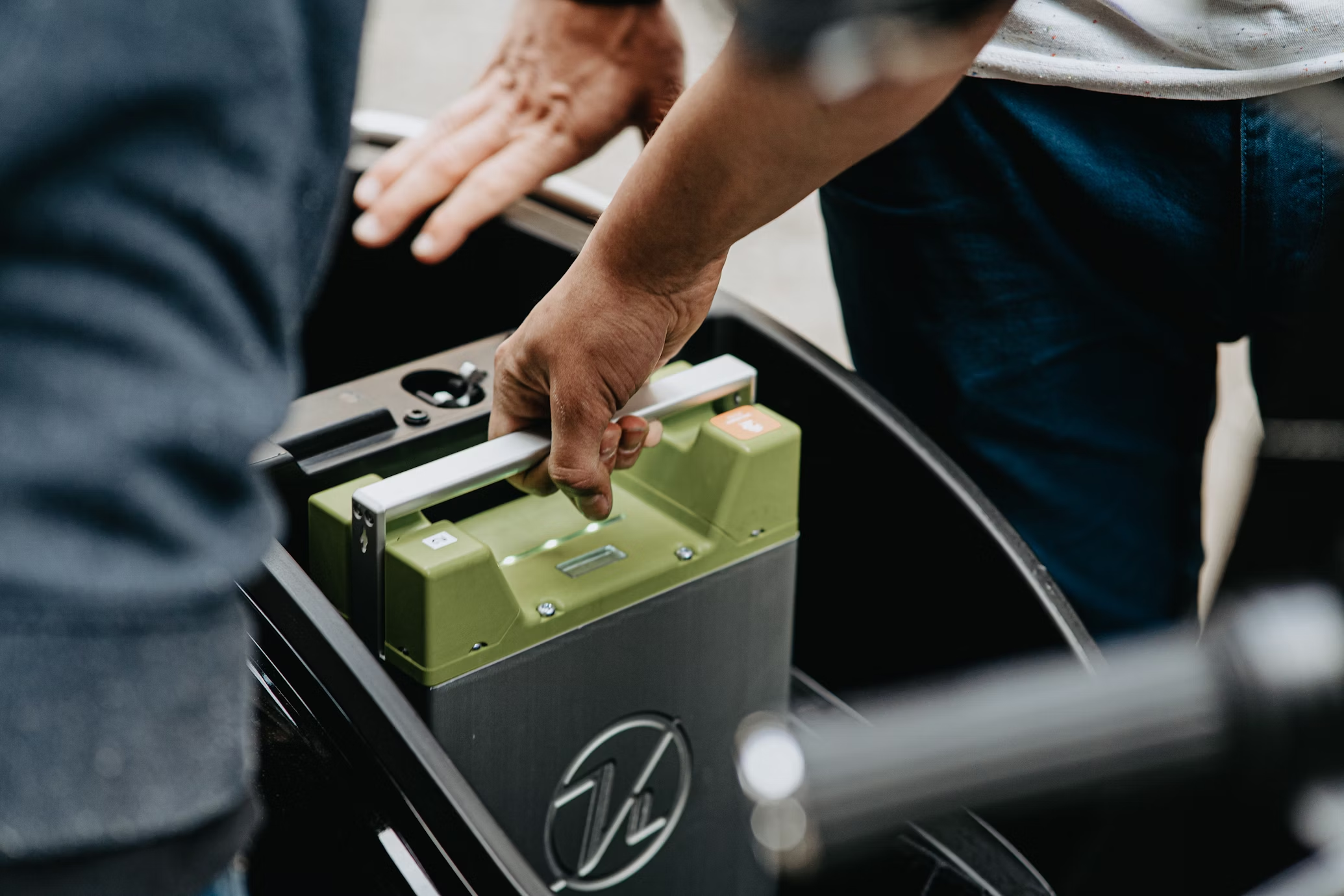
For a decade the argument against a home battery was simple: exporting your surplus paid nearly as well as storing it, and the hardware cost too much. Both halves of that argument have broken down. Feed-in tariffs on the Sunshine Coast now sit around 3–10 cents per kWh depending on your retailer, while the power you buy back between 4pm and 9pm costs 25–35 cents. That gap is the whole business case for storage.
A typical Sunshine Coast home with solar self-consumes only 30–50% of what its panels make. The rest goes to the grid for small change and gets bought back at four times the price after dark. Sized properly, a battery lifts self-consumption to roughly 80–90%, which is where the annual savings of $1,000 to $1,500 that we model for most retrofit customers come from.
The federal Cheaper Home Batteries Program then takes a meaningful chunk off the install — up to 30% on approved systems between 5 kWh and 50 kWh, applied as an upfront discount by your accredited installer rather than a rebate you chase afterwards. The value per usable kWh steps down each year as battery prices fall, so we confirm the current rate at quoting time rather than advertising a number that dates.
Every kWh you store and use after dark is worth roughly three to four times what the grid pays you to export it.
Rebate-eligible batteries must be capable of joining a Virtual Power Plant. Joining is optional, but the capability is there if you want the extra credits later.
Most of what we install stacks in 4–5 kWh modules, so you can add capacity later for an EV or a pool without replacing the inverter.
Installing since 2015, and we do not subcontract. Dan and the team do the design, the install and the commissioning under a 10-year workmanship warranty.
Battery sizing is not about matching your solar system. It is about covering the electricity you use once the sun goes down. Pull twelve months of interval data from your retailer and look at consumption from roughly 4pm to 7am — for most Sunshine Coast households that lands between 8 and 16 kWh, which is why 10 kWh and 15 kWh are the two sizes we quote most often.
| Usable capacity | Household type | Evening & overnight load it covers |
|---|---|---|
| 5–6.5 kWh | Units, townhouses, couples out at work all day | Fridge, lights, TV, laptops and one air-con zone for part of the evening |
| 10 kWh | The standard Sunshine Coast family home | A normal evening through to morning — cooking, air con, hot water boost, no big surprises |
| 15 kWh | Larger homes with a pool pump or ducted air conditioning | Whole-house evening use plus overnight pool filtration, with reserve left for a morning outage |
| 20 kWh+ | EV charging, home business, rural properties, whole-home backup | Everything above plus overnight vehicle charging, or a full day of essentials through a long outage |
Oversizing is the most common mistake we see on competitors' quotes. A battery that never fully cycles earns nothing on the unused capacity, and there is no point buying 20 kWh of storage if a 6.6 kW array only has 10 kWh of surplus to put into it on a good day.
We are not tied to a single supplier, so the recommendation you get depends on your usage, your existing inverter and your budget — including where a cheaper option is the right call.
| Brand | Typical capacity | What it does well | Our take |
|---|---|---|---|
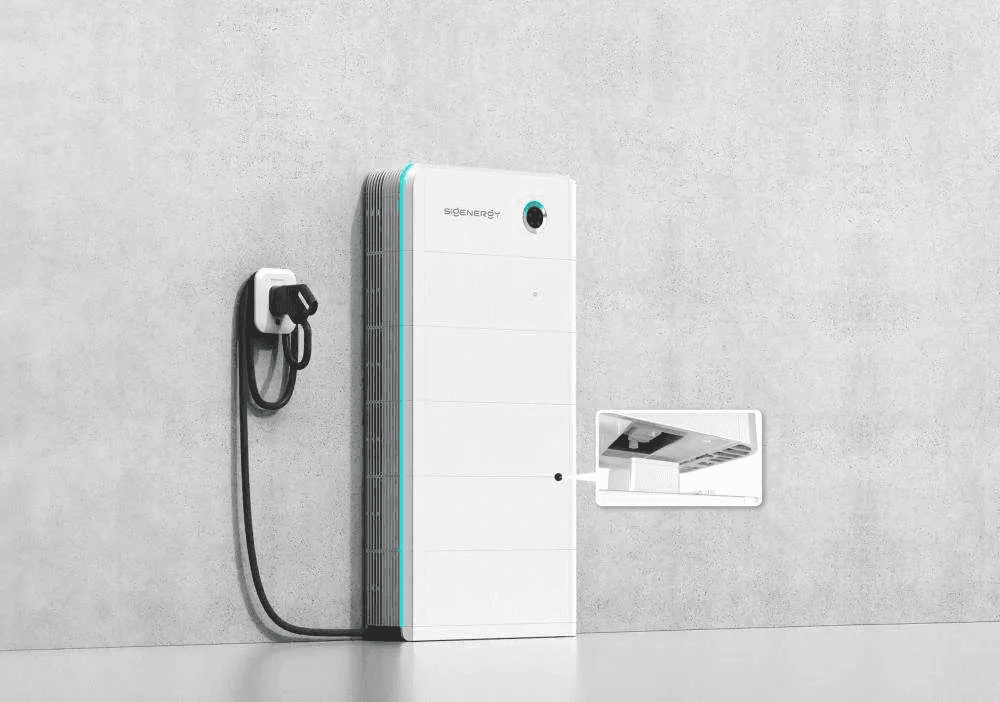 Sigenergy Sigenergy | Stacked modules, ~8–48 kWh | All-in-one stack: hybrid inverter, battery modules and EV charging in a single cabinet | The premium end of our range. Worth it if you want the tidiest possible install and plan to add EV charging. |
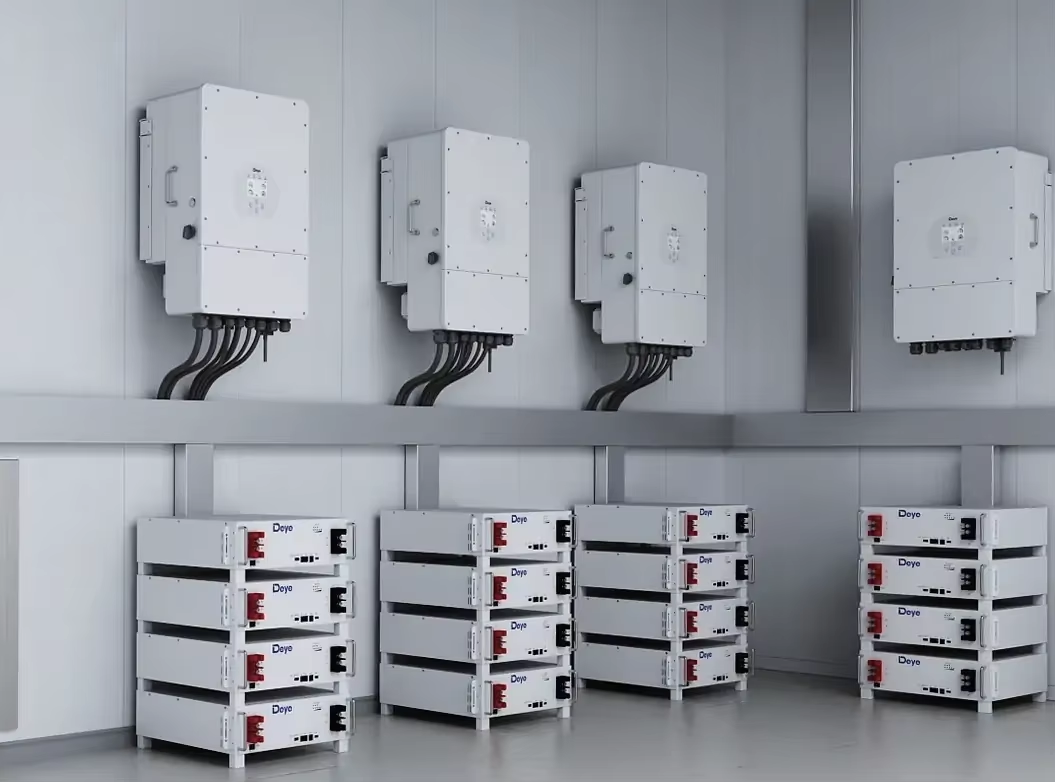 Deye Deye | 5.12 kWh modules, up to 30.72 kWh | High-voltage LiFePO4, IP65 enclosure rated to 55°C, sub-20ms backup switchover | Our default recommendation for most Sunshine Coast homes. Best combination of performance, expandability and price we have found. |
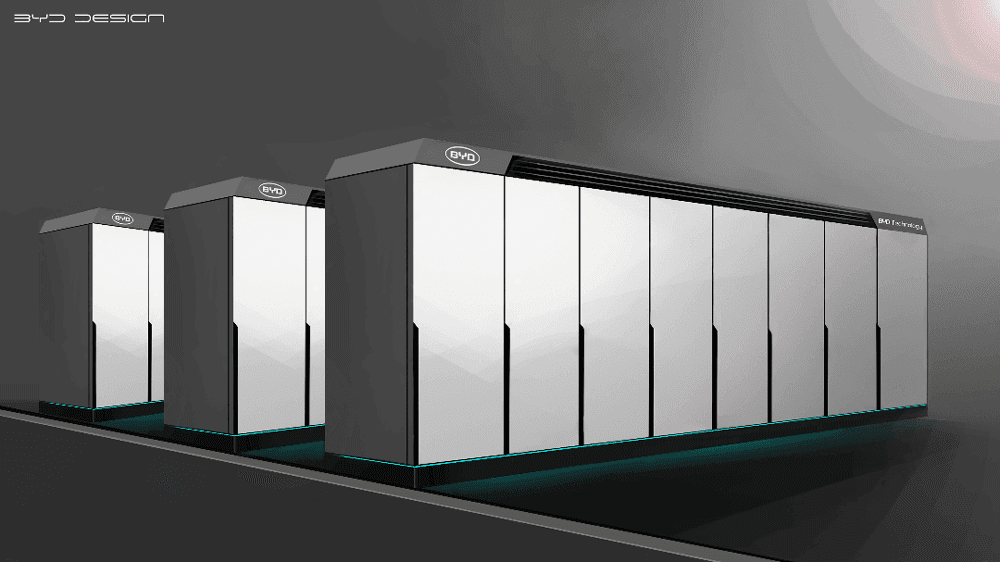 BYD BYD | ~4 kWh modules, stackable | Commercial-grade cells in a residential package, works with a wide range of hybrid inverters | A strong choice when you want proven cell quality and flexibility on inverter brand. |
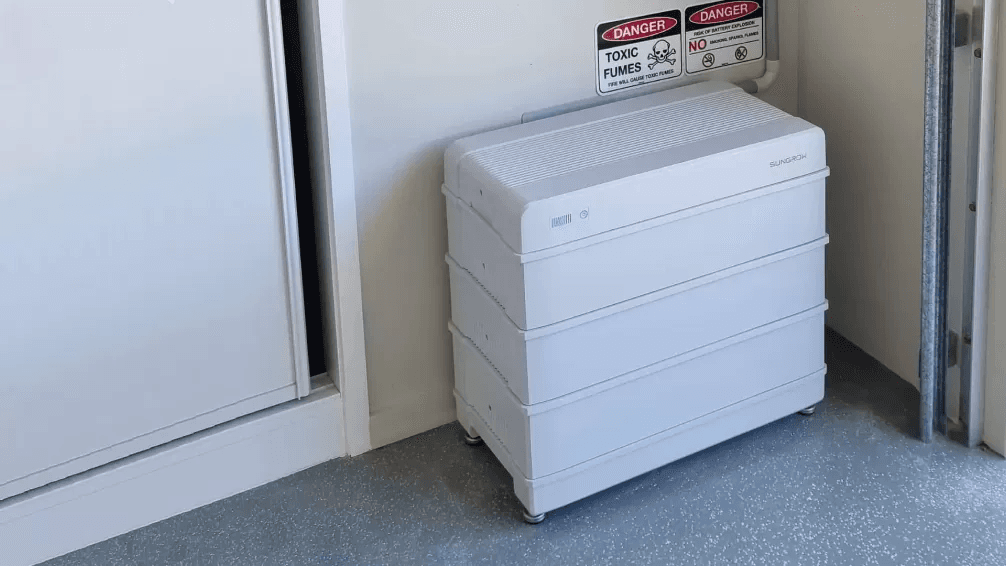 Sungrow Sungrow | SBR series, 9.6–25.6 kWh | Modular, well-priced, mature Australian support network | Excellent value, particularly when paired with a Sungrow hybrid inverter on a new system. |
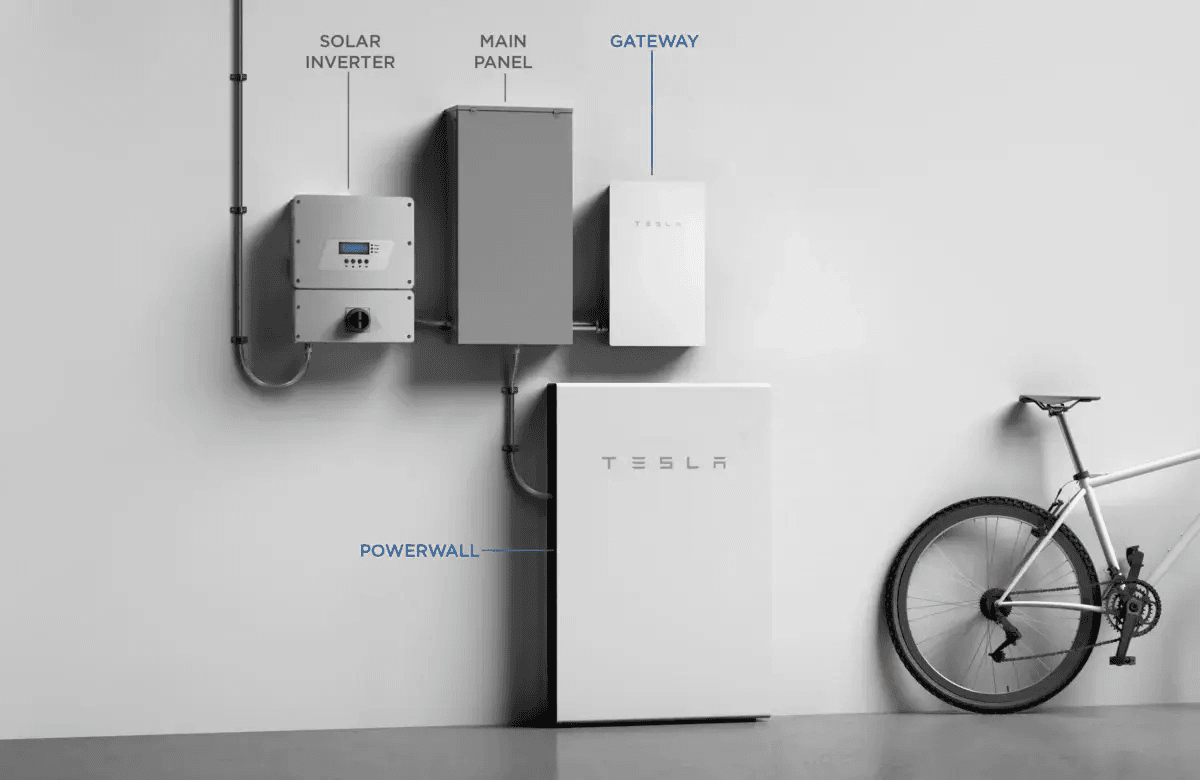 Tesla Powerwall Tesla Powerwall | 13.5 kWh, 11 kW continuous (AU) | The most recognised name, polished app, strong whole-home backup on a single unit | Costs more per kWh than the alternatives and the capacity is fixed. We install it happily when customers ask for it by name. |
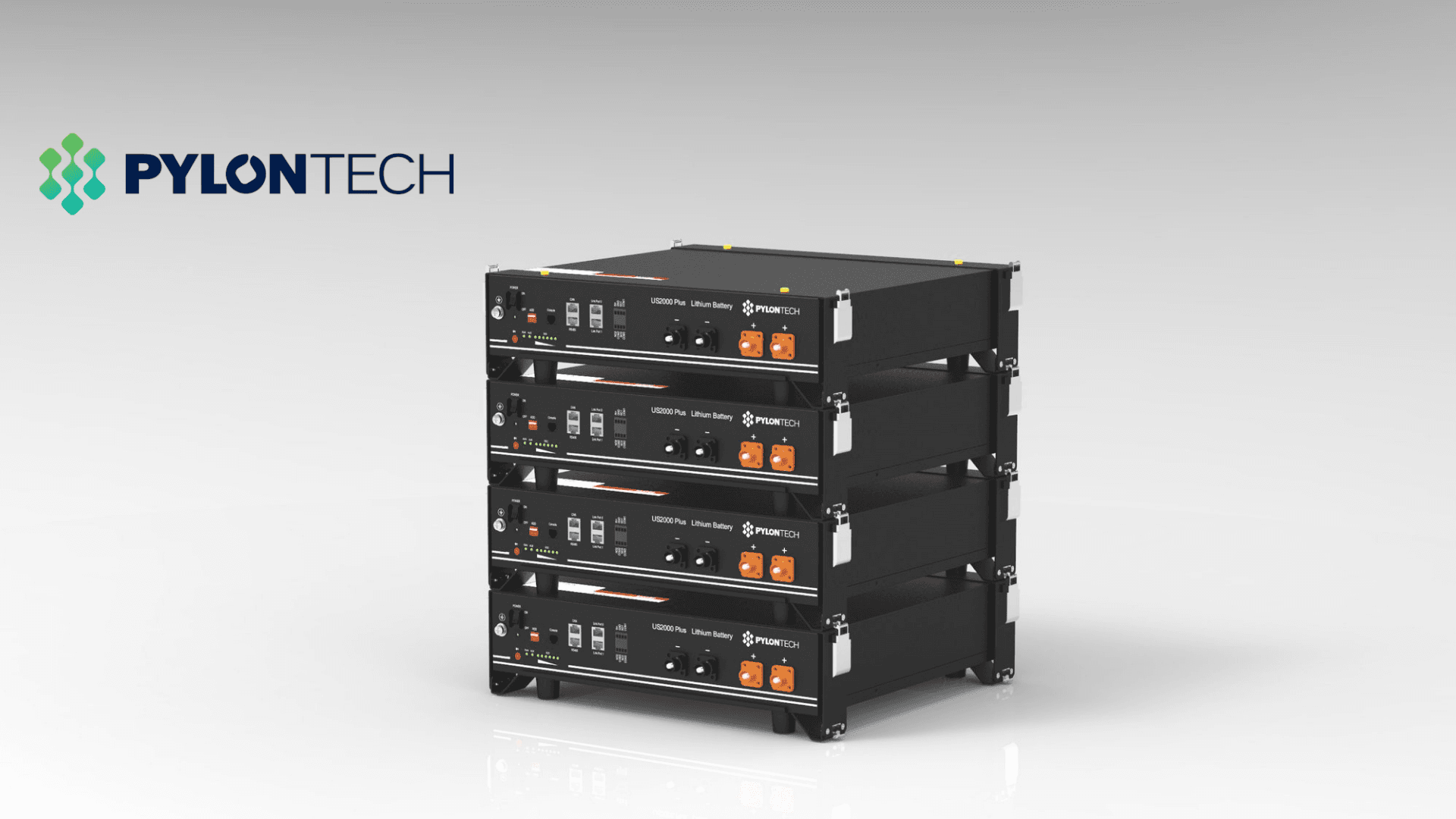 Pylontech Pylontech | Low-voltage stacks from ~3.5 kWh | The budget entry point, compatible with a very wide range of inverters | Sensible where the priority is getting storage in at the lowest cost, or on hybrid off-grid builds. |
As at August 2026, a 5 kWh install lands around $8,500–$9,500, a 10 kWh install around $13,000–$14,500 and a 15 kWh install around $17,500–$19,500, installed and before rebates — switchboard upgrades and cable runs are the main variables. We publish our full reasoning on brand choice in our honest review of the Deye battery for Sunshine Coast homes.
Most of the battery work we do on the Sunshine Coast is a retrofit: the panels went on five or ten years ago, the feed-in tariff has been cut since, and the household wants to keep the energy instead of gifting it to the grid. You almost never need to replace working panels to do this.
AC-coupled is the usual retrofit path. Your existing solar inverter stays exactly where it is, and the battery gets its own inverter alongside it. Solar power is converted to AC as it always was, then converted back to DC to charge the battery. You lose a couple of percent to the extra conversion, but you keep your current system, keep any legacy feed-in arrangement, and the install is faster and less disruptive.
DC-coupled puts the panels and the battery on one hybrid inverter, so solar charges the battery directly without the extra AC round trip. It is more efficient and tidier, and it is what we fit on new installs. On a retrofit it means replacing your existing inverter, which is worth doing if that inverter is near the end of its life anyway.
We work with Fronius, Selectronic, SMA, Enphase and Deye inverters, so a retrofit is rarely blocked by what is on your wall. What does need checking is switchboard capacity, space, and what the Energex connection at your address allows — a site visit, not a phone estimate. See how a residential solar assessment works, or start with an online estimate.
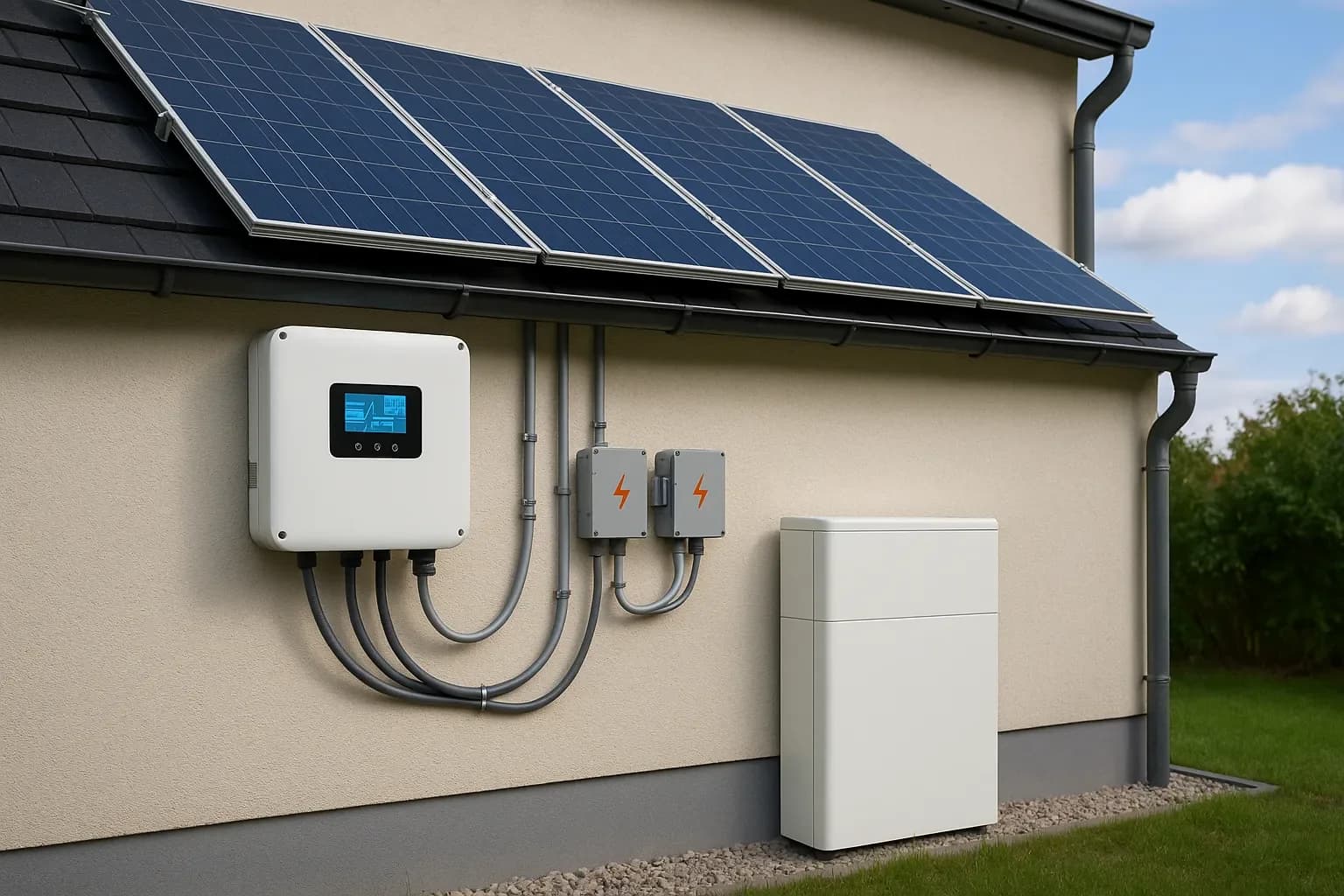
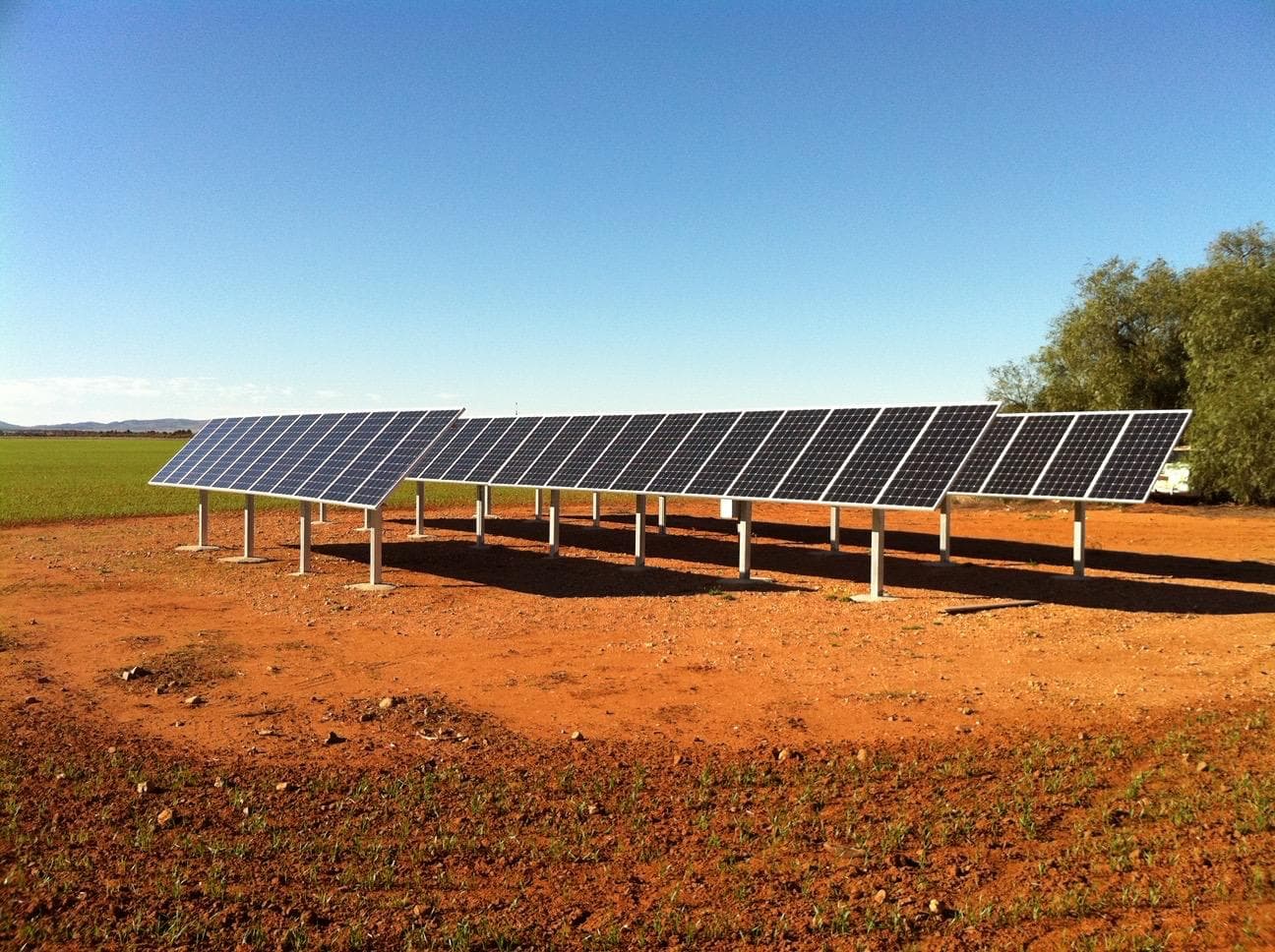
Here is the part most people do not know: a standard grid-connected solar system shuts down the moment the grid does. Anti-islanding protection is a safety requirement — it stops your panels backfeeding a line that a crew may be working on. Without a battery, a blackout on a sunny day leaves you with nothing.
A battery with backup capability changes that. It disconnects your home from the network, forms its own micro-grid and keeps your nominated circuits live — fast enough on the systems we fit that computers do not reboot. Once islanded, your solar keeps running and recharging the battery through the day, which turns a few hours of backup into multi-day resilience during storm season.
The practical detail is which circuits get backed up. Whole-home backup needs enough continuous output to start an air conditioner or pool pump, which drives both inverter choice and cost. Most customers back up an essential-loads sub-board — fridge, lights, power points, internet, and often the bore pump on rural blocks — and accept that the ducted air stays off until the grid returns.
If independence rather than backup is the goal, our off-grid systems page covers full standalone power for properties past the end of the line — a genuine specialty of ours in the Noosa hinterland and Gympie region.
Work from your evening and overnight usage, not your total daily figure. Most Sunshine Coast homes land on 10–15 kWh: 10 kWh covers a normal family evening through to morning, 15 kWh adds a pool pump or ducted air. Under 6.5 kWh suits units and low-usage couples, and 20 kWh or more only makes sense with EV charging or a solar array big enough to refill it each day.
Most battery systems we quote on the Sunshine Coast model out at roughly 7–12 years. Households with heavy evening loads — air conditioning, pool pumps, EV charging — sit at the fast end, around 6–8 years, because they shift more expensive peak power out of every cycle. The federal rebate typically takes two to three years off that. We do not build speculative future price rises into the numbers we show you.
Expect 10–15 years of service life from a modern LiFePO4 battery. Manufacturer warranties on the brands we install are typically 10 years, written as a capacity guarantee — commonly around 70% of original usable capacity at the end of the term, or a stated cycle count, whichever comes first. On top of that, every Keystones install carries our own 10-year workmanship warranty, and we handle claims for you rather than sending you to the manufacturer.
Only if it is specified and wired for backup — not every battery installation includes it, which catches people out. With backup configured, the system islands from the grid, keeps your nominated circuits running, and lets solar recharge the battery during daylight. How long you last depends on capacity and what you have backed up: essentials only can run for many hours to a couple of days with solar recharging, while whole-home backup with air conditioning drains far faster.
Almost always, yes. An AC-coupled battery works alongside your existing inverter regardless of brand, so the panels and inverter stay put. What determines feasibility is switchboard capacity, a location out of direct afternoon sun, and the export rules Energex applies at your address. We check all three on site, and we are happy to work on systems another company installed.
It can, but disconnecting a property that is already connected is rarely the cheapest option. Going standalone means sizing for your worst week of weather rather than an average day — a much larger array, substantially more storage and a generator for backup. It makes real sense on new builds and rural blocks where a grid connection quote runs into tens of thousands. Off-grid design is a specialty of ours — see our off-grid solar page for how those systems are put together.
Send us a recent power bill and we will tell you whether a battery is worth it for your household, what size makes sense, and what it costs with the federal discount applied. If the numbers do not work, we will say so. Keystones Energy Solutions, Cooroibah — rated 5.0 from 31 Google reviews.
Call 0423 157 290 Mon–Fri 9:00–17:00, or email sales@keystonesenergy.com.au