Rebates & Incentives
Solar Rebate QLD 2026: Every Queensland Rebate Explained
Last updated: August 2026 · Danial “Dan” Walters, founder of Keystones Energy Solutions, 18+ years in solar
The short answer
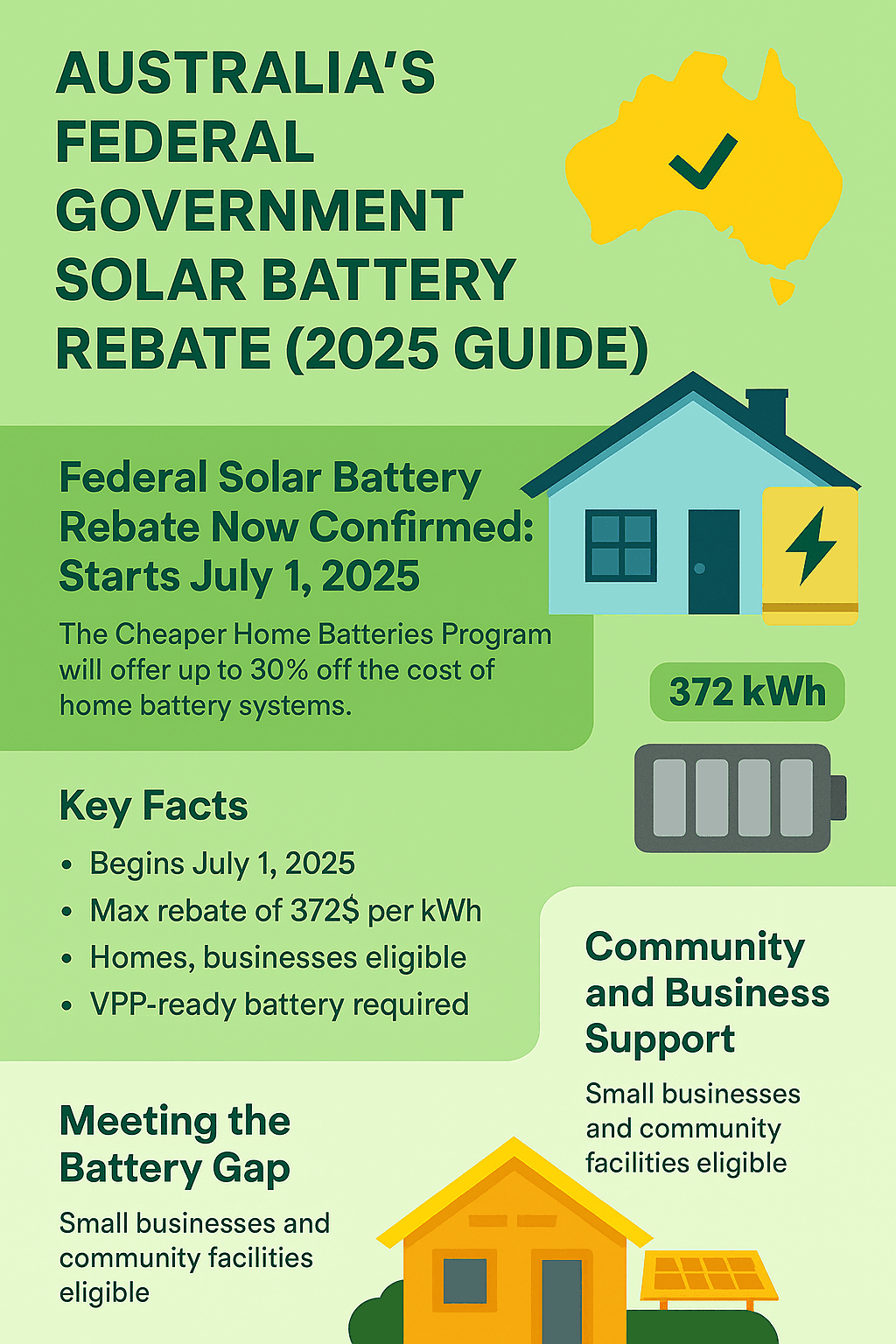
In Queensland the solar rebates that actually exist are federal, not state. Rooftop solar is discounted at the point of sale through the federal Small-scale Renewable Energy Scheme, which issues Small-scale Technology Certificates (STCs) your installer claims on your behalf and takes straight off the invoice. Home batteries of 5 to 50 kWh attract a second federal discount under the Cheaper Home Batteries Program — up to 30% off an approved battery. Since 1 May 2026 that is worth roughly $252 per usable kilowatt-hour — about $2,520 on a 10 kWh battery — down from around $311 earlier in the year, and it steps down again every six months. Queensland's own Battery Booster program is closed to new applicants, so for most households those two federal schemes are the whole story.
Every solar rebate a Queensland homeowner can access
Several things get called “the QLD solar rebate”, and only two of them are rebates you can still claim.
| Scheme | Who it's for | What it's worth | How you claim it |
|---|---|---|---|
| Federal STCs (Small-scale Renewable Energy Scheme) | Anyone installing new rooftop solar — owner-occupiers, landlords, small business | Scales with system size, location and install date. Usually thousands, and already inside your quoted price. | Nothing to apply for. Your CEC-accredited installer creates the certificates and deducts their value. |
| Cheaper Home Batteries Program (federal battery rebate) | Households, landlords, small business and community groups adding a 5–50 kWh battery | Around $252 per usable kWh since 1 May 2026 (6.8 STCs/kWh). About $2,520 on a 10 kWh battery. Steps down again each six months. | Also deducted upfront by your installer. One per property. |
| Queensland Battery Booster | Queensland households — closed | Previously up to $6,115. Do not budget for it. | No longer accepting applications. |
| Queensland feed-in tariff | Anyone exporting surplus solar | Not a rebate — an ongoing bill credit, commonly 3–10c per kWh. | Set by your retailer, applied automatically. |
| Council and retailer offers | Varies by council and retailer | Occasional loans or time-limited discounts. Small by comparison. | Check locally before you sign. |
Figures move with certificate prices and policy. Confirm the current rate with the Clean Energy Regulator or the Queensland Government before you commit.
The federal STC rebate, and why it never arrives as a cheque
The Small-scale Renewable Energy Scheme (SRES) is the reason solar in Queensland costs what it does. A new rooftop system generates Small-scale Technology Certificates based on the clean electricity it is expected to produce, and those certificates are tradable — companies with obligations under the renewable energy target have to buy them.
You assign the right to create those certificates to your installer, and they take the market value off your invoice on the spot. That is why nobody in Queensland receives a solar rebate payment: the money is out of the price by the time you sign, and the headline figure you see advertised has almost always had it removed. When comparing quotes, check the STC deduction is itemised.
Why the value falls every year
The scheme is legislated to wind up at the end of 2030, and the number of certificates a system earns is tied to the years remaining — so each year an identical system earns fewer than it would have twelve months earlier, and the certificate price moves with the market too. It is a slow, predictable decline rather than a deadline, but the same 6.6 kW system genuinely costs more next year. Check the current rate before you commit.
Why the installer has to be CEC accredited
Certificates can only be created for a system designed and installed by a Clean Energy Council accredited installer. It is not a nice-to-have quality badge; it is the mechanism the rebate runs through. Use an unaccredited operator and there is no rebate at all, however good the price looked, and manufacturer warranties usually fall over too. Ask for the accredited installer's name and number, and check it is the person who will be on your roof rather than a name on the paperwork.
The federal battery rebate, and how it stacks with STCs
The Cheaper Home Batteries Program launched on 1 July 2025 as an expansion of the same SRES machinery: an upfront discount of roughly 30% off an approved home battery, delivered as certificates your installer claims and deducts from the invoice.
The important thing to understand is that it shrinks on a schedule. The rebate is calculated as an STC factor per usable kilowatt-hour, and that factor dropped from 8.4 to 6.8 on 1 May 2026. At an STC price of about $37 after administration costs, that is roughly $252 per usable kWh today, against about $311 in the first four months of 2026 and $372 when the program opened. It now steps down every six months through to the end of 2030.
Since 1 May 2026 it is also tiered rather than flat, which matters if you are sizing a large system:
- The first 14 kWh of usable capacity earns the full factor
- Capacity from 14 to 28 kWh earns 60% of it
- Capacity from 28 to 50 kWh earns just 15%
So a 10 kWh battery sits entirely in the top band and attracts about $2,520. Going much past 14 kWh buys you noticeably less rebate per kilowatt-hour, which is worth knowing before anyone talks you into an oversized system on rebate grounds.
Because the rate moves twice a year, the figure that matters is the one current on the day your system is installed, not the day you read about it. We confirm it in writing on every quote.
It stacks with the panel rebate rather than replacing it — STCs come off the panels, the battery rebate off the battery, on the same invoice. It is not means-tested and not capped by participant numbers, but you can claim only one battery rebate per property, and the value declines annually through to the end of 2030 as battery prices fall.
Eligibility in plain terms
- Between 5 kWh and 50 kWh of usable capacity
- Installed by a CEC-accredited installer
- New equipment — not second-hand or refurbished
- VPP-ready — capable of remote management by a Virtual Power Plant operator. You do not have to join one, the battery just has to be able to
- Installed alongside new or existing rooftop solar — retrofits qualify
Landlords can claim on each property they own, and small businesses and community organisations are eligible too. Most current major-brand batteries are VPP-ready out of the box.
Where Queensland stands at state level
Plainly: there is no Queensland-wide state rebate on solar panels. The state battery incentive that did exist — the Battery Booster program, worth up to $6,115 to eligible households — is no longer open to new applicants. Do not build it into your budget.
Queensland's legacy Solar Bonus Scheme feed-in tariff also comes up constantly in searches. Households already on it keep their arrangement under its own terms, but it has not been open to new connections for many years. A new solar customer in 2026 gets their retailer's standard feed-in rate.
Council programs, retailer promotions and interest-free finance offers do surface from time to time, but they are usually small, regional and short-lived — worth a phone call, not the difference between solar stacking up and not. Because state policy moves, verify the current position with the Queensland Government and the Clean Energy Regulator rather than trusting any sales pitch, ours included.
Worked example: a Sunshine Coast home, panels plus battery
A standard single-storey home on the Sunshine Coast, tile or tin roof, no tilt frames, adding 6.6 kW of panels and a 10 kWh battery at the same time.
- 6.6 kW solar system, installed, STC rebate already deducted
- ~$6,000
- 10 kWh battery, installed, before the battery rebate
- ~$13,500
- Less federal battery rebate on 10 kWh
- −$2,520
- Battery, net of rebate
- ~$10,980
- Total out of pocket
- ~$16,980
A 6.6 kW system on the Coast typically lands between $5,000 and $7,000 installed with the STC discount applied, so $6,000 is a fair middle. A 10 kWh battery generally sits between $13,000 and $14,500 installed before the rebate, and at the current rate the rebate on it comes to about $2,520.
A household installing solar and a battery together can save up to around $2,500 a year; $1,000 to $1,500 is typical for a battery added to existing solar. Against a $16,980 outlay that is a payback of roughly seven to fourteen years, depending almost entirely on how much of your own power you use in the evening instead of exporting it. Anyone promising a guaranteed three-year payback is selling, not calculating.
Feed-in tariffs, and why they change the battery maths
A feed-in tariff is not a rebate. It is the credit your retailer pays for surplus solar you export, and in south-east Queensland it commonly sits around 4 to 12 cents per kWh depending on who you are with. Grid electricity costs roughly 25 to 35 cents per kWh at peak.
That gap is the whole argument for storage. Every kilowatt-hour you export earns single-digit cents; every one you store and use after sunset saves three to five times as much. When feed-in rates were generous, exporting was fine. Now that they are not, self-consumption is where the return lives — a well-sized battery can lift the share of your own solar you actually use from 30–50% to 80–90%. Rates change, so compare them when your plan rolls over, and if you are on an older, higher rate, say so before changing anything on your system.
Solar rebate QLD: common questions
Is there a Queensland state solar rebate in 2026?
Not a general one. The Queensland Battery Booster program, worth up to $6,115 to eligible households, is closed to new applicants, and there is no Queensland-wide rebate on panels. What you get instead is the federal STC discount on panels and the federal battery rebate on storage, both applied to your invoice rather than claimed back later. If you see an ad for a Queensland state solar rebate, check the fine print: it is usually the federal scheme marketed as a local one.
How much is the solar rebate in QLD for a 6.6 kW system?
There is no single dollar figure — STCs are priced by system size, location and years remaining in the scheme. The practical answer is that the discount is already inside the quote. On the Sunshine Coast a quality 6.6 kW system on a standard single-storey roof typically lands between $5,000 and $7,000 installed after the STC discount, and a 10 kW system between $8,000 and $11,000.
Do I have to apply for the solar rebate myself?
No. You assign the right to create the certificates to your installer and they take the value off the invoice — a point-of-sale discount rather than a rebate in the everyday sense. No forms, no waiting, no cash back. Because you never see the certificates, ask for the deduction to be itemised.
Does the rebate shrink if I wait until next year?
Yes, by design. Both federal schemes step down over time and are legislated to wind up at the end of 2030, so a system installed this year is credited with more than the same system next year. It is not a cliff, but the value only moves one way. Confirm the current rate before you commit.
Can I claim the battery rebate on a retrofit to existing solar?
Yes. The battery must be new, 5 kWh to 50 kWh of usable capacity, VPP-ready and installed by a CEC-accredited installer, but it can go onto an existing rooftop system. Tell us your inverter make and model — some accept a DC-coupled battery directly, others need an AC-coupled battery alongside.
Does my installer have to be Clean Energy Council accredited?
For the rebate, yes — it is not optional. Certificates can only be created for a system designed and installed by a CEC-accredited installer, so an unaccredited operator does not just void your warranties, it forfeits the discount entirely.
Find out exactly what your rebate is worth
Every quote we write itemises the federal STC deduction and, where a battery is included, the battery rebate — so you can see the discount rather than take our word for it. Keystones has been Clean Energy Council accredited and installing across the Sunshine Coast, Noosa and Gympie since 2015, rated 5.0 from 31 Google reviews.
Monday to Friday, 9am to 5pm · sales@keystonesenergy.com.au
Keep reading
- Full guide to the federal battery rebate — eligibility and savings in detail
- Battery storage installation — the batteries we fit and what they cost
- Residential solar — what we install, and how the process runs
- Solar battery storage in Queensland: costs and payback — the numbers behind the battery decision
- Free solar quote — instant estimate, then a local installer calls