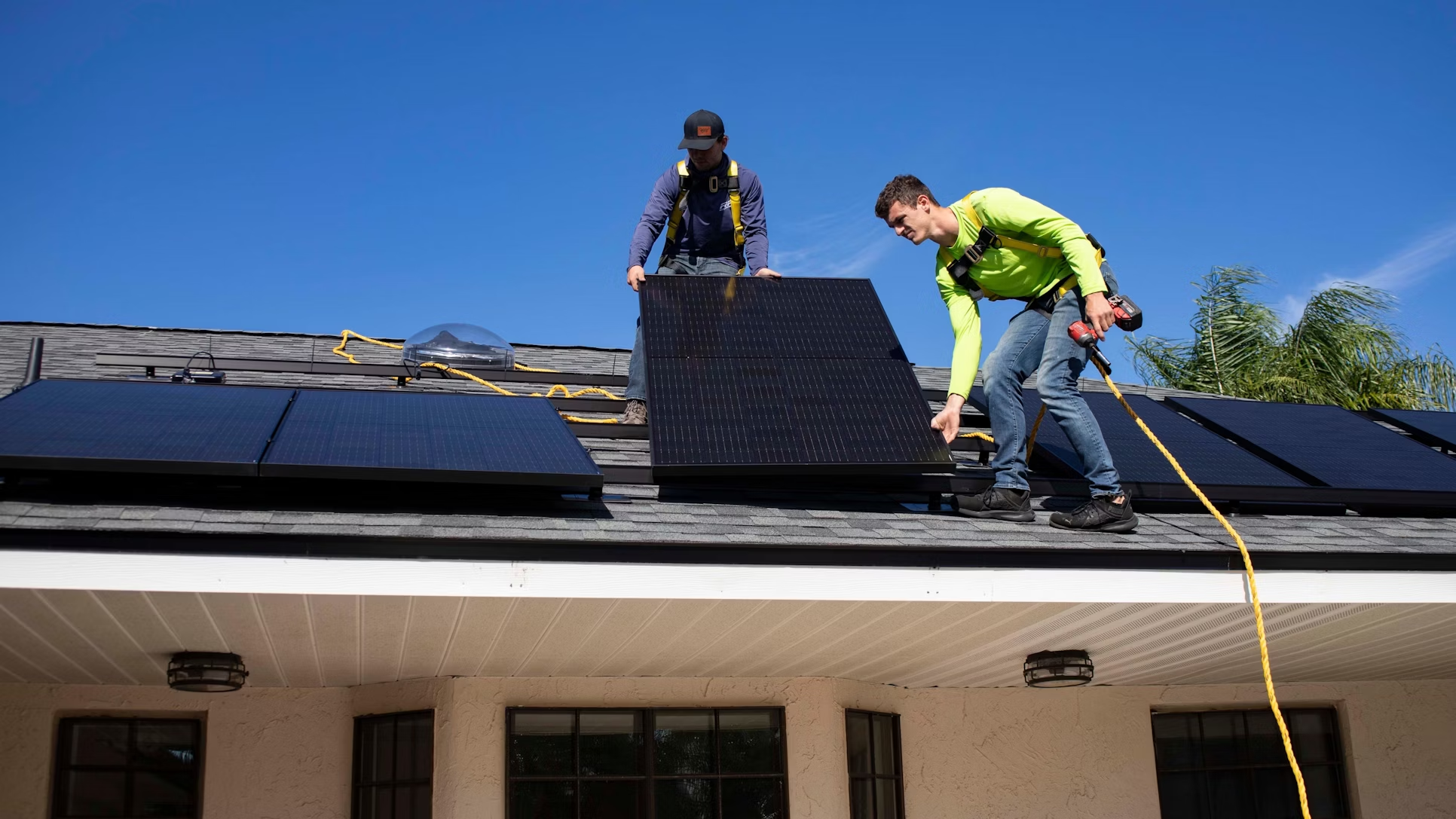

Get three solar quotes on the Sunshine Coast and you'll usually get three different system sizes, three different brands, three prices that don't line up, and three companies that all have five stars on Google. It's no wonder people stall at this point. Our guide on how to compare solar quotes handles the numbers; this one is about the companies behind them.
I've been in solar for more than eighteen years and installing on the Coast since 2015, and the honest truth is that the hardware is rarely the problem. Most of the bad outcomes we get called out to fix come down to who installed it, how carefully, and whether they were still answering the phone two years later.
The best solar installer on the Sunshine Coast is one whose system is designed and installed by an accredited installer (so the federal STC rebate actually applies), holds a Queensland electrical contractor licence, tells you exactly who will be on your roof, itemises the rebate on the quote, and backs the job with a written workmanship warranty. After that, look for brands with real Australian support and a track record of after-sales service in the reviews. Price matters, but only once those boxes are ticked.
The quick checklist
Every installer you're considering should pass all of these.
| Check | Why it matters | How to verify it |
|---|---|---|
| Accredited installer and designer | No accreditation, no STC rebate. Manufacturer warranties usually fall over too | Ask for the accreditation number and check it with Solar Accreditation Australia |
| Licensed QLD electrical contractor | DC work on a solar array is licensed electrical work in Queensland | Ask for the licence number and check it with the Electrical Safety Office |
| Named installer on the job | Subcontracting is common; you want to know who's accountable | Ask who will physically be on the roof, and whether they're staff |
| Itemised STC deduction | Shows you the rebate rather than asking you to trust it | It should be a separate line on the quote |
| Written workmanship warranty | Covers the install itself, not just the products | Ask for the term and the warranty document |
| Brands with Australian support | Inverters are the most common failure point | Ask which distributor holds stock and handles claims here |
| Site visit or switchboard photo | Avoids surprise costs on install day | A quote without one should at least ask for photos |
Is the installer accredited? (And what happened to "CEC approved")
This one isn't optional. Federal STC rebates can only be claimed for a system designed and installed by an accredited installer; it's the mechanism the discount runs through. Use an unaccredited operator and there's no rebate at all. Our Queensland solar rebate guide explains how the STC discount works in detail.
For years this was called "CEC accreditation" because the Clean Energy Council ran it, and you'll still see the phrase everywhere, including on our own site. The scheme has moved. The Clean Energy Regulator approved Solar Accreditation Australia (SAA) as the installer and designer accreditation operator on 29 February 2024, and the transition from the Clean Energy Council was completed on 29 May 2024 (energy.gov.au; Clean Energy Council). Ask any installer, us included, for their accreditation number, check it on SAA's accreditation status check, and make sure that person is the one on your roof.
What is a "CEC approved solar retailer"?
The Clean Energy Council's Approved Solar Retailer program ran from 2013 until 2023. On 1 February 2023 it was replaced by the New Energy Tech Consumer Code (NETCC), and retailers that sign up are now called NETCC Approved Sellers (New Energy Tech; Clean Energy Council).
It covers the retail side of the deal (sales conduct, quotes, contracts, warranties and support), and it's voluntary. The federal energy guide is clear that not every legitimate retailer has signed up and you don't have to buy from one (energy.gov.au). Treat it as one useful signal alongside accreditation and licensing, not a substitute for them.
Are they a licensed Queensland electrical contractor?
A solar array is a live DC generator whenever the sun is on it. Turning the inverter off doesn't make the roof safe, and in Queensland any work on the DC side of a system is licensed electrical work.
So the business you sign with should hold a Queensland electrical contractor licence, and the person doing the electrical work should hold a worker's licence. Ask for the number and check it.
Who will actually be on your roof?
Here's how a lot of the solar market works, and it's not a secret. You can buy a system from an accredited installer who sells and installs it, or from a solar retailer who sells it and then subcontracts an accredited installer to put it on your roof. The government's own consumer guide describes both models (energy.gov.au).
Subcontracting isn't automatically bad; plenty of subcontract crews do excellent work. The problem is accountability. When the person who sold you the system isn't the person who installed it, and neither is the person you call when the inverter throws an error in year four, small problems bounce between companies. Ask who will physically install it, whether the accredited installer will be on site, and who comes out in year five.
For what it's worth, we don't subcontract. The person who quotes your system is accountable for how it goes in, and that's a deliberate choice rather than a slogan.
Does the quote itemise the STC rebate?
On the Sunshine Coast, the STC discount is taken off the invoice by your installer at the point of sale. You never see a cheque, which is exactly why you want to see it on paper. A good quote shows the system price, the STC deduction as its own line, and the amount you pay. If a battery is included, the federal battery rebate should be itemised separately too.
The federal guide's list of what a proper quote should contain is a useful benchmark: system size, the make and model of every component, a site-specific design, the total cost with rebate deductions shown, any switchboard or mains work and who does it, expected output with assumptions, export limit information, and warranty details (energy.gov.au).
If a quote just says "6.6 kW system with Tier 1 panels and premium inverter", it isn't a quote you can compare. Ask for model numbers. For a sense of what's normal on price, our breakdown of solar panel cost on the Sunshine Coast has current ranges. As a rough sanity check, a 6.6 kW system on a standard single-storey roof here typically lands between $5,000 and $7,000 installed with the STC discount applied (as at August 2026).
How long is the workmanship warranty, and who honours it?
There are three different warranties on a solar system, and people regularly confuse them.
| Warranty | Who gives it | What it covers |
|---|---|---|
| Panel product and performance warranty | The panel manufacturer | Defects, and output staying above a set level for (usually) 25 years |
| Inverter and battery product warranty | The equipment manufacturer | Faults in the equipment itself |
| Workmanship warranty | The installer | Problems caused by the installation, such as leaks, loose terminations or poor cabling |
The government's guide says a workmanship warranty is usually five years (energy.gov.au). Ours is ten. Whatever you're offered, get the term and the document in writing.
Here's the part nobody mentions in the sales meeting. Solar companies close down regularly. When an installer goes bust, the panel and inverter warranties usually survive, because they belong to the manufacturer or its Australian distributor. What you lose is the workmanship warranty. A long workmanship warranty from a company that won't be around is worth very little, so how long a business has been trading locally matters as much as the number on the certificate. Some battery brands also route warranty claims through the installer, which our Fox ESS battery review explains.
Do the brands have real support in Australia?
Two things matter. The products should be on the Clean Energy Council's approved products list, which is listed by model; unlisted products won't attract the rebate. And the manufacturer should have an Australian office or distributor that handles warranty claims. The federal guide flags the inverter as the most common point of failure in a system (energy.gov.au), and we see that daily. Some brands have left the Australian market entirely, leaving owners with no parts and no claim. A good installer will tell you why they've picked a brand for your roof, not just which one they stock.
How to read solar installer reviews on the Sunshine Coast
Google reviews are genuinely useful, as long as you read them rather than count stars. A few things we'd look for:
- Volume and spread over time. Fifty reviews across five years tells you more than fifty in a month.
- Detail. Reviews that mention the system, the crew, the install day or a follow-up visit are more believable than one-line praise.
- What happens after install. The best signal is reviews that mention after-sales support, warranty help, or a problem being fixed. Anyone can be nice before you've paid.
- How the owner handles criticism. A business with a couple of three-star reviews and calm, specific replies is often a safer bet than a perfect score with no detail.
- Product-specific reviews. Look up reviews of the inverter and panel models on the quote, not just the company.
To be transparent about our own numbers: we hold a 5.0 rating from 31 Google reviews. That's a modest count, because we're a small local crew rather than a volume seller. The themes that come up most often are communication and after-sales support, which is the thing we'd want you to check for in any installer's reviews.
Red flags: when to walk away
- A guaranteed payback, especially three years. Our modelling for solar plus a battery typically lands at seven to fourteen years. Anyone promising a guaranteed three-year payback is selling, not calculating.
- Pressure to sign today, cold calls or door-knockers. The federal guide warns about all three, and says feeling pressured is a sign to take more time (energy.gov.au).
- An oversized battery. Most Sunshine Coast homes need around 8 to 16 kWh of storage, based on usage from roughly 4pm to 7am. A 20 kWh-plus battery on a 6.6 kW array will sit half-empty, and the federal battery rebate tapers off above 14 kWh. Oversizing is the most common mistake we see on other quotes.
- No look at the switchboard. An upgrade belongs in the quote, not on an invoice after install day.
- No mention of network approval. Connecting a system needs an application to Energex before the install.
- Out-of-date rebate figures. The federal battery rebate steps down every six months; check the number is current.
Questions to ask every installer before you sign
- What's your accreditation number, and is that person installing my system?
- What's your Queensland electrical contractor licence number?
- Are your installers employees or subcontractors?
- Can you itemise the STC deduction (and battery rebate, if included) on the quote?
- What are the exact panel, inverter and battery model numbers?
- Who handles warranty claims for each product in Australia?
- How long is your workmanship warranty, and does it cover labour?
- Does my switchboard need work, and is it included?
- How did you size the system, and what usage data did you use?
- If I have a fault in year six, what happens when I call?
A good installer will answer all ten without hesitating.
How we approach it at Keystones
We're Keystones Energy Solutions, based at Cooroibah just north of Noosa, installing across the Sunshine Coast, the hinterland and the Gympie region since 2015. We're Clean Energy Council accredited and a licensed Queensland electrical contractor. We do our own installs with no subcontractors, every job carries a 10-year workmanship warranty on top of the manufacturer warranties, and we take on service and warranty work for systems other companies installed, including ones whose installer has since closed.
We're not tied to one supplier, so the recommendation follows your roof and usage rather than what's in the shed.
We're also not the right fit for everyone. We're north-based, so the southern end of the coast is booked, scheduled work rather than same-day callouts, and if same-day response in Caloundra is your priority, someone local to that end may suit you better. More about the business and the team is on our about page.
If you're comparing solar panels Sunshine Coast installers and want a quote to hold the others against, request a free quote. We'll itemise everything on this page.
Frequently asked questions
Who are the best solar companies on the Sunshine Coast?
There isn't an independent ranking worth trusting, and you should be wary of any "top 10" list written by a company that appears in it. The best installer for you is accredited, licensed, does its own installs or tells you clearly who does, itemises the rebate, offers a written workmanship warranty, and has reviews that mention after-sales support. Compare at least three quotes against those criteria.
Are solar installer reviews on Google trustworthy?
Mostly, if you read them properly. Look for detail, a spread of dates, mentions of follow-up service, and how the owner replies to criticism. Also check reviews of the specific inverter and panel models on your quote.
What is a CEC approved solar retailer?
It was a Clean Energy Council program that ran from 2013 to 2023. It was replaced on 1 February 2023 by the New Energy Tech Consumer Code, and participating retailers are now called NETCC Approved Sellers. It's voluntary and covers sales conduct and consumer protection. Separately, the installer accreditation that the rebate depends on moved from the Clean Energy Council to Solar Accreditation Australia in 2024.
How many solar quotes should I get?
At least three, which is also the government's advice. Ask each company to quote on their recommended system and, if you can, on the same size, so you can compare like with like. A site visit, or at least photos of your switchboard and roof, makes the quotes far more reliable.
Is the cheapest solar quote ever the best one?
Sometimes, if it ticks every box on the checklist and uses the same quality hardware. More often, a much cheaper quote has left something out: switchboard work, a proper site assessment, a known inverter brand, or a workmanship warranty with someone behind it.