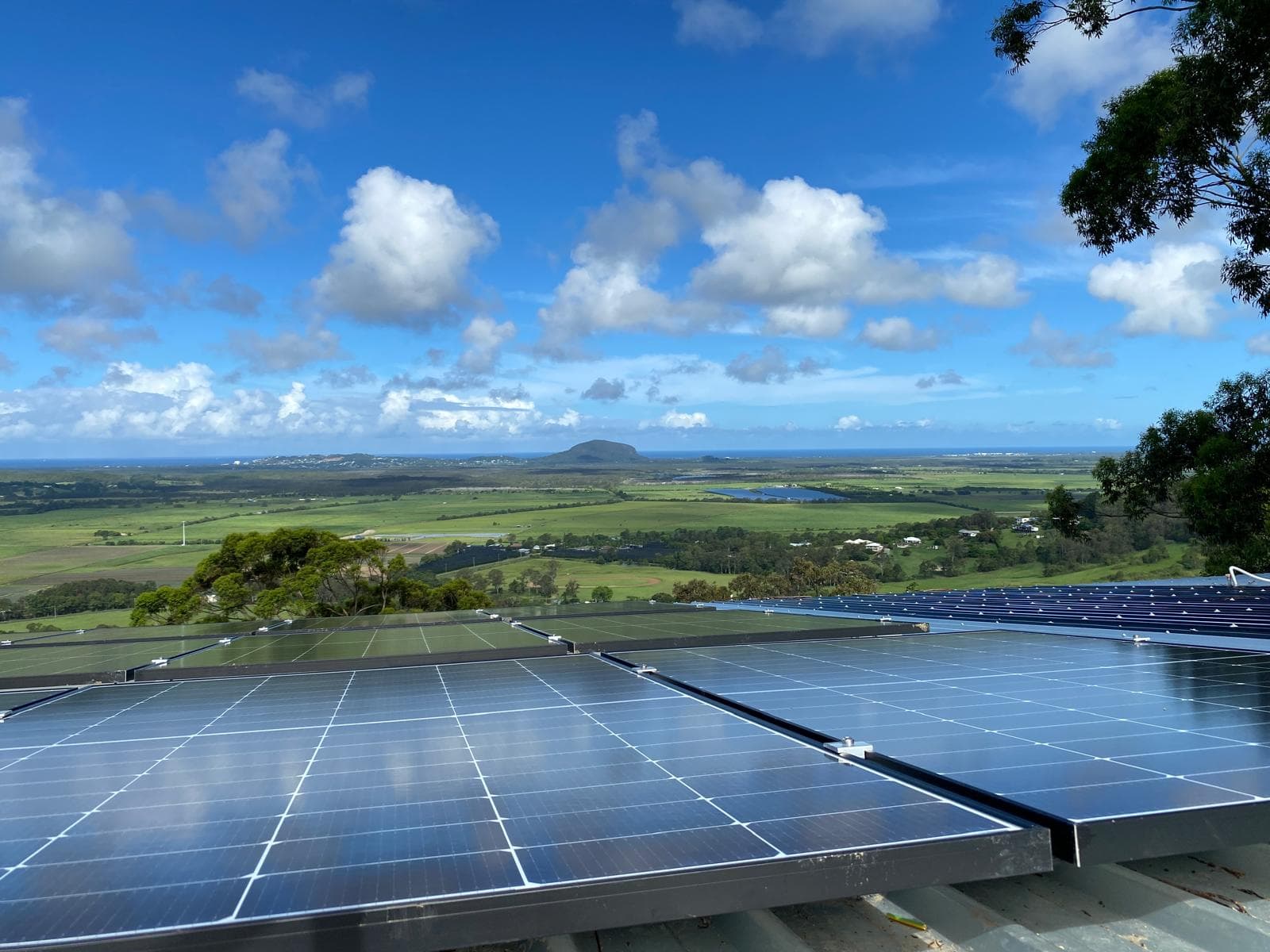

On a sticky Sunshine Coast afternoon in January, the air conditioner is the biggest thing running in most homes. The good news is that the hottest, most humid hours line up neatly with the hours your panels are producing the most. The bad news is that the house is often still warm at 8pm, when the panels have gone to sleep and you're buying power at peak rates.
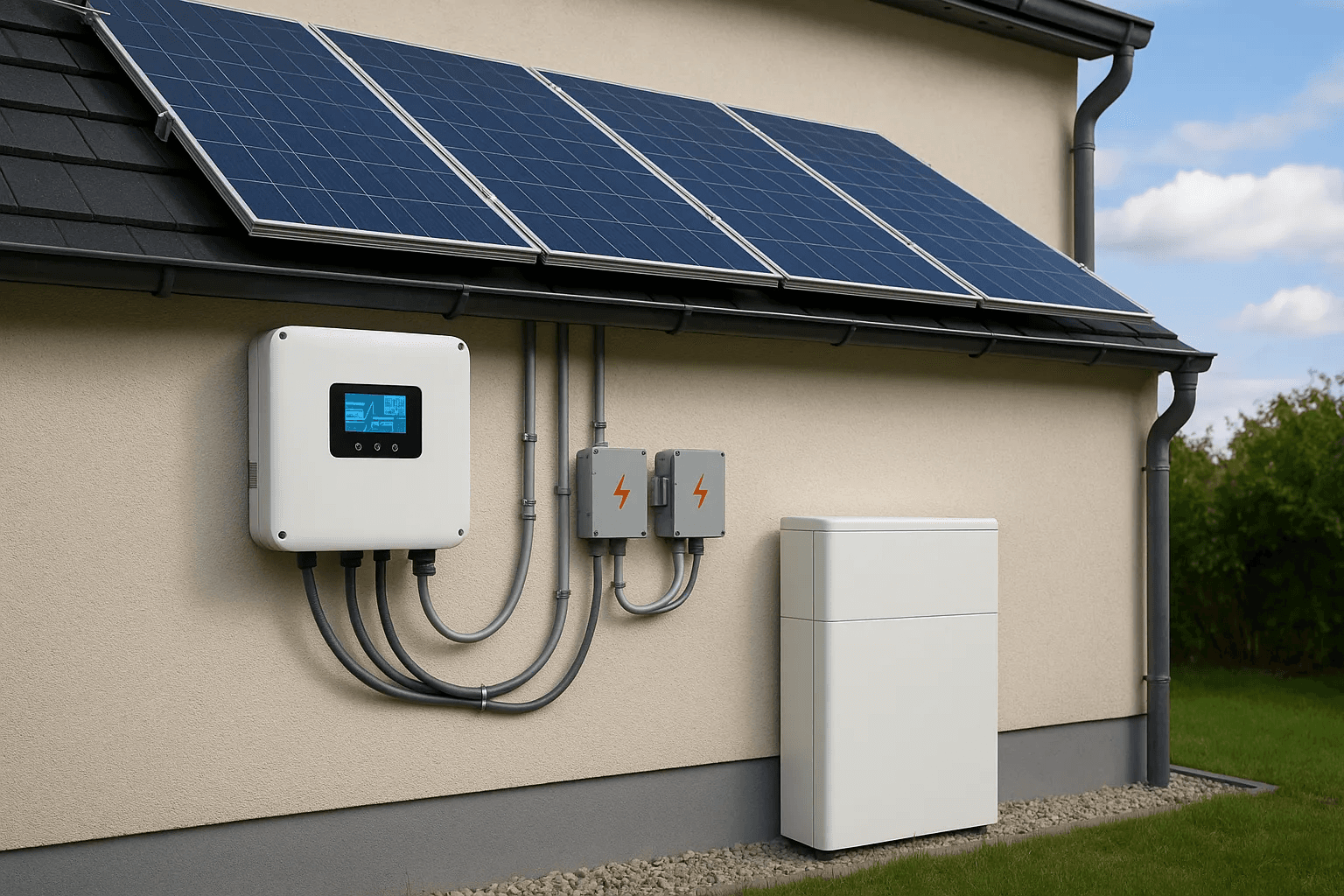
Yes, you can run an air conditioner on solar power. During the day, a grid-connected solar system supplies your house first, so a reasonably sized system can carry an inverter split system, or a good share of a ducted system, while the sun is up, with the grid topping up any shortfall. After sunset, solar alone can't help: you need a battery or you're on grid power. Getting the most out of solar for air conditioning comes down to sizing the system with simple kW and kWh arithmetic, and pre-cooling the house in the afternoon instead of fighting the heat at night.
Can you run an air conditioner on solar power?
There's no special "solar air conditioner" needed. A normal grid-connected solar system feeds whatever's running in the house. When the panels are producing more than the house is using, the surplus goes to the grid. When the house is using more than the panels produce, the grid fills the gap automatically.
So the real questions are:
- How much of the air conditioner's running does your solar cover? That depends on system size, the time of day and the weather.
- What happens after sunset? Without a battery, the evening aircon runs on grid power.
- What happens in a blackout? A standard grid-connected solar system shuts down when the grid does. It's a safety requirement. Only a battery set up for backup keeps anything running.
The two numbers that matter: kW and kWh
Every air conditioning and solar conversation gets easier once these two are clear.
- kW (kilowatts) is power: how hard something is drawing right now. Think of it as speed.
- kWh (kilowatt-hours) is energy: power multiplied by time. Think of it as distance travelled.
An air conditioner has a rated input power, shown on its energy rating label or in the manual. That's not what it draws every minute. Inverter air conditioners ramp the compressor up hard to pull the room down to temperature, then throttle back to hold it. So the average draw over an afternoon is usually below the rated input, by how much depends on the unit, the room, insulation and the weather.
Your solar system works the same way. A 6.6 kW system can produce up to around its inverter rating at the best moment of a clear day, but its daily energy is what matters for most decisions. Our guide to how many solar panels you need uses a planning figure of about 4 kWh per kW of panels per day, averaged across the year. Summer days beat it; short winter days don't reach it.
How many solar panels do you need to run an air conditioner?
Here's the method. The numbers below are an illustration of the arithmetic, not the draw of any particular unit. Use the figures from your own unit's label.
Step 1: Find the rated cooling input in kW. Say the label on your split system shows 2 kW.
Step 2: Estimate how many hours it runs, and how hard. Say it runs from midday to 6pm, six hours, and averages about half its rated input once the room is down to temperature. That's an average of 1 kW.
Step 3: Work out the energy. 1 kW × 6 hours = 6 kWh for the afternoon.
Step 4: Turn that into panels. At the planning figure of 4 kWh per kW per day, 6 kWh is about 1.5 kW of panels' worth of daily output. At 440 W per panel, that's roughly four panels dedicated to the air conditioner.
Step 5: Check the instant power, too. Energy covers the day, but the air conditioner draws power in real time. If the panels are producing 3 kW at 1pm and the house (aircon included) is drawing 2 kW, you're fully covered and exporting the rest. When a cloud rolls over and production drops below what the house is drawing, the grid fills the gap for those minutes.
And remember the aircon isn't the only thing running. The fridge, pool pump, hot water and everything else share the same solar. That's why we size systems from your whole bill and interval data, not one appliance.
| What you're running | How solar handles it |
|---|---|
| One split system in the afternoon | Comfortably covered on a sunny day by a typical modern family-sized system |
| Several split systems or ducted in the afternoon | Partly to mostly covered, depending on system size and weather |
| Aircon on an overcast day | Panels still produce in cloud, at reduced output; expect more grid top-up |
| Aircon after sunset | Not covered by solar; battery or grid |
| Aircon overnight | Needs a large battery, or it's on grid power |
Pre-cooling: the cheapest trick on the Sunshine Coast
The single most useful habit for anyone running aircon with solar is pre-cooling. Instead of switching on when you walk in at 5:30pm, run the air conditioner through the early to mid afternoon while the panels are producing, so the house is already cool when the sun drops.
How to do it well:
- Start early afternoon. Let the unit pull the house down while solar is strongest.
- Close the blinds on the western side before the afternoon sun hits them.
- Set a sensible temperature rather than the lowest setting. Inverter units are most efficient holding a steady temperature.
- Use a timer or the app so it starts before you get home.
- Keep doors shut to the rooms you're cooling.
This matters even more on a time-of-use plan. Energex's network time-of-use tariffs treat 4pm to 9pm as the peak period and 11am to 4pm as off-peak (Energex). Retail plans vary, but a lot of SEQ plans follow that shape. Cooling the house with your own solar before 4pm, then coasting through the peak, can make a real difference. If your plan is the new Solar Sharer Offer, with free power from 11am to 2pm in South East Queensland, that's another reason to shift cooling into the middle of the day. Our guide to tariffs 11, 31 and 33 covers how those plans work with solar.
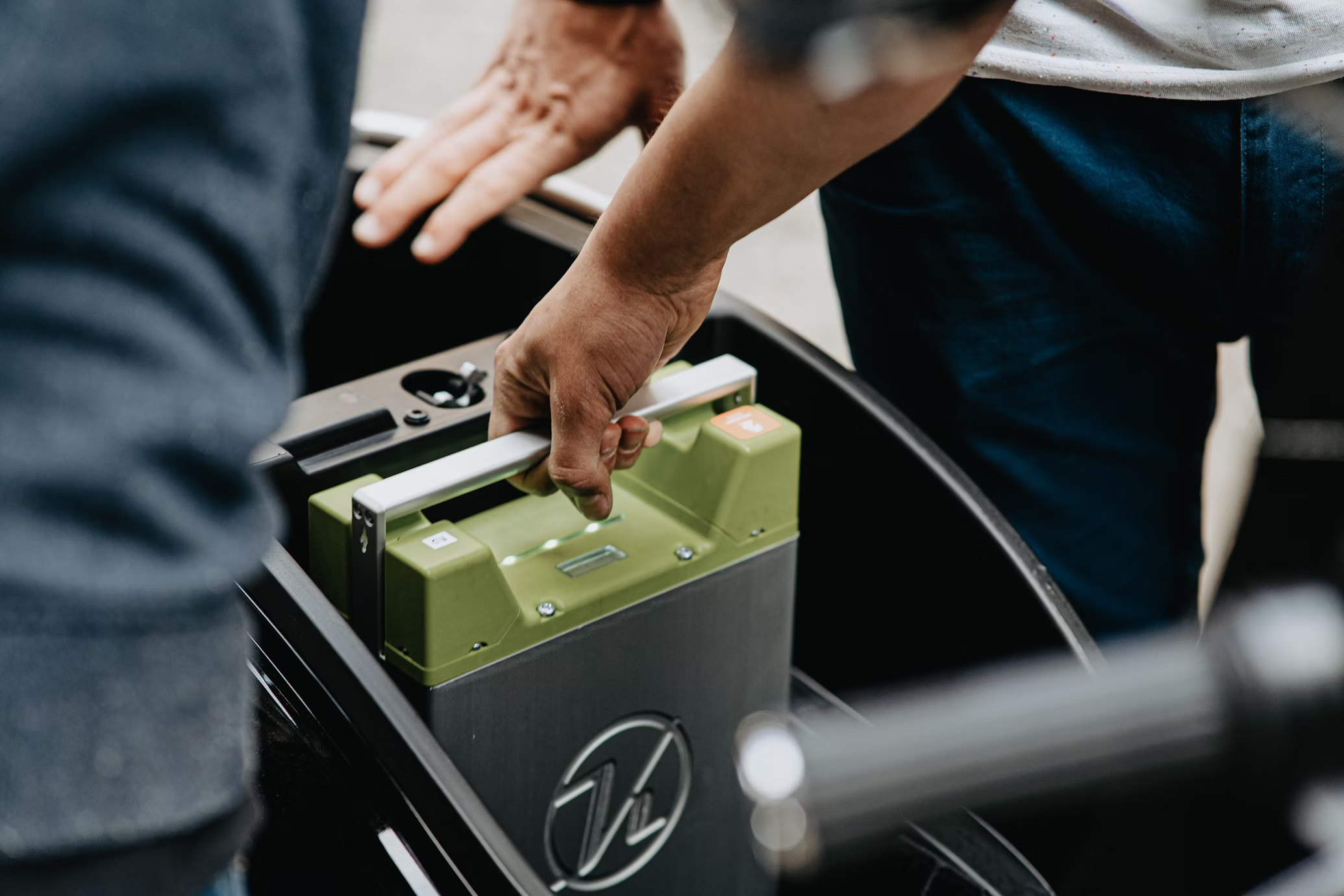
Can a solar battery run air conditioning?
Yes, within two limits that people often mix up.
Limit 1: power (kW). The battery inverter has a maximum continuous output, and air conditioner compressors need a short surge to start. If the inverter can't supply both the aircon and everything else running at once, something won't start or the system trips. For a single split system this is rarely a problem on a modern hybrid. For ducted or several units at once, it's an inverter sizing question.
Limit 2: energy (kWh). Runtime is usable capacity divided by average load. Using illustrative loads:
| Average evening load (house plus aircon) | 10 kWh usable lasts about | 15 kWh usable lasts about |
|---|---|---|
| 1 kW | 10 hours | 15 hours |
| 2 kW (one aircon zone running) | 5 hours | 7.5 hours |
| 3 kW (ducted or several heavy loads) | Around 3.3 hours | 5 hours |
If you keep a backup reserve for blackouts, take that off first. So a battery can comfortably carry air conditioning through the evening peak, which is exactly when grid power is most expensive. Running ducted aircon all night on a 10 kWh battery is a different story. It will usually empty well before morning, and then you're on grid power. Our guide to how long a 10kWh battery lasts goes deeper on that arithmetic.
The practical approach most Sunshine Coast households land on: pre-cool on solar, let the battery carry the house and a zone or two through the 4pm to 9pm peak, and accept grid power for anything heavy overnight.
Can a Tesla Powerwall run an air conditioner?
Generally, yes. Tesla's Australian Powerwall page (October 2026) lists 13.5 kWh of energy, up to 10 kW of continuous power depending on local conditions, and a 185 A motor start rating (Tesla Australia). That's enough power headroom to start and run a typical split system alongside normal household loads, and its 13.5 kWh fits the runtime table above.
The same caveats apply to every battery brand:
- Runtime is still kWh ÷ kW. A Powerwall running ducted aircon all evening drains like any other 13.5 kWh battery.
- Backup depends on wiring. In a blackout, the aircon only runs if its circuit is on the backed-up side and the design allows for it.
- Three-phase homes need a three-phase plan. If your ducted unit is three-phase, check that the backup design actually covers it.
We install Powerwall on request, and also fit Deye, Sigenergy, Sungrow and others. The right answer depends on your loads, not the badge.
Running aircon in a blackout
Storm season on the Sunshine Coast tends to arrive with the heat. If keeping cool during an outage matters, say so at the quote stage, because it changes the design:
- Essential-circuits backup usually covers the fridge, lights, internet and some power points. Air conditioning is often left off so the battery lasts.
- Whole-home backup can include aircon, but needs a larger inverter and often more battery, and the battery drains much faster with it running.
Our guide to solar battery backup in a power outage explains how to choose.
Should you put aircon on an economy tariff?
Energex says you can connect an air conditioner to an economy (controlled load) tariff, but warns that during high demand, usually in summer, supply to it may be interrupted, typically sometime between 5pm and 8pm. Its advice is that if you rely heavily on air conditioning, an economy tariff may not suit you (Energex). With solar and pre-cooling, most households are better off keeping the aircon on the main tariff and running it while the sun's up.
Sizing solar for air conditioning on the Sunshine Coast
If you're getting a new system or upgrading, tell your installer:
- What you've got: split or ducted, how many units, single or three-phase.
- When you run it: afternoons only, evenings, or overnight in the bedrooms.
- Your bills: ideally twelve months, so summer shows up.
- Whether blackout cooling matters.
From that, the answer is usually one of three designs: a bigger array to cover afternoon cooling, a battery to carry the evening peak, or both. Our residential solar page shows the systems we install, and we'll do the arithmetic on your actual usage rather than a rule of thumb.
Frequently asked questions
Can you run an air conditioner on solar power?
Yes. During the day, a grid-connected solar system powers whatever's running in the house first, including air conditioning, and the grid tops up any shortfall. After sunset you need a battery or grid power. Pre-cooling the house in the afternoon makes the most of your solar.
Can a Tesla Powerwall run an air conditioner?
Generally, yes. Tesla's Australian page lists the Powerwall at 13.5 kWh, up to 10 kW continuous depending on local conditions, with a 185 A motor start rating. How long it runs aircon depends on the load: divide usable kWh by the average kW being drawn. In a blackout, the aircon must be on a backed-up circuit.
How many solar panels do I need to run an air conditioner?
Work it out from energy. Multiply the unit's average draw in kW by the hours it runs to get kWh, then divide by about 4 kWh per kW of panels per day. For example, 1 kW average for six hours is 6 kWh, roughly 1.5 kW of panels or about four 440 W panels, on top of the rest of the house.
Can a solar battery run air conditioning overnight?
It can run it for part of the night. Runtime is usable capacity divided by average load, so 10 kWh at 2 kW lasts about five hours. A battery is best used to carry the house and some cooling through the 4pm to 9pm peak, not to run ducted air conditioning until morning.
Is it cheaper to run the aircon during the day with solar?
Usually, yes. Power from your own panels costs you only the small feed-in credit you'd otherwise earn for exporting it, while grid power at peak costs several times more. Running the aircon in the early afternoon to pre-cool the house shifts cooling onto your solar and away from the evening peak.