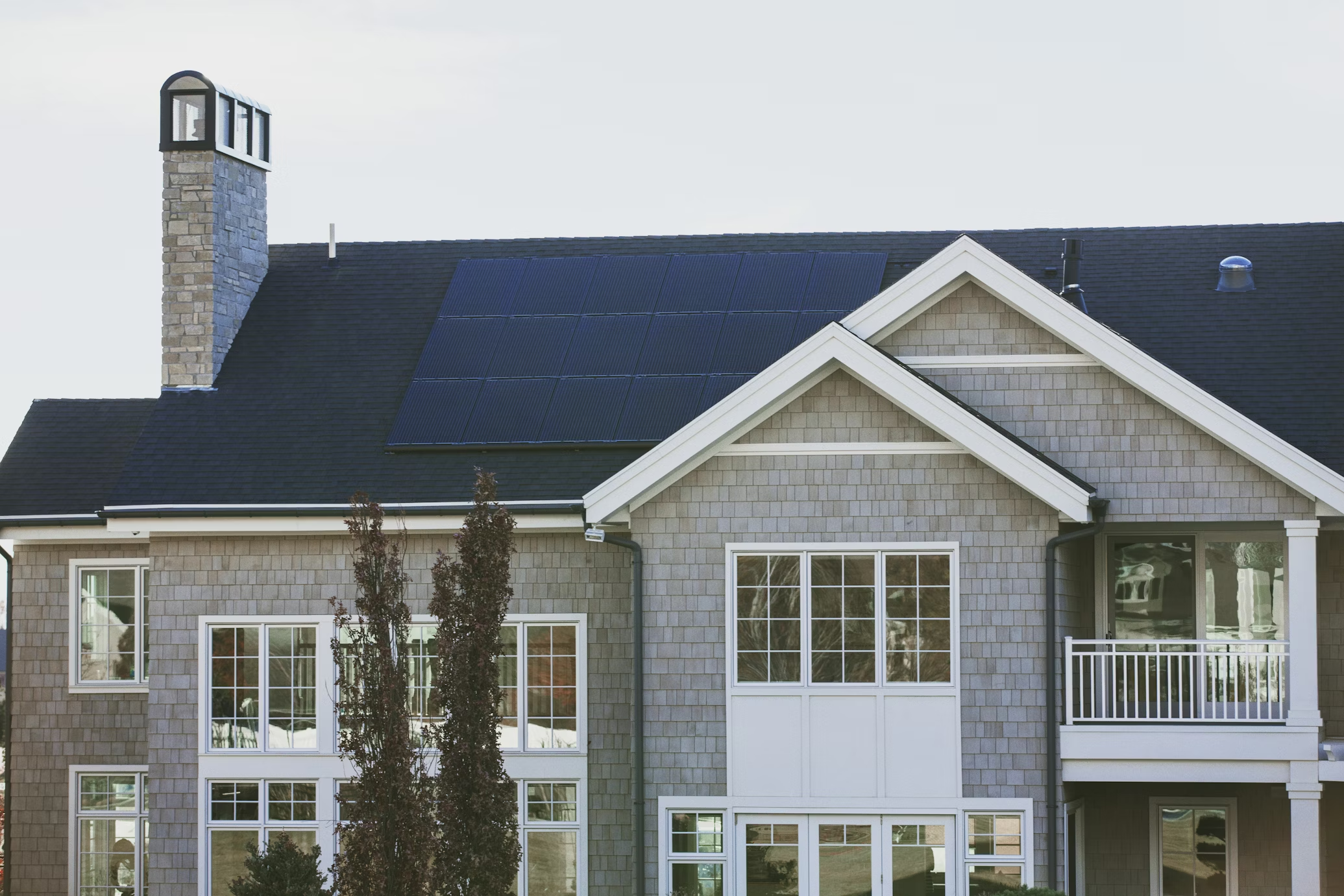

A 13 kW quote usually lands in people's inboxes after they've asked for a battery, an EV charger or a pool, and the installer has come back with "you'll want more panels". Sometimes that's right. Sometimes it's an upsell. Here's how to tell, and how to judge the price without anyone needing to guess at a number.
How much does a 13kW solar system cost?
We don't publish a fixed 13 kW price, because at that size the phase supply, inverter and roof layout swing the cost too much to quote fairly without seeing the house. As a reference, a 10 kW system on the Sunshine Coast costs $8,000 to $11,000 installed with the STC discount already deducted (as at August 2026). A 13 kW system costs more than that in total, but usually less per watt, because the fixed parts of the job are spread across more panels. The federal STC discount also grows with system size. For an actual figure on your roof, we quote 13 kW systems individually after a site visit or a good set of photos.
Last updated: 26 October 2026. Reference prices are Sunshine Coast installed bands as at August 2026.
Why the cost per watt falls as systems get bigger
Look at the two bands we do publish:
| System size | Installed price (STC deducted) | Rough cost per watt |
|---|---|---|
| 6.6 kW | $5,000 to $7,000 (around $6,000 typical) | about 90 cents a watt at $6,000 |
| 10 kW | $8,000 to $11,000 | about 80 cents to $1.10 a watt |
The per-watt arithmetic is simple: $6,000 ÷ 6,600 W ≈ $0.91, and $8,000 ÷ 10,000 W = $0.80 up to $11,000 ÷ 10,000 W = $1.10.
The reason the per-watt cost tends to fall is that a solar job has two kinds of cost:
| Cost that scales with size | Cost that's largely fixed per job |
|---|---|
| Panels | Getting the crew and safety gear on site and on the roof |
| Rails, clamps and roof fixings | Switchboard work to connect the system |
| Extra DC cabling and labour per panel | The Energex network application |
| A step up in inverter size | Commissioning, monitoring setup and handover |
Going from 10 kW to 13 kW adds more of the left column but very little of the right. That's why a bigger system usually costs less per watt.
What can push a 13 kW system the other way
Per-watt savings aren't guaranteed. At 13 kW these are what bite:
- Phase supply and inverter. A bigger array may need a larger single-phase inverter, a three-phase inverter, or a hybrid if a battery is in the plan. That's the biggest single swing.
- Roof layout. Thirty-odd panels often don't fit on one good face. A second face, a second storey or tilt frames add labour.
- Switchboard. Older boards often need an upgrade before they can take a bigger system safely.
- Export limits. If the network caps your export, part of what you're paying for may be clipped on sunny middays unless the house or a battery uses it.
The full list of what moves a solar price is in our guide to solar panel cost on the Sunshine Coast.
Why 13.2 kW is such a common size
If you've seen "13.2 kW" on quotes, it isn't random. It's the bigger sibling of the 6.6 kW system.
Clean Energy Council design guidelines say an inverter's AC output can't be less than 75% of the array's peak power. Flip that around and an inverter can carry up to about a third more panel than its own rating. A 5 kW inverter carries up to about 6.6 kW of panels. A 10 kW inverter carries up to about 13.3 kW of panels, and 13.2 kW is what thirty 440 W panels add up to (30 × 440 = 13,200 W).
So a 13.2 kW quote is usually a 10 kW inverter with as much panel as the guidelines allow. The extra panel keeps the inverter working closer to full output for more of the day, especially in mornings, late afternoons and winter, and on the few perfect hours it's capped.
How many panels in a 13kW system?
Panel count is system size divided by panel wattage. As an illustration only, with 440 W panels:
- 13 kW: 13,000 ÷ 440 ≈ 29.5, so about 30 panels
- 13.2 kW: 13,200 ÷ 440 = exactly 30 panels
Your actual count depends on the panel model quoted. That's roughly double a 6.6 kW system, so roof space is often the first thing that decides whether 13 kW is even possible. Our guide to how many solar panels you need shows the full method from your power bill.
How much does a 13kW solar system produce per day?
Our planning figure for the Sunshine Coast is about 52 kWh a day for a 13 kW system, averaged across the year, which works out to roughly 4 kWh per kW of panels per day. Summer days will beat that, short winter days won't reach it, and a north-facing unshaded roof will do better than an east-west split.
For context, that's more than most family homes use in a day. Which is the point of the next section.
Is 13kW solar too big?
For a lot of homes, yes. For some, it's exactly right. It comes down to whether the house, a battery or an EV can use what it makes.
A typical Sunshine Coast home self-consumes only 30 to 50% of its solar. The rest is exported at roughly 3 to 12 cents a kWh, while grid power costs roughly 25 to 35 cents at peak. Adding panels without adding a way to use them just grows the share you sell cheaply.
13 kW tends to make sense when you have:
- A battery of 10 to 15 kWh or more. A battery can only store surplus, and a bigger array keeps it full through winter.
- An EV. Charging from midday sun is the cheapest kilowatt-hours you'll buy.
- Ducted air conditioning or a pool. Both run hard when the sun is highest.
- People home during the day. Retirees, home offices and home businesses use far more solar directly.
- Three-phase power. A big array is a far simpler design on three-phase.
It's probably too big if:
- You're out all day, with no battery and no plans for one
- Your roof only has room for 30 panels by using shaded or poor faces
- You're on single-phase with a tight export limit and no battery
- You're selling within a couple of years
We compare the common big sizes in more detail in 10kW vs 15kW solar systems.
13 kW on single-phase vs three-phase
This is where 13 kW conversations are won or lost.
On single-phase, a 13 kW array is often designed onto a 10 kW inverter, as above. Whether that's approved, and how much of it can be exported, depends on your connection type and what Energex allows at your address. Energex's basic connections have a fixed per-phase export limit, and its dynamic connections allow more export with an internet-connected inverter. The limit for your house is confirmed when your installer submits the network application, before the install. If anyone promises full export from a big single-phase system before they've applied, ask for it in writing.
On three-phase, 13 kW is a much more straightforward design. Generation spreads across all three phases, export headroom is larger, and a three-phase hybrid can back up all three phases if a battery joins later.
If you're not sure what supply you have, our explainer on single-phase vs three-phase solar shows how to tell from your switchboard, without removing any covers, and sets out Energex's published limits.
In regional areas outside the Energex network, Ergon applies its own rules, and we confirm them at application.
Adding a battery to a 13 kW system
A 13 kW array is often the right partner for a bigger battery. Using the same planning figure, a 13 kW system averages about 52 kWh a day, which leaves plenty of surplus after daytime use to fill a 10 to 15 kWh battery even through winter. Most Sunshine Coast homes need 8 to 16 kWh of storage based on their 4pm to 7am use.
If a battery is coming within a few years, a hybrid inverter now can save replacing the inverter later. The federal battery rebate is about $252 per usable kWh for the first 14 kWh since 1 May 2026, and steps down every six months.
How to get an accurate 13 kW price
A phone estimate can't see your switchboard, your roof faces or your phase supply, and on a 13 kW system those are the bits that matter most. Our process:
- Send a recent power bill, ideally with interval data, so we can see when you use power.
- We check your supply and switchboard, single or three-phase, and whether the board needs work.
- We lay out the roof around vents, skylights and shading to see what really fits.
- You get a written quote with model numbers, the STC discount itemised, and what the network is expected to allow.
Our residential solar page sets out how the assessment works. When you're ready, request a free quote and we'll tell you whether 13 kW is the right size for your house, or whether 10 kW would serve you better.
Frequently asked questions
How much is a 13kW solar system?
We quote 13 kW systems individually, because phase supply, inverter choice and roof layout swing the price at that size. As a reference, a 10 kW system costs $8,000 to $11,000 installed on the Sunshine Coast with the STC discount deducted (as at August 2026). A 13 kW system costs more in total but usually less per watt, since the fixed costs of the job are spread across more panels.
How many panels are in a 13kW system?
Divide the system size by the panel wattage. With 440 W panels, a 13 kW system is about 30 panels (13,000 ÷ 440 ≈ 29.5), and a 13.2 kW system is exactly 30. The actual count depends on the panel model on your quote.
How much power does a 13kW solar system produce per day?
Around 52 kWh a day averaged across the year on the Sunshine Coast, using our planning figure of about 4 kWh per kW of panels per day. Summer days produce more and winter days less, and orientation and shading change the result for your roof.
Is 13kW solar too big?
It's too big if you're out all day with no battery, because most of the extra output gets exported for a few cents. It makes sense with a battery, an EV, ducted air or a pool, people home during the day, or three-phase power.
Can I put a 13kW solar system on single-phase?
Often, yes, typically as about 13 kW of panels on a 10 kW inverter, which Clean Energy Council guidelines allow. How much you can export depends on your Energex connection type and is confirmed in the network application. Three-phase homes have an easier time with systems this size.
Why is 13.2kW a common system size?
Because the guidelines let an inverter carry up to about a third more panel than its rating. A 10 kW inverter can take up to about 13.3 kW of panels, and thirty 440 W panels make 13.2 kW. It's the same logic that makes 6.6 kW the standard size on a 5 kW inverter.