
Deye and Sigenergy are two of the batteries we install most, and they come up side by side on quotes all the time. They're both good. They're also aimed at quite different buyers, and the right one for you depends far more on what you care about than on any spec sheet. Here's how we explain the choice on site.
Deye vs Sigenergy: which is better?
Neither is better across the board. Deye is our default for most Sunshine Coast homes because it delivers the most usable storage and backup capability per dollar. Sigenergy is the premium choice: an all-in-one stack with the inverter, battery modules and optional EV charging in one tidy cabinet, and it costs more per kWh. If value and capacity matter most, Deye usually wins. If you want the cleanest install, a single integrated system and an EV charging path, Sigenergy is worth the extra.
Both use LiFePO4 cells, both carry 10-year warranties to 70 per cent capacity, both stack in modules so you can add storage later, and both handle single and three-phase homes.
Deye vs Sigenergy at a glance
Deye figures below come from our Deye battery review. Sigenergy figures come from Sigenergy's published Australian datasheets and warranty documents. Specs and warranty terms change between product revisions, so check the current datasheet for the exact model on your quote.
| Deye (high-voltage modular) | Sigenergy SigenStor | |
|---|---|---|
| Chemistry | LiFePO4 | LiFePO4 |
| Module size | 5.12 kWh | 5 kWh or 8 kWh modules (5.2 / 7.8 kWh usable) |
| Stack size | 1 to 6 modules, 5.12 to 30.72 kWh | 1 to 6 modules per controller, up to about 48 kWh total with 8 kWh modules |
| Inverter | Separate matched Deye hybrid (DC-coupled) | Built into the stack (Sigen Energy Controller) |
| Inverter sizes | Single and three-phase hybrids | 5 to 12 kW single-phase, 5 to 30 kW three-phase |
| Backup switchover | Under 20 milliseconds | Datasheet quotes 0 ms disruption time |
| Battery enclosure rating | IP65 | IP66 |
| Battery warranty | 10 years, 70% capacity retention | 10 years, 70% of usable energy or a minimum throughput |
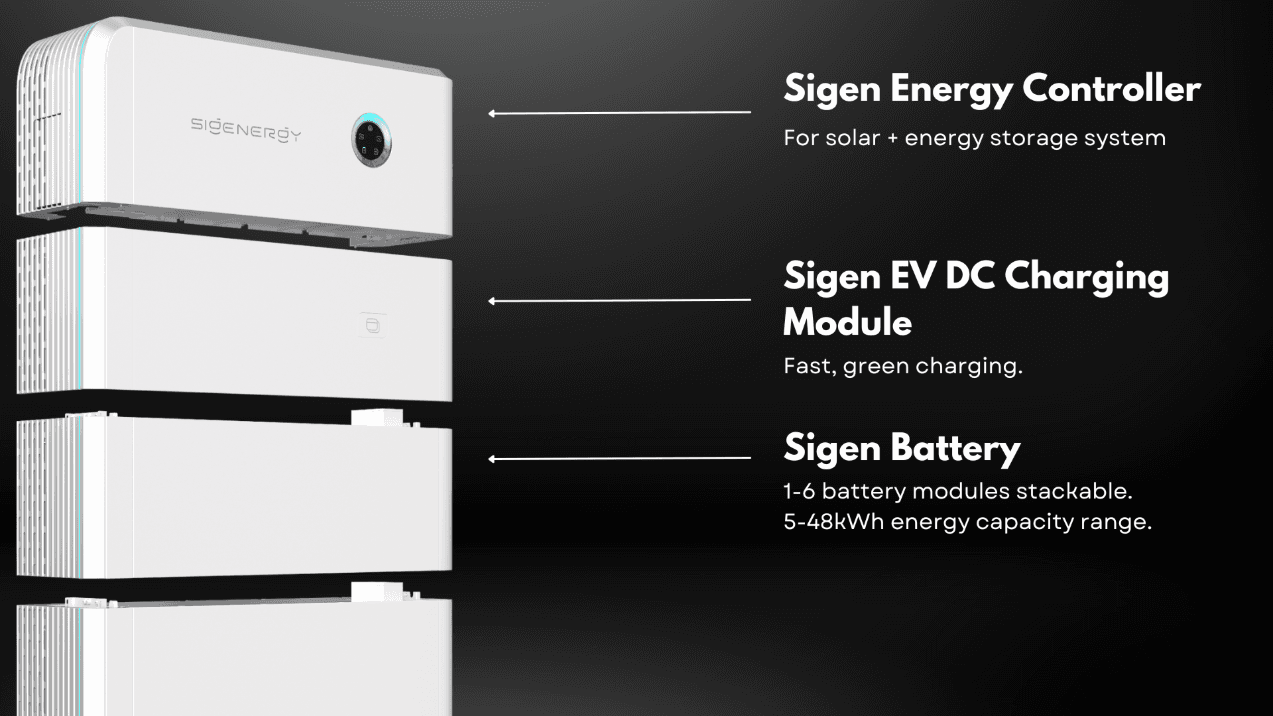
| EV charging | Separate charger | Optional Sigen EV DC charging module in the stack |
| Our positioning | Best value per kWh, strong backup | Premium, tidiest install, EV-ready |
Where Deye wins
Price per kWh. This is the big one. In our experience, Deye lands roughly 20 to 30 per cent cheaper per stored kilowatt-hour than the big-brand alternatives. On a 10 to 15 kWh system that's real money.
Capacity and backup grunt for the dollar. With a matched Deye hybrid, you can build a large stack with serious backup output without paying a premium badge price. For homes with a pool, ducted air conditioning or a three-phase supply, that matters.
Flexibility. Because the inverter and battery are separate, we can size each one to the job. Need a bigger inverter for backup but only a modest battery? Easy.
Track record with us. Deye is our default recommendation for most Sunshine Coast homes. We've installed a lot of them, and we know how they behave in Queensland heat and storms.
Where Deye loses
- Brand recognition. Most of your neighbours won't have heard of it.
- VPP access. Virtual Power Plant approved-device lists are narrower than the market, and Deye's coverage is thinner than some competitors'.
- Looks. A Deye stack is chunkier and more utilitarian than a Sigenergy cabinet.
- Installer-dependent. Deye rewards a careful commissioning job and punishes a lazy one. Settings, firmware and comms all need to be right.
Where Sigenergy wins
One integrated system. The SigenStor stack combines the hybrid inverter (Sigenergy calls it the Energy Controller), the battery modules and, optionally, an EV DC charging module in a single cabinet. One brand, one app, one warranty conversation.
The tidiest install. If the battery is going on a visible wall of a new build, or you just like things neat, Sigenergy is the best-looking system we fit.
Bigger stacks. With 8 kWh modules and up to six per controller, a single SigenStor can go up to around 48 kWh of total capacity. Most homes don't need anywhere near that, but it's there.
EV charging path. If an EV is in your plans, building it into the same system is a genuine advantage.
Sigenergy's warranty is clearly published. Sigenergy's factory warranty covers the battery for ten years, with a performance guarantee written around 70 per cent of usable energy over ten years or a minimum energy throughput for each module size.
Where Sigenergy loses
- Price. It's the premium end of our range and costs more per kWh than Deye.
- Locked to one ecosystem. The battery modules work with Sigenergy's own controllers and hybrids. That's simpler, but it's less flexible if you want to mix and match.
For a deeper look at the SigenStor on its own, see our Sigenergy battery review.
Sungrow vs Sigenergy
Sungrow is the other name that often lands on the same shortlist.
- Sungrow batteries (the SBR series, roughly 9.6 to 25.6 kWh) are modular, well priced and backed by a mature Australian support network. They're excellent value, especially paired with a Sungrow hybrid inverter on a new system. Sungrow also appears on nearly all VPP approved-device lists.
- Sigenergy costs more but gives you the all-in-one stack, larger maximum capacity, and the integrated EV charging option.
Which is better, Sungrow or Sigenergy? If you want strong value from a well-established brand, and VPP access matters, Sungrow. If you want the most integrated, premium system and plan to add EV charging, Sigenergy.
Sigenergy vs Tesla Powerwall
The Tesla Powerwall is the battery most people have heard of.
- Tesla Powerwall: 13.5 kWh per unit, 11 kW continuous output in Australia, inverter built in, a polished app and strong whole-home backup on a single unit. It's the most recognised name and appears on nearly all VPP lists. The trade-offs: it costs more per kWh than most alternatives, and capacity is fixed per unit, so expanding means adding another whole Powerwall.
- Sigenergy: modular, so you can buy closer to the capacity you actually need and add 5 or 8 kWh modules later. Inverter built in, EV charging available in the same stack.
Are Sigenergy batteries better than Tesla? For flexibility and right-sizing, Sigenergy has the edge because it's modular. For brand recognition, app polish and VPP coverage, Tesla. Both are premium-priced. We install either happily.
Who should buy which?
This is the table that actually matters.
| If you are... | We'd usually point you to... | Why |
|---|---|---|
| Wanting the most storage and backup per dollar | Deye | Best value per kWh, strong backup with a matched hybrid |
| On a three-phase home with a pool or ducted air | Deye (or Sigenergy if budget allows) | Both do three-phase properly; Deye costs less |
| Building new and want the tidiest possible install | Sigenergy | All-in-one cabinet, looks the part |
| Buying an EV in the next few years | Sigenergy | EV DC charging can sit in the same stack |
| Set on joining a specific VPP | Tesla or Sungrow (check the list) | Widest VPP approved-device coverage |
| Wanting a name the neighbours recognise | Tesla Powerwall | Brand comfort is worth something |
| Wanting solid value from an established brand | Sungrow | Well-priced, mature local support |
| Only needing a small battery on a tight budget | Ask about a low-voltage option | Entry-level systems step in smaller, cheaper increments |
What is the best home battery in Australia?
There isn't one, and anyone who tells you otherwise is selling a brand. The best home battery is the one that:
- Is sized to your evening and overnight use, which for most Sunshine Coast homes is 8 to 16 kWh.
- Matches your supply, single or three-phase, and backs up the circuits you actually need.
- Fits your plans, like an EV, pool or VPP.
- Is installed and commissioned properly by someone who'll still answer the phone in year seven.
That last point matters more than the brand. The same battery can be a great system or a headache depending on who sets it up.
Before you sign, check these
- The exact model numbers on the quote, and that they're on the current Clean Energy Council approved list
- The current warranty document for that model, including the capacity and throughput terms
- Which circuits are backed up, and on which phase
- The federal battery rebate amount, itemised on the quote
- Whether labour is covered under the warranty, or just the parts
Frequently asked questions
Which is better, Sungrow or Sigenergy?
It depends on what you value. Sungrow offers strong value, a mature Australian support network and wide VPP compatibility. Sigenergy is the premium choice, with an all-in-one stack, larger maximum capacity and an integrated EV charging option. Budget and VPP buyers tend to suit Sungrow; buyers wanting the tidiest integrated system tend to suit Sigenergy.
Are Sigenergy batteries better than Tesla?
Not better outright, but more flexible. Sigenergy is modular, so you can buy closer to the capacity you need and add more later, and EV charging can be built into the same stack. Tesla's Powerwall is a fixed 13.5 kWh per unit with a more recognised brand, a polished app and wider VPP coverage. Both cost more per kWh than Deye.
What is the best home battery in Australia?
There's no single best. For most Sunshine Coast homes we recommend Deye on value; Sigenergy for a premium integrated system or EV plans; Tesla for brand recognition and VPP coverage; and Sungrow for well-priced, well-supported storage. The right battery is sized to your overnight use, matched to your supply, and installed properly.
Is Deye or Sigenergy cheaper?
Deye. It's the better-value option per kWh in our range, and Sigenergy sits at the premium end. The gap is biggest on larger systems. If you'd like actual numbers for your home, the battery installation team will quote both side by side.
Can I add more modules later to Deye or Sigenergy?
Yes, both are modular. Deye stacks 5.12 kWh modules up to six per stack; Sigenergy stacks 5 or 8 kWh modules up to six per controller. Adding modules works best when the new ones match the old. If you know you'll want more capacity within twelve to eighteen months, it's usually better to buy it upfront, because manufacturers revise products and mismatched generations aren't ideal.