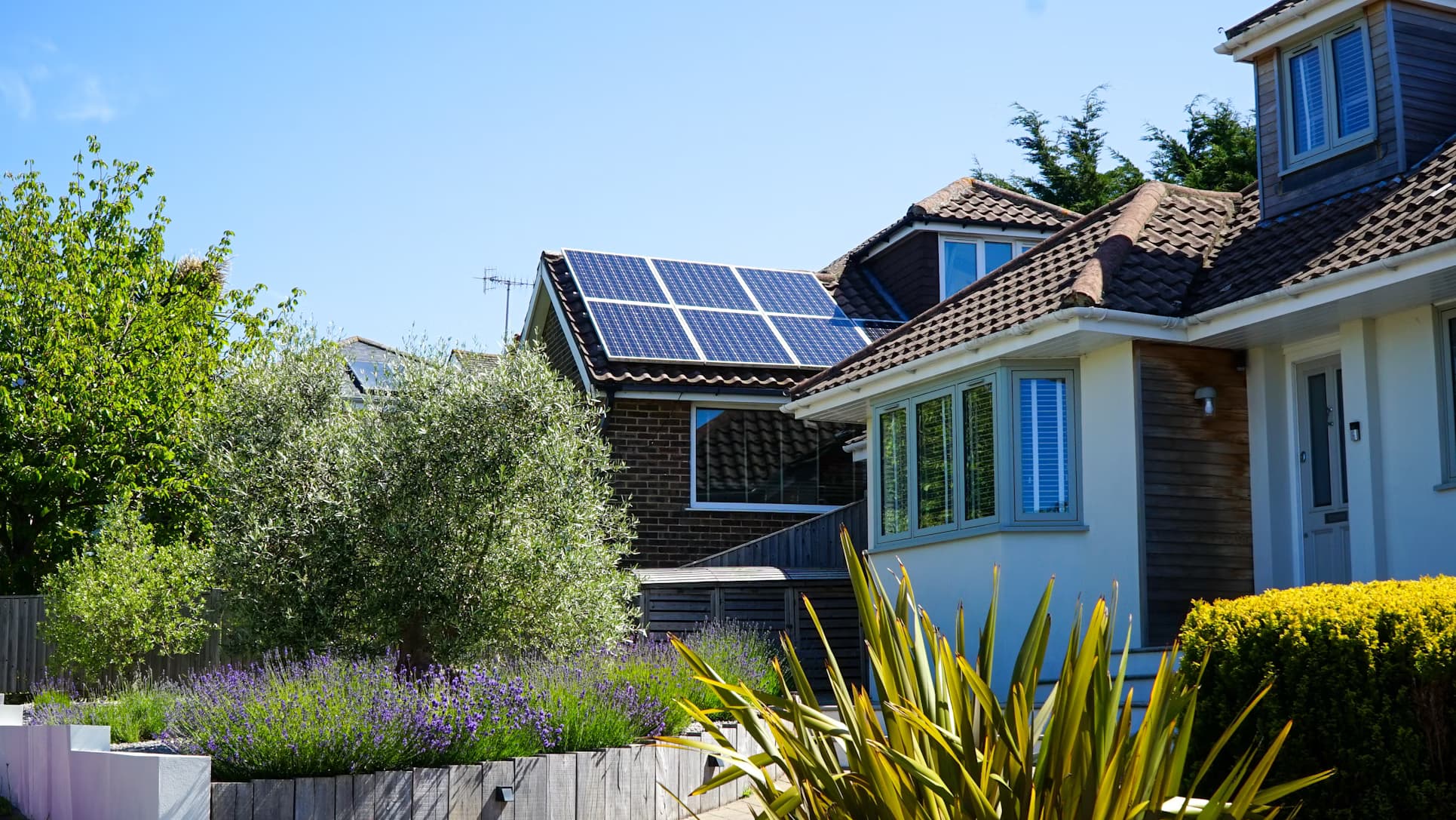

"Can you put panels on my roof?" is usually the first question, and the answer is nearly always yes. The more useful question is how, because the way panels are fixed to a roof decides whether that roof is still watertight in fifteen years.
Sunshine Coast roofs are a real mix: Colorbond and Zincalume, concrete and terracotta tiles, concealed-fix Klip-Lok, and low-pitch skillions on modern renovations and patios. Each one gets mounted differently, and each has its own way of going wrong.
Short answer: solar panels can go on tile, metal and flat roofs, and none is a deal-breaker. Metal roofs (Colorbond, Zincalume, Klip-Lok) are usually the simplest and quickest, using brackets screwed through the crest of the sheet or clamps that grip the ribs. Tile roofs take longer because tiles have to be lifted, hooks fitted to the rafters and tiles ground to sit flat again, and brittle tiles can crack. Flat or low-pitch roofs often need tilt frames, which have to be engineered for wind. Near the beach, the fixings and hardware matter as much as the roof material.
Solar panels on a metal roof
Metal is the friendliest roof to work on. The rail system attaches to the roof in one of two ways, depending on the profile.
Corrugated and trapezoidal sheet (Custom Orb, Trimdek and similar)
On pierce-fixed profiles, brackets are screwed through the crest of the sheet (the high point, not the valley) into the battens or purlins below, with sealing washers. The water runs through the valleys, so a properly placed crest fixing stays dry.
BlueScope, which makes Colorbond and Zincalume steel, publishes a good-practice guide for solar on its roofing. The key points are worth knowing even if you never get on a ladder (BlueScope TB-36):
- Keep incompatible metals off the roof. Stainless steel, copper, brass and lead shouldn't touch Colorbond or Zincalume, or be electrically connected to it. That includes conductive washers and gaskets.
- Use neutral-cure sealant anywhere sealant touches the roof, not acetic acid-based silicone.
- Avoid the valleys for fixings or cable holes, and keep brackets away from the side laps where sheets overlap.
- Keep cables off the roof surface, fixed to the rails instead, so dirt and salt don't build up underneath them.
- Leave a gap. BlueScope suggests clearance of commonly more than about 75 mm above the top of the rib, so debris clears, air moves and the roof underneath can be cleaned.
- Replace corroded roofing screws that will end up under the panels, because nobody will get to them later.
- Clean up swarf daily. Metal filings from drilling rust on the surface and stain the roof.
Klip-Lok and other concealed-fix roofs
Klip-Lok is a concealed-fix profile: the sheets clip onto brackets underneath, with no screws through the top. Drilling through it to mount solar defeats the point of the design. The usual approach is a clamp made for that specific profile, which grips the ribs without penetrating the sheet. Mounting manufacturers make clamps for particular Klip-Lok profiles, such as S-5's clamp for Klip-Lok 700 (S-5).
If you have a concealed-fix roof, ask the installer what attachment they're using and whether it's rated for that exact profile. "We'll just screw through it" is the wrong answer.
Coastal Colorbond: what changes near the beach
Salt air doesn't make a metal roof a bad candidate for solar, but it raises the stakes on the details.
- The roof under the panels is now an "unwashed" area. BlueScope notes that the steel under the panels is shielded from rain, so salt and dirt can sit there, which speeds up corrosion. It recommends washing unwashed areas with fresh water at least every three months in coastal or industrial areas.
- Fixings and rails need to suit a marine environment, and the rules on dissimilar metals matter more when salt and humidity are involved.
- Earthing has to be right. BlueScope points out that stray currents into metal roof sheets can speed up corrosion, and refers to the Australian solar array standard, AS/NZS 5033.
We cover the salt side in detail in our guide to solar panels near the beach and salt corrosion.
Solar panels on a tile roof
Tile roofs take more care and more time, but they're perfectly good for solar. Mounting on tiles works like this:
- Tiles are lifted where each hook will go.
- A tile hook is screwed to the rafter or batten underneath.
- The hook comes out between the tiles, and the tile above is usually ground on its underside so it sits flat over the hook.
- Tiles go back down and the rails attach to the hooks.
Done properly, the tiles shed water exactly as before and the hooks carry the load into the roof frame, not onto the tiles.
Concrete vs terracotta tiles
| Concrete tiles | Terracotta tiles | |
|---|---|---|
| What they are | Moulded concrete with a surface coating | Fired clay, sometimes glazed |
| How they age | Coating wears and tiles get more fragile with age | Can become brittle, especially old or glazed tiles |
| During the install | Neat grinding over each hook so the tile sits flat | Careful handling and footing; expect the odd crack on an old roof |
| Finding replacements | Easier for current profiles, harder for old ones | Can be hard for older or discontinued profiles |
| What to do first | Ask about spares and replacement tiles | Ask about spares and replacement tiles |
Whatever the tile, the installer should walk only where the tiles are supported, and on older roofs should check the condition of the pointing and bedding at the same time. Cracked bedding on the ridge is a separate roofing issue, but it's better to know about it before the panels go on.
Broken tiles during a solar install
It happens, even on careful jobs, because old tiles crack under a light load. What matters is how it's handled.
- Before the job: ask your installer how they handle cracked tiles, and whether you have any spares in the garage or under the house. Matching an old tile profile can be harder than people expect.
- During the job: a good installer replaces any tile they crack before leaving, not on a later visit.
- Afterwards: if you get a leak in the first few rains, call the installer straight away.
That last one is what the workmanship warranty is for. The federal government's solar guide gives "a leaky roof caused by cracked tiles" as its example of what a workmanship warranty covers (energy.gov.au). Ours runs for 10 years, and we don't use subcontractors, so the person who fixes it is from the same team that installed it.
Solar on a flat roof and tilt frames
Low-pitch skillion roofs are common on modern Sunshine Coast renovations, carports and patios. Panels can be mounted flush on a low pitch, but there are good reasons to tilt them:
- Self-cleaning. A panel lying almost flat doesn't shed water, so dirt, leaves and salt film sit on it. A bit of tilt lets rain do the cleaning.
- Orientation. Tilt frames can angle panels toward the sun when the roof itself doesn't face a useful direction.
- Output. A better angle generally means more energy over the year, though on a north-ish low pitch the gain may not justify the frames.
The trade-off is wind. A tilted panel acts like a sail, catching wind underneath that a flush-mounted panel never sees. On the Sunshine Coast, with summer storms and an exposed coastline, that's the main design issue. Tilt frames should be:
- Engineered and certified for the site's wind conditions under the Australian wind loading standard (AS/NZS 1170.2), taking into account the building height, terrain and how exposed the site is.
- Fixed into structure, not just the roof sheet, with the fixing pattern the engineering calls for.
- Kept back from roof edges and corners where the engineering requires it, because wind loads are higher there.
Tilt frames also add parts and labour, which is why our solar panel cost guide lists them as one of the things that push a quote up.
Tile vs metal vs flat roof at a glance
| Metal (pierce-fixed) | Metal (Klip-Lok) | Tile | Flat / low pitch | |
|---|---|---|---|---|
| Attachment | Brackets through the crest | Profile-specific rib clamps | Hooks to rafters, under tiles | Tilt frames or low-profile rails |
| Install time | Quickest | Quick | Slower | Depends on frames |
| Main risk | Wrong fixings, dissimilar metals, valley penetrations | Using the wrong clamp, or drilling through | Cracked tiles, poor grinding over hooks | Wind loads, debris build-up |
| Coastal issue | Unwashed areas, fixings | Unwashed areas, clamp material | Hooks and rails | Salt film on low-tilt panels |
How roof type affects how many panels fit
Roof type matters less than roof shape. A hip roof in tiles and a hip roof in Colorbond have the same awkward triangles. What changes the layout is:
- Setbacks from edges, ridges and valleys.
- Obstructions such as vents, skylights, whirlybirds and air-con units.
- Tile roofs sometimes lose a little flexibility, because hooks have to land on rafters, which are at fixed spacing.
Our guide to how many solar panels you need works through sizing from your usage, and the roof then decides whether it fits.
What to ask on your quote
- What attachment will you use for my roof profile, and is it rated for it?
- What are the rails, clamps and fixings made of, and are they suitable for a coastal site?
- On a metal roof: how do you avoid dissimilar metals, valley penetrations and side laps?
- On a tile roof: how do you handle cracked tiles, and do you replace them on the day?
- If tilt frames are proposed: are they engineered for my site's wind conditions, and can I see the certification?
- How are cables run and supported?
- What does your workmanship warranty cover if the roof leaks?
If you'd like us to look at your roof and give you a straight answer on how we'd mount it, our residential solar installations page explains what we fit and how the process works.
Frequently asked questions
Can you put solar panels on a tile roof?
Yes. Tiles are lifted, hooks are fixed to the rafters underneath, tiles are ground to sit flat over the hooks and then replaced, and the panel rails attach to the hooks. It takes longer than a metal roof, and old or terracotta tiles can crack, so ask how the installer handles broken tiles before the job starts.
Is a metal roof better for solar panels?
It's usually quicker and simpler to install on, with less risk of breakage, but a tile roof works just as well once the panels are on. On metal, the details that matter are correct fixings in the crest, no incompatible metals in contact with the roof, neutral-cure sealants, and a clamp made for the profile if it's Klip-Lok.
Can solar panels go on a Klip-Lok roof?
Yes, using clamps designed for the specific Klip-Lok profile that grip the ribs without drilling through the sheet. Klip-Lok is a concealed-fix roof, so screwing through it is the wrong approach. Ask your installer which clamp they're using and confirm it's rated for your roof.
Do I need tilt frames on a flat roof?
Not always. A slight tilt helps panels shed dirt and water and can improve output, but tilt frames catch more wind, so they must be engineered for your site's wind conditions and fixed into the structure. On a low-pitch roof that already faces roughly north, flush mounting can be the better choice.
Who fixes tiles broken during a solar installation?
The installer. Breakage during installation, and any leak it causes, falls under the installer's workmanship warranty. The federal government's solar guide uses a leaky roof from cracked tiles as its example of workmanship warranty cover. A good installer replaces cracked tiles before leaving the job.