
"Which brand of panel should I get?" is the first question almost everyone asks us, and it's the one I'm least interested in answering with a brand name. Not because brands don't matter, but because the honest answer is that several manufacturers make excellent panels, and the difference between them is usually smaller than the difference between a good installation and a bad one.
What I can do is explain what actually separates a good panel from a mediocre one, so you can read a quote and know what you're looking at.
The best solar panels for an Australian home are monocrystalline panels, today usually N-type (most commonly TOPCon), from a manufacturer that is on the Clean Energy Council's approved modules list, has an Australian office handling warranty claims, and offers a long product warranty as well as the standard 25-year performance warranty. Beyond that, choose on fit: the panel's size and output for your roof, its heat performance for Queensland summers, and its corrosion rating if you're near the water. "Tier 1" on its own tells you about a manufacturer's finances, not the panel's quality.
Which brand of solar panels is the best in Australia?
There's no single winner, and anyone who tells you otherwise probably sells that brand exclusively. Across the market there are a handful of large manufacturers making very similar products on very similar production lines, and their flagship residential panels sit close together on the spec sheet.
For the record, the panel we install most is Jinko. We choose it because it ticks the boxes below and has local support, not because it's the only good option. If you've been quoted another major brand by a reputable installer, that's not a reason to worry.
Here's what we'd actually judge a panel brand on:
| What to check | Why it matters | Where to find it |
|---|---|---|
| On the CEC approved modules list | Required for the STC rebate, and a baseline for safety and testing | Clean Energy Council approved products list |
| Australian office or distributor | Someone local has to process your warranty claim in year twelve | Ask the installer; check the manufacturer's Australian website |
| Product warranty length | Covers defects; the government calls it the most important panel warranty | Panel datasheet and warranty document |
| Performance warranty | Guarantees minimum output over time | Panel datasheet |
| Temperature coefficient | How much output drops as the panel heats up | Panel datasheet |
| Salt-mist rating | Matters within a kilometre or so of the ocean | Datasheet certifications (look for IEC 61701) |
| Physical size and output | Determines how many panels, and how much kW, fit your roof | Panel datasheet |
The Australian government's own guide gives almost the same advice: check the approved list, check the warranty, and look for manufacturers with technical support in Australia (energy.gov.au).
What are the different types of solar panels?
For Australian homes there are really three families, and only one of them matters for most roofs.
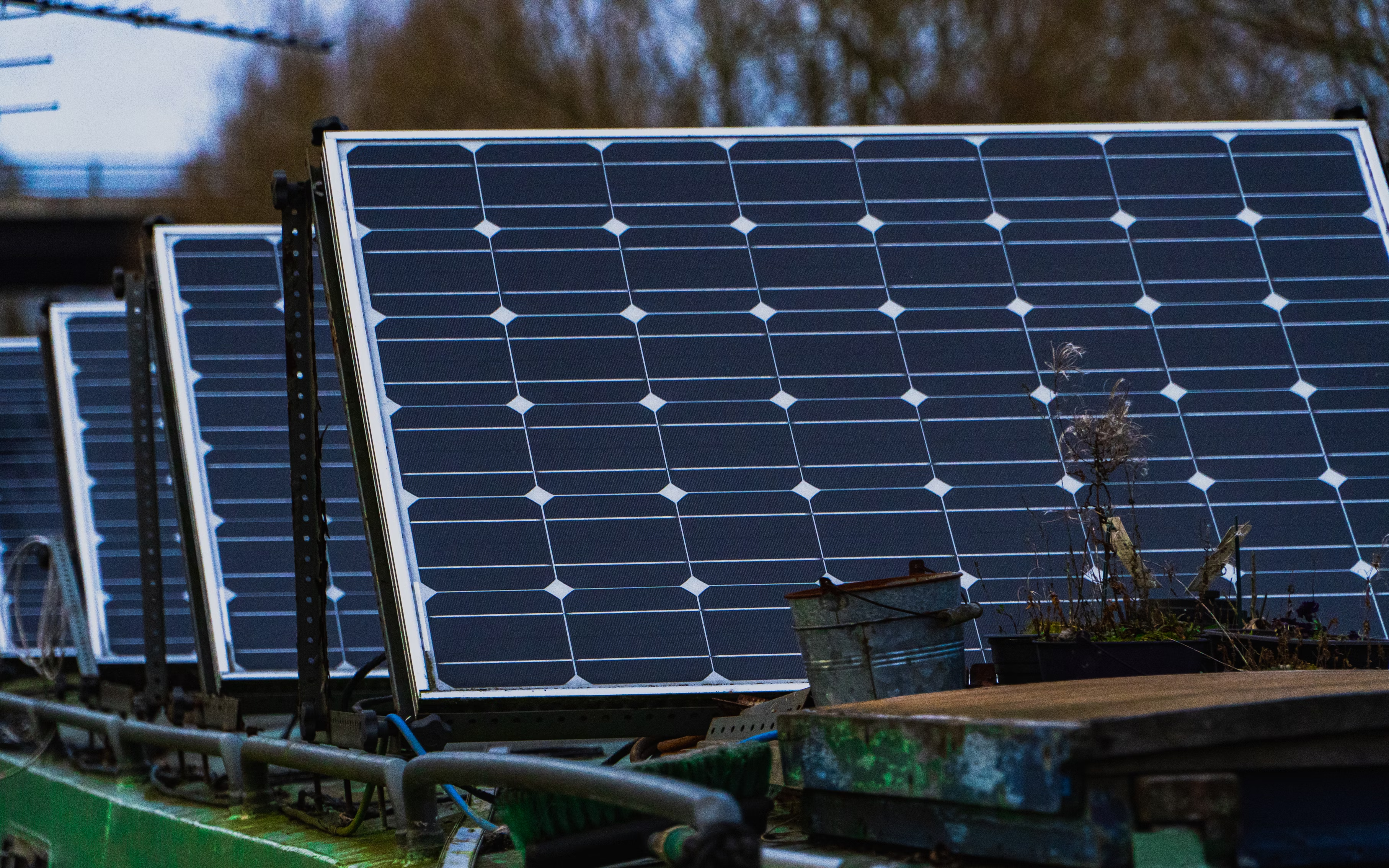
Monocrystalline. Cells are cut from a single silicon crystal. They're more efficient, which means more output from the same roof area, and they now dominate the residential market.
Polycrystalline. Cells are made from many silicon crystals melted together. They used to be the cheaper option and were common on systems from the 2010s. The federal YourHome guide notes they've been largely phased out of residential use because of lower efficiency and lifespan (YourHome).
Thin film. Made by depositing a very thin layer of material on a backing. Rarely used on Australian homes; you'll mostly see it on portable kits, campervans and some building-integrated products (YourHome).
So when people ask about types of solar panels in 2026, the real question is which kind of monocrystalline panel. That's where PERC, N-type and TOPCon come in.
What's the difference between monocrystalline and polycrystalline panels?
| Monocrystalline | Polycrystalline | |
|---|---|---|
| Cell structure | Single silicon crystal | Many crystals fused together |
| Appearance | Uniform black | Bluish, speckled look |
| Efficiency | Higher | Lower |
| Output per square metre of roof | More | Less |
| Availability today | Standard for residential | Largely phased out of residential |
| Where you'll still see it | Every new quote | Older systems, often from the early 2010s |
If you have an older poly system on the roof and it's still producing, there's no reason to rip it off just because the technology has moved on. If you're buying new, you'll be quoted monocrystalline, and that's correct.
PERC, N-type and TOPCon, in plain English
This is where quotes start to read like alphabet soup. Here's what the terms mean without the marketing.
PERC
PERC stands for passivated emitter and rear cell. It adds a layer to the back of the cell that bounces some unabsorbed light back through the silicon for a second chance at being converted. For most of the last decade, PERC monocrystalline was the mainstream rooftop panel in Australia. A lot of good systems are running on it right now.
P-type versus N-type
Silicon cells are "doped" with small amounts of another element to make them work. Traditional cells were P-type (boron doped). N-type cells use a different dopant (typically phosphorus). In practical terms, N-type cells are generally less prone to some of the early-life degradation that affected P-type cells and tend to cope a little better with heat. That's why the industry has moved toward N-type for premium and, increasingly, mainstream panels.
TOPCon
TOPCon (tunnel oxide passivated contact) is the most common way of building an N-type cell right now. It adds an ultra-thin oxide layer and a contact layer at the rear of the cell to reduce energy losses. Jinko's Tiger Neo range, for example, is an N-type TOPCon panel (JinkoSolar). You'll also see heterojunction (HJT) panels, another N-type approach, from some manufacturers.
So should you insist on N-type?
If two quotes are otherwise equal, an N-type panel from a reputable manufacturer is the better buy. But don't throw out a well-designed quote from a good installer just because it uses a quality PERC panel. The gap between them is real but modest, and it's much smaller than the gap between a properly designed system and a badly designed one.
Are bifacial panels worth it on a house?
Bifacial panels can collect light from both the front and the back. That's very useful on ground mounts and raised frames over reflective surfaces. On a typical pitched roof, the back of the panel sits a few centimetres above dark roofing in its own shadow, so there's little extra light to collect. YourHome makes the same point: bifacial panels are less effective on typical rooftop installs where the rear is shaded (YourHome).
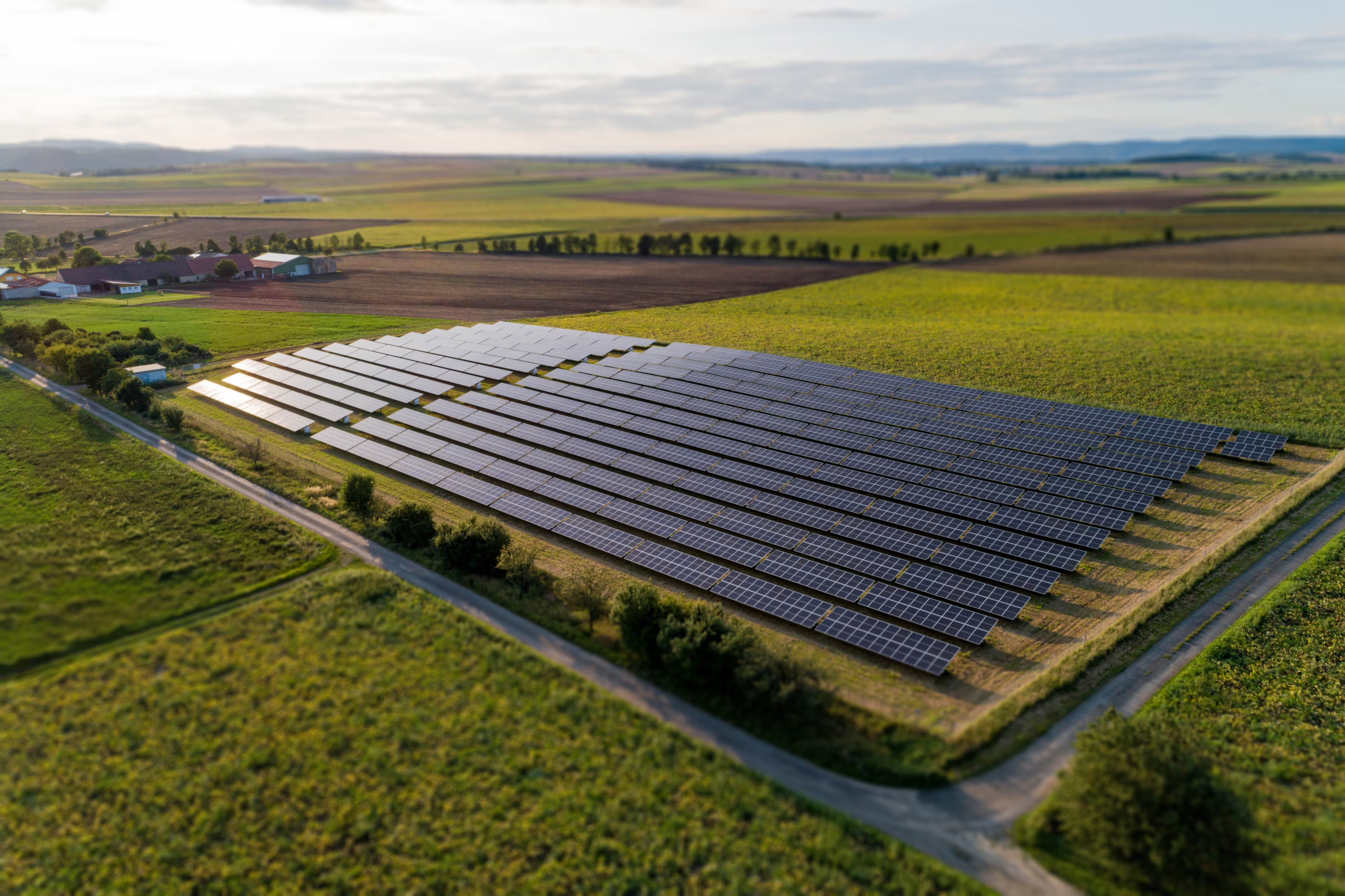
Where bifacial panels can make sense for our customers is on ground-mounted arrays on rural blocks or tilted frames on flat commercial roofs. On a standard Sunshine Coast house, don't pay extra for it.
How efficient are solar panels?
Efficiency is the percentage of the sunlight hitting a panel that it turns into electricity. According to the federal YourHome guide, market-leading panels are currently around 24% efficient (YourHome).
Two things people often get wrong about efficiency:
- Higher efficiency doesn't mean a 6.6 kW system makes more power. A 6.6 kW system of lower-efficiency panels and a 6.6 kW system of higher-efficiency panels have the same rated output. The efficient one just takes up less roof. Efficiency matters most when roof space is the constraint.
- The number on the datasheet is under test conditions. Real output depends on heat, orientation, shading, dirt and the weather, which is why the government guide lists all of those as factors in actual generation (energy.gov.au).
Heat matters more in Queensland than efficiency does
Solar cells lose efficiency as they get hotter, and on a dark roof in a Queensland summer they get very hot. Every datasheet lists a temperature coefficient: the percentage of output lost per degree above the test temperature. The closer to zero, the better the panel holds up on a 35-degree day. YourHome notes that more expensive panels typically have lower efficiency loss at high temperatures (YourHome). If you're comparing two panels for a Sunshine Coast roof, the temperature coefficient is worth more of your attention than the headline efficiency figure. We go deeper in our guide to solar panel efficiency on a hot Queensland roof.
What does "Tier 1 solar panels" actually mean?
This is the most misunderstood phrase in Australian solar sales, so let's be precise.
"Tier 1" usually refers to BloombergNEF's Tier 1 PV module makers list. It's a financial bankability list: it identifies manufacturers whose panels have been used in large solar projects that banks have financed on a non-recourse basis. It says nothing directly about how good a particular panel is. BloombergNEF itself states that buyers and banks should not use the list as a measure of quality, and should consult technical due diligence firms instead (BloombergNEF methodology).
The federal government's guide puts it the same way: tier systems are based on things like financial status, scale and automation, and "do not measure the quality of the solar panels themselves" (energy.gov.au).
So what is Tier 1 good for? It's a reasonable signal that the manufacturer is large, established and more likely to still exist when you need to make a warranty claim. That's genuinely useful for a 25-year product. Our own residential range uses Tier 1 panels for exactly that reason. But "Tier 1 panels" on a quote with no model number tells you almost nothing. Ask which panel, then look up that model.
Warranties: the part of the datasheet that matters most
Panels come with two separate warranties, and the difference is important.
Product warranty covers defects in the panel itself. The government guide says many panels carry a 10 to 15 year product warranty, some manufacturers now offer 25 years or more, and that this is the most important panel warranty to consider (energy.gov.au).
Performance warranty guarantees the panel will still produce a minimum percentage of its rated output after a set number of years. Almost all panels carry a 25-year performance warranty. A standard example is at least 90% of rated output up to 10 years and 80% up to 25 years (energy.gov.au). Premium panels can guarantee more, and some current N-type panels carry 30-year linear performance warranties (one Jinko Tiger Neo datasheet, for example, lists a 30-year linear power warranty) (JinkoSolar). Terms vary by model and market, so check the Australian datasheet for the exact panel on your quote.
A warranty is only as good as the company behind it, which brings us back to Australian support. We cover how panels age, and what those warranty percentages mean in practice, in our guide to how long solar panels last.
Panels for Sunshine Coast conditions
A few local factors are worth weighing when you choose.
- Salt air. Within about a kilometre of the water, salt film and corrosion are real. The glass copes fine; the frames, clamps and rails take the punishment. Look for panels with salt-mist certification and make sure the mounting hardware is rated for a marine environment.
- Heat. Covered above. Temperature coefficient matters on our roofs.
- Storms. Hail and flying debris crack panels. Most panel warranties don't cover hail, so check your home insurance covers the system (energy.gov.au). Our guide to solar panel hail damage covers claims and repairs.
- Roof size and shape. Hip roofs and small planes reward a panel size that fits neatly. The best panel is sometimes the one that lets you fit two more on the north face.
Does the panel brand change the price much?
Less than people expect. The panels are only one part of a system price, alongside the inverter, mounting, labour, switchboard work and the STC discount. On the Sunshine Coast a 6.6 kW system typically lands between $5,000 and $7,000 installed with the STC rebate applied, and a 10 kW system between $8,000 and $11,000 (as at August 2026). Our full breakdown of solar panel cost on the Sunshine Coast explains what moves a job from one end of that range to the other.
Our honest recommendation
Pick the installer first, then the panel. A reputable installer will specify a monocrystalline panel, very likely N-type, from an established manufacturer with Australian support, sized for your roof and your usage. Ask for the datasheet, check the product warranty and temperature coefficient, and make sure it's on the approved list.
If you want us to look at your roof and tell you what we'd fit and why, see how our residential solar installations work, or request a free quote and we'll give you a straight read on any others you've received.
Frequently asked questions
Which brand of solar panels is the best in Australia?
There isn't one best brand. Several large manufacturers make very similar high-quality monocrystalline panels. Choose a brand that's on the Clean Energy Council approved list, has an Australian office handling warranty claims, and offers a long product warranty. We mostly install Jinko for those reasons, but other major brands from a good installer are equally sound choices.
What's the difference between monocrystalline and polycrystalline panels?
Monocrystalline cells are cut from a single silicon crystal, so they're more efficient and produce more power per square metre. Polycrystalline cells are made from many crystals fused together and are less efficient. Polycrystalline has been largely phased out of the residential market, so new home systems in Australia use monocrystalline.
Are N-type solar panels better?
Generally, yes. N-type cells (most commonly TOPCon) tend to suffer less early-life degradation and handle heat slightly better than older P-type PERC cells. The difference is modest, though. A well-designed system with good PERC panels will still serve you well.
Is Tier 1 a quality rating?
No. Tier 1 is BloombergNEF's list of manufacturers whose panels have been used in bank-financed large projects. It's a measure of financial bankability, and BloombergNEF says it shouldn't be used as a quality measure. It's a useful sign that a manufacturer is established, but check the specific panel model too.
How efficient are solar panels today?
Market-leading panels are currently around 24% efficient, according to the federal YourHome guide. Higher efficiency means more output from the same roof area, which matters most when space is tight. On hot Queensland roofs, the temperature coefficient is just as important.