
A common call we get goes something like this: "Our solar is about twelve years old and the neighbour said we'll need to replace the whole lot soon. Is that right?" Almost always, the answer is no. What usually needs replacing is a much smaller, cheaper part of the system.
Solar panels are the most reliable part of a rooftop system. They have no moving parts, and they age slowly rather than failing suddenly. The parts that wear out are the electronics and connectors around them.
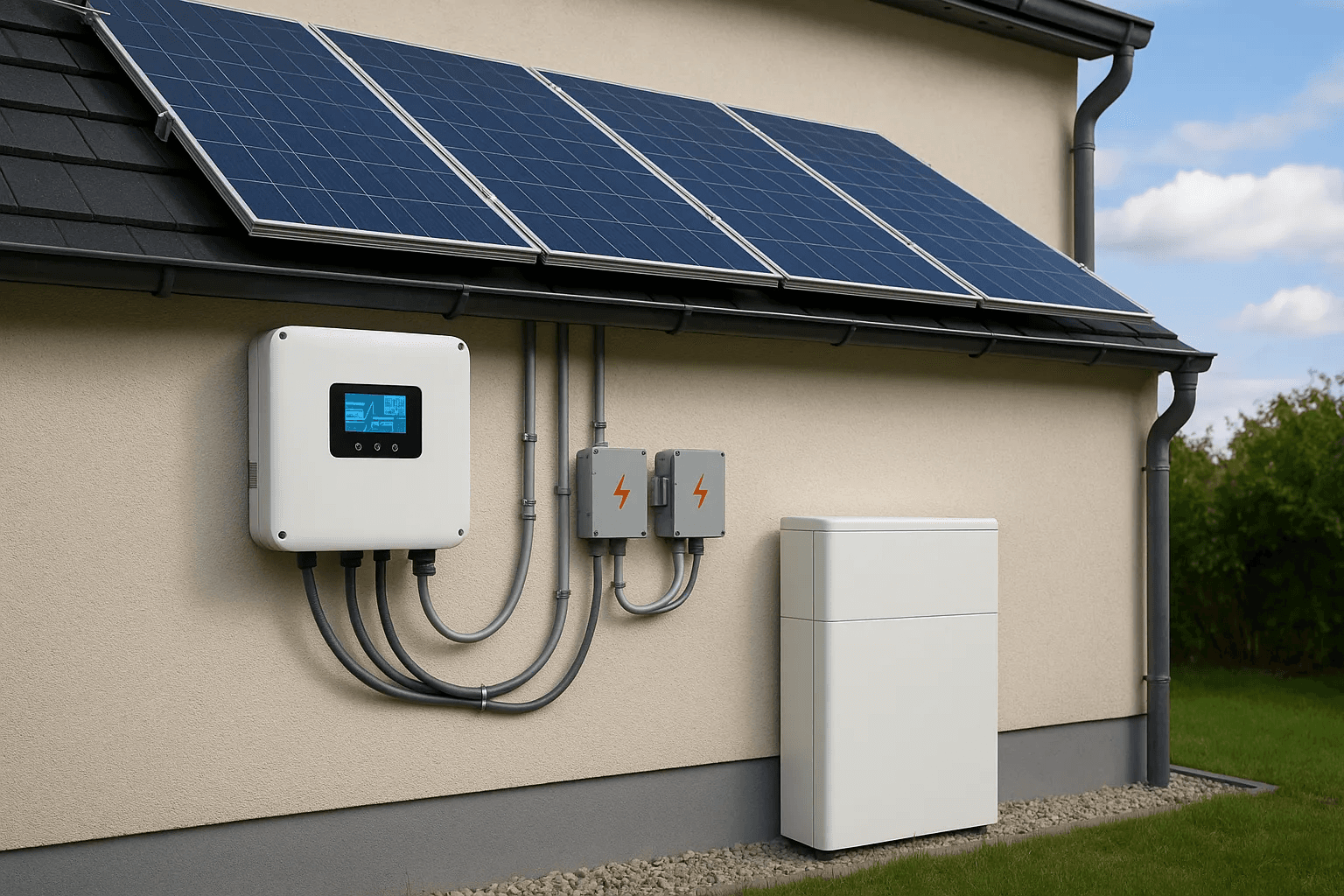
Solar panels typically last 20 to 30 years, and almost all carry a 25-year performance warranty that guarantees a minimum output over that time. They don't stop working at 25 years; they gradually produce a little less each year, which is called degradation. In most systems the inverter fails well before the panels, usually somewhere in the 10 to 15 year range for a string inverter, so most "solar replacement" jobs are really inverter, isolator or connector replacements on panels that still have years left in them.
How long do solar panels last compared with the rest of the system?
The federal government's solar guide publishes average lifespans for each part of a system (energy.gov.au):
| Component | Average lifespan |
|---|---|
| Solar panel | 20 to 30 years |
| String inverter | 10 to 15 years |
| Microinverter | 20 to 25 years |
| Battery (lithium-ion) | 10 to 15 years |
| Battery (lead acid) | 5 to 10 years |
The same guide points out that inverters often need replacing within the lifetime of the panels, but it's rare to need to replace a whole system at once. That matches what we see on Sunshine Coast roofs. A large share of the systems we're called to are on their second inverter or due for one, and the ones installed during the 2011 to 2013 rebate wave are well past the point where their isolators and inverters should have been checked.
If your inverter has stopped, read our guide to solar inverter replacement before assuming the panels are the problem.
What is solar panel degradation?
Every solar panel loses a small amount of output over time. Sunlight, heat cycling, moisture and age slowly wear the cells and materials. It's normal, it's expected, and it's exactly what the performance warranty is written around.
The performance warranty states the maximum degradation the manufacturer will accept. The government's example of a standard warranty is at least 90% of rated output up to 10 years and 80% up to 25 years (energy.gov.au). The federal YourHome guide adds that after 25 years, budget panels are typically guaranteed around 80% of their original output and premium panels 90% or more (YourHome).
Newer N-type panels push those guarantees further. One Jinko Tiger Neo datasheet, for example, lists a 30-year linear power warranty with 0.40% annual degradation (JinkoSolar). Terms vary by model and market, so check the datasheet for your exact panel. We go through panel technology in more detail in our guide to the best solar panels in Australia.
Normal degradation versus damage
Slow, even loss of output across the whole array is normal. What isn't normal is one panel, or one string of panels, falling well behind the others. That usually points to a specific fault:
- Microcracks from hail, storm debris, or people walking on panels during other roof work
- Hot spots where bird droppings or lichen have baked onto the glass
- Backsheet breakdown on older panels, where the protective rear layer cracks or yellows
- Delamination, where the layers inside the panel start to separate
- Frame corrosion, which salt air speeds up on homes close to the water
Damage like this is worth finding early, because a damaged cell can drag down the output of the panels wired with it. A string test and a careful visual inspection will usually pinpoint it.
What happens to solar panels after 25 years?
Nothing dramatic. The performance warranty ends, but the panels keep producing, just at a lower level than when they were new. A healthy panel that's held close to its warranty curve can keep running for years beyond that.
At that point it becomes a practical decision rather than a technical one:
- Is the output still useful? If your usage hasn't grown and the bills are fine, there may be no reason to change anything.
- Is the inverter on its last legs? If it is, that's the natural moment to reconsider the whole setup.
- Has your household changed? An EV, a pool, ducted air conditioning or a home office can make an older, smaller array look undersized.
- Is the roof due for replacement? Panels have to come off for re-roofing anyway.
Why are people getting rid of their solar panels?
This is one of the most searched questions about solar, and it can sound alarming. In our experience it almost never means solar "didn't work". These are the real reasons we see people remove or replace panels on the Sunshine Coast.
1. The original system is too small for how they live now. Many of the systems from the early 2010s were small by today's standards. Households have since added air conditioning, pools and EVs, and the economics now favour a bigger array paired with a battery. Removing the old panels to make room for a larger, modern layout is a common outcome.
2. The inverter failed and it triggered a rethink. When an older inverter dies, some owners decide to replace the lot rather than put a new inverter on old panels, especially if they're planning a battery anyway.
3. The roof needs replacing. Panels have to come off for re-roofing. If they're old, damaged or from a manufacturer that's gone, some people choose not to put them back.
4. They're upgrading to panels plus a battery. Feed-in tariffs have fallen a long way, so the value has moved from exporting solar to storing it. A redesign around a hybrid inverter and battery sometimes means starting fresh on the roof.
5. The system is "orphaned". The installer has closed and the owner has no records. Often the system is perfectly salvageable; sometimes it's had years of neglect and the owner decides to start again.
6. The manufacturer has left Australia. No local support means no warranty claims and no parts, which pushes people toward replacement.
7. Storm or hail damage. Cracked panels need replacing, and insurance often covers it. Our guide to solar panel hail damage covers what to do next.
There's one more Queensland-specific reason coming. Households on the old 44c Solar Bonus Scheme feed-in tariff have strict rules about changing their system, including replacing an inverter only with one of the same size or smaller. That tariff expires on 1 July 2028 (qld.gov.au). We expect plenty of those systems to be upgraded once the restriction no longer protects anything.
What is the biggest disadvantage of solar panels?
Honestly? Timing. Solar panels produce the most power in the middle of the day, and most households use the most power in the late afternoon and evening. A typical Sunshine Coast home with solar only uses 30 to 50% of what its panels make. The rest is exported for a small feed-in credit, and power is bought back after dark at several times the price.
The other disadvantages are worth knowing too:
- A standard grid-connected system shuts down in a blackout. It's a safety requirement so the panels don't feed power into lines crews may be working on. Without a battery set up for backup, a sunny-day outage still leaves you with nothing.
- The inverter will need replacing within the life of the panels. Budget for it.
- Output varies with the weather. Panels still produce in cloud, but at reduced output.
- Upfront cost, although the federal STC discount takes a meaningful amount off at the point of sale.
None of these make solar a bad decision. They just mean the system should be sized to your usage, and a battery considered if most of your consumption is in the evening.
Solar panel replacement: repair, replace or upgrade?
Our rule of thumb is simple. If the panels still test well and the fault is the inverter or the isolators, repairing is almost always the better spend. If the panels are cracked or badly degraded, the manufacturer no longer exists, and you're weighing up a battery anyway, a new system can work out cheaper than repairing the old one piece by piece. We give people both numbers and let them decide.
Can you replace just one or two panels?
Sometimes. The catch is matching. A replacement panel needs to be electrically compatible with the rest of the string, and older panel models are often no longer made. A mismatched panel can limit the output of the panels around it. In practice we test the string, check what compatible stock exists, and tell you whether a like-for-like swap is realistic or whether re-stringing or a microinverter or optimiser solution makes more sense.
Can you add new panels to an old system?
Often, with caveats. The inverter has to have capacity for the extra panels, the new panels need to be on their own string or otherwise suitably matched, and any network approval rules have to be met. If your old inverter is near the end of its life, replacing it with a larger hybrid inverter at the same time is usually the cleaner answer.
What if your installer has gone out of business?
This is one of the most common calls we take, and the usual assumption is that the warranty died with the company. That's not quite right.
Panel and inverter warranties are manufacturer warranties. They sit with the manufacturer or its Australian distributor, not with the retailer who sold the system, and they often survive the installer going under. What you genuinely lose is the installer's workmanship warranty, and the only people who knew how the system was put together.
We take these systems over: identifying what's actually on the roof, recording model and serial numbers, working out what manufacturer cover remains, and lodging the claim on your behalf where there is one. You can start that process through our warranty support page.
How to make your solar panels last longer
Panels don't need much, but what they need matters.
- Get an annual inspection, especially on coastal homes and anything over ten years old. The faults we find are usually in isolators, connectors and terminations, not the panels.
- Keep an eye on your monitoring. A system that's been offline for months often goes unnoticed until the bill arrives.
- Clean when it's needed, not on a calendar. Two to four times a year is the general guidance; inland homes on pitched roofs sit at the low end because rain does a lot of the work, while homes within about a kilometre of the water need it more often because of salt film.
- Never walk on the panels, and make sure anyone doing other roof work knows they're there.
- Deal with bird droppings and lichen promptly; they cause hot spots.
If you'd like your system checked, our solar repairs and servicing team works on any brand, including systems we didn't install, and every service comes with a written report and photos.
What about recycling old panels?
Most of the materials in a solar panel can be recycled, but it's specialist work and there may be a fee. Some states have banned solar panels and other e-waste from landfill, and the federal government is funding a National Solar Panel Recycling Pilot (energy.gov.au). Ask your installer to take away anything that comes off the roof rather than leaving it with you.
Frequently asked questions
How long do solar panels last?
Typically 20 to 30 years, according to the federal government's solar guide. Almost all panels carry a 25-year performance warranty, and many keep producing usefully beyond that at a gradually reduced output. The inverter usually needs replacing well before the panels do.
Why are people getting rid of their solar panels?
Mostly to upgrade, not because solar failed. The common reasons are small older systems that no longer suit the household, an inverter failure that prompts a full redesign, roof replacement, moving to a bigger array with a battery, installers or manufacturers that have left the market, and storm or hail damage. Our solar system upgrade guide walks through the options.
What is the biggest disadvantage of solar panels?
The mismatch between when panels produce power (the middle of the day) and when most households use it (late afternoon and evening). Without a battery, much of your solar is exported for a small credit and power is bought back at night for far more. Standard grid-connected systems also switch off during blackouts unless a backup battery is fitted.
What happens to solar panels after 25 years?
They keep working. The performance warranty ends, but the panels continue producing at a reduced level, often still close to the 80 to 90% range their warranty guaranteed. Whether to replace them then depends on your usage, the inverter's condition and whether you're re-roofing.
Do I need to replace my panels when my inverter dies?
Usually not. If the panels test well, replacing just the inverter is almost always the better value. It's also a good moment to consider a hybrid inverter if you think you'll want a battery later.
How much does solar panel degradation reduce output?
It depends on the panel. A standard warranty guarantees at least 90% of rated output up to 10 years and 80% up to 25 years. Premium panels guarantee more, and some newer N-type panels carry 30-year linear warranties with lower annual degradation.