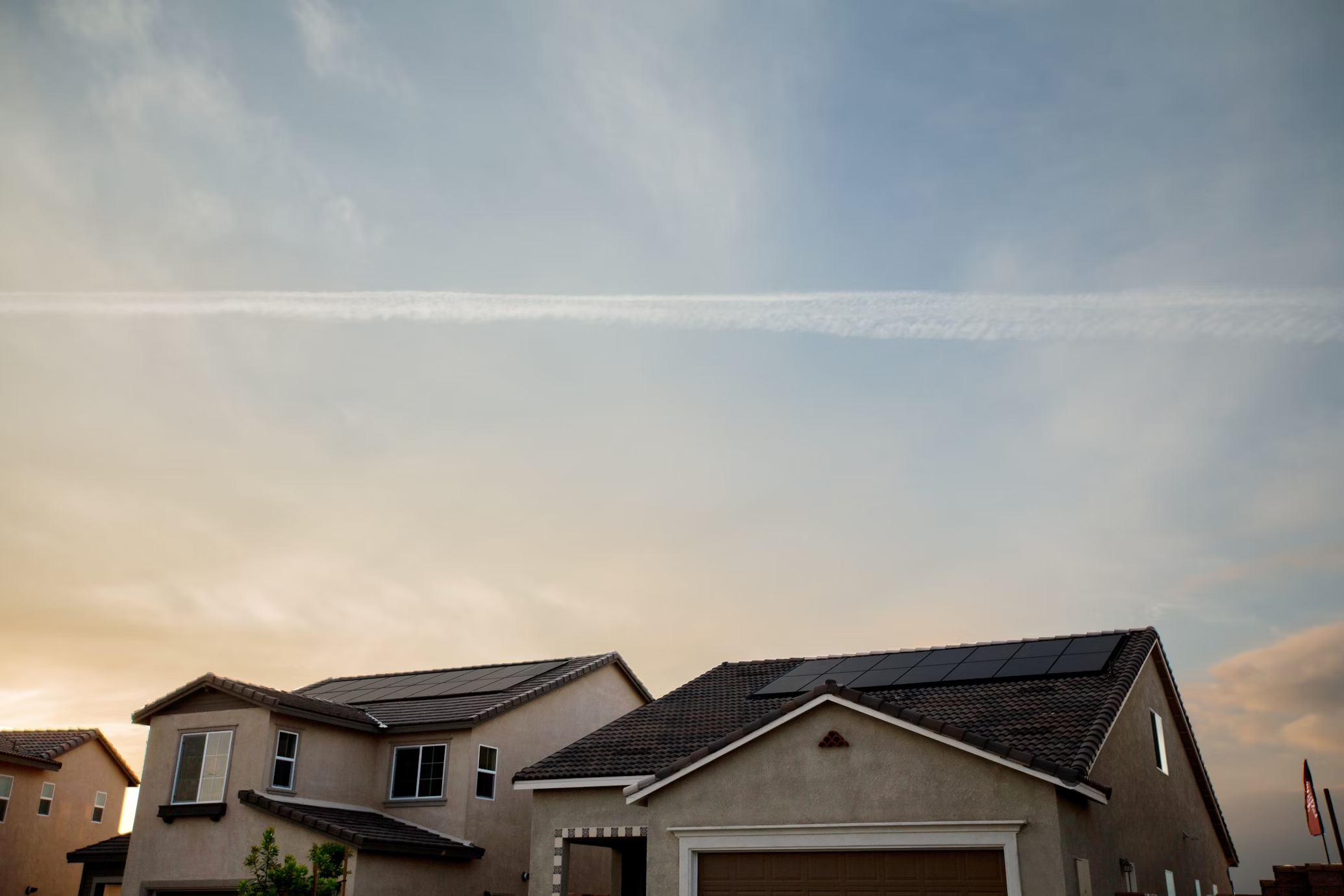

The storm rolls through the hinterland late in the arvo, the hail sounds like gravel on the roof for ten minutes, and the next morning you're standing in the yard squinting up at the panels wondering whether that was a problem.
Most of the time it isn't. Panels are built and tested to take hail. But big storms do crack them, and when it happens there's a right order to do things in: safety first, then evidence, then the insurer, then the repair.
Short answer: yes, hail can damage solar panels, but modern panels are tested to withstand typical hail and most storms pass without harm. The standard hail test fires 25 mm ice balls at 23 m/s at 11 points on the panel. Larger hailstones can crack the glass or cause hidden microcracks. A cracked panel still produces electricity whenever there's daylight, so don't touch it or climb up to look. Manufacturer warranties usually don't cover hail, but home insurance often does, so photograph the damage and get a written installer report before you claim.
Do solar panels get damaged by hail?
Sometimes, but less often than people expect. The front of a panel is a sheet of tempered glass. Jinko's Tiger Neo datasheet, for example, specifies 3.2 mm tempered, low-iron front glass (JinkoSolar datasheet). Tempered glass is far tougher than ordinary window glass, but it isn't unbreakable.
What the IEC 61215 hail test actually checks
Every panel on the Clean Energy Council's approved modules list, which is the list a panel must be on for the STC rebate, has to be tested to IEC 61215 (Clean Energy Council). That's the international design qualification standard for crystalline silicon panels, and its hail test, known as MQT 17, works like this:
| Hail test parameter (IEC 61215 MQT 17) | Minimum requirement |
|---|---|
| Ice ball diameter | 25 mm |
| Ice ball speed | 23 m/s |
| Number of impacts | 11, at set points across the panel, including spots likely to be vulnerable such as over the junction box |
| Pass criteria | No major visual defects, and wet leakage current still meets requirements |
The standard also allows testing with larger ice balls for hail-prone areas. That's an option a manufacturer may choose, not the baseline (Sinovoltaics summary of IEC 61215-2:2021 MQT 17).
Two things are worth knowing about that test:
- 25 mm is the minimum, not a ceiling. South-east Queensland storms can drop hail well above that. A panel that passed the standard test hasn't been proven against golf-ball hail.
- The pass criteria are about safety, not output. The test checks the panel isn't visibly broken and is still electrically insulated. It doesn't set a limit on lost power, so a panel can pass with microcracks that trim its output.
Independent labs such as PVEL run tougher hail sequences with larger ice balls, and some manufacturers publish those results. If you're in a high-hail spot, ask your installer whether the panel on your quote has been tested beyond the IEC minimum, and to what size. Our guide to the best solar panels in Australia covers what else to check on a datasheet.
What hail damage looks like
- Shattered glass. Obvious from the ground: a frosted, crazed pattern across all or part of the panel. Tempered glass breaks into small pieces rather than shards, but they usually stay stuck to the panel.
- Chips or impact marks near the edges or corners.
- Microcracks. Fine cracks in the cells underneath the glass. You can't see them from the ground, and often not up close either. They show up later as a drop in output or as hot spots.
- Damage to everything else. Bent frames, dislodged rails, damaged rooftop isolators or cabling, and debris on the array. On tile roofs, broken tiles near the array are common after a big storm.
When is storm season in South East Queensland?
The Queensland Government says storm season typically runs from November to April (Queensland Government). On the Sunshine Coast that lines up with our hottest months, which is also when your panels are doing the most work. Storms can hit anywhere from the beach to the hinterland, so check after every big one rather than assuming your area missed out.
The Electrical Safety Office's pre-storm advice includes shutting your solar system down using its safe isolation procedure before a storm arrives (Electrical Safety Office). The shutdown procedure is a printed sign at your switchboard or inverter. Read it now, while the weather's fine.
Safety first: a cracked panel is still live
This is the part people get wrong. Turning off the main switch, or the grid going down, doesn't make the roof safe.
Solar panels produce DC voltage whenever light hits them. A shattered panel still does. Broken glass lets water into the panel, and storm debris can damage cabling. That's a shock risk to anyone on the roof and, in the worst case, a fire risk.
The Electrical Safety Office is blunt about it: even when the network is off, solar panels keep producing voltage in daylight, so treat the system and its wiring as live. After a storm it says:
- Don't try to turn the system off after the storm has passed.
- Stay away from the panels, batteries and wiring, and avoid getting on the roof unless you absolutely have to.
- Get a licensed electrical contractor to inspect it and confirm it's safe before it's switched back on, and before other clean-up starts around it.
That last point matters if you're also dealing with tree damage or roof repairs. The solar check comes first, so the roofer or tree crew isn't working around live, damaged cabling.
What happens when a solar panel breaks?
A broken panel usually keeps producing some power, so you might not notice straight away. What tends to happen next:
- Output drops. Panels in a string are wired in series, so a damaged panel can drag down the ones it's connected to, not just itself.
- Moisture gets in. Water through cracked glass or a damaged backsheet causes insulation faults.
- The inverter complains. Insulation or earth-fault errors are common after storm damage, and many inverters will refuse to start until the fault is cleared. If your inverter is showing an error after a storm, our guide to why a solar inverter stops working explains what the common codes mean.
- Hot spots can develop. Cracked cells can run hotter than their neighbours, which speeds up further damage.
A cracked panel doesn't heal and it doesn't get safer, so get it looked at even if the system seems to be producing.
Does home insurance cover solar panels?
Often, yes, but it depends on your policy. That's the honest answer.
The federal government's solar guide points out that warranties usually don't cover hail damage, and that insurance is how you protect against it. It lists hail and windstorm among the common insured events, notes some insurers offer extra cover specifically for solar, and warns that you may need to raise your building sum insured once solar is on the roof (energy.gov.au).
| Cover | Does it usually cover hail damage? |
|---|---|
| Panel manufacturer warranty | Usually not. Covers defects, not weather. |
| Panel performance warranty | No. Covers normal degradation, not impact damage. |
| Installer workmanship warranty | No, unless the damage comes from poor installation. |
| Home building insurance | Often, depending on the policy. Check the wording. |
Things to check on your policy now, before the next storm:
- Is solar listed as part of the building, or as something that needs extra cover?
- Is your sum insured high enough to include the system?
- What's excluded? Look for wear and tear, gradual deterioration, and anything about damage you can't see, such as microcracks.
- Landlords, renters and body corporates: the government notes that cover works differently for each. If you own a rental or a unit, check who insures the roof.
How to make a solar panel hail damage claim
Every insurer's process is different, but the steps that make a claim go smoothly are much the same.
- Stay safe. Don't climb up. Photos from the ground or the second storey window are enough to start.
- Photograph everything you can safely see. Panels, the roof, hail in the yard with something for scale, and the date.
- Screenshot your monitoring. Daily production for the week before and after the storm is strong evidence that something changed. If the inverter shows an error, photograph the screen.
- Call your insurer early. Ask whether they want to send their own assessor, and whether they need a report from a licensed solar installer.
- Get a written installer report. A proper inspection includes close-up photos, string voltage and current readings, insulation resistance testing, and a clear list of what's damaged and what it'll take to fix. That's what insurers want to see.
- Get a repair quote that itemises panels, labour and any other parts, so the insurer can approve it.
Don't let anyone pull panels off before the insurer has seen what they need. We write these reports after storms. Our solar repairs on the Sunshine Coast service covers inspections, testing, insurance reports and panel replacement, on systems we didn't install as well as our own.
How much does it cost to replace a solar panel?
There's no honest single figure, because the panel is often the smallest part of the bill. What moves the price:
- Can you get a matching panel? A replacement has to be electrically compatible with the rest of the string. On systems more than a few years old the original model is often no longer made.
- How many panels are damaged? One panel is a small job. Half the array is a different conversation.
- Roof access. Single-storey tin is the easy end. Two storeys, a steep pitch or a tile roof take more time and safety gear.
- What else was hit? Isolators, cabling, rails or the inverter can add to the job.
- The age of the system. On an older, smaller system it can make more sense to redesign than to hunt for matching parts.
When an exact match isn't available, the options include re-stringing the array, using a near-match within the inverter's limits, or fitting module-level electronics so the new panel doesn't hold back the old ones. We go through those trade-offs in our guide to solar panel lifespan and degradation.
Repair the panels, or replace the whole system?
If the system is fairly new and only a few panels are damaged, repair is almost always the answer. If the system is old, small and already due an inverter, and the storm has taken out several panels, an insurance payout can be the point where an upgrade makes sense. You'd put the payout toward a new system designed for how you use power now, rather than patching a 2012 array.
That's your decision and your insurer's, not ours. What we can do is give you an honest comparison of both, in writing.
Reducing hail risk on a new system
You can't stop hail, but you can stack the odds:
- Ask what the panel was hail-tested to beyond the IEC 61215 minimum, and keep the datasheet.
- Tell your insurer when the system goes in, and check your sum insured.
- Keep the paperwork with panel model numbers, serial numbers and a few install photos. They make any later claim much easier.
- Watch your monitoring after big storms, so a drop in output gets caught early.
- Book an annual inspection, especially on coastal or older systems. Our solar panel maintenance guide covers what a proper one includes.
Frequently asked questions
Do solar panels get damaged by hail?
They can, but most storms pass without harm. Panels certified to IEC 61215 have passed a hail test with 25 mm ice balls fired at 23 m/s at 11 points. Larger hail can crack the glass or cause microcracks inside the cells that reduce output over time. If output drops after a storm, get the panels inspected.
What happens when a solar panel breaks?
It usually keeps producing some electricity, which means it's still live in daylight. Water can get in through the cracked glass, causing insulation faults that can trip the inverter, and a damaged panel can reduce the output of the panels wired with it. Don't touch it. Have a licensed electrical contractor make it safe and replace it.
How much does it cost to replace a solar panel?
It depends less on the panel and more on the job: whether a compatible panel is still available, how many panels are damaged, roof height and pitch, and whether other parts were hit. On older systems, finding a match can be the hardest part. A written quote after an inspection is the only reliable figure.
Does home insurance cover solar panels?
Often, but not always. The federal government's solar guide notes that warranties usually don't cover hail, while hail and storms are common insured events under home insurance. Check that your policy includes the solar system, that your building sum insured covers it, and what's excluded.
Are solar panels covered by warranty for hail damage?
Usually not. Panel product warranties cover manufacturing defects, and performance warranties cover normal ageing. Weather damage such as hail is normally excluded, which is why insurance matters.
Should I turn off my solar before a storm?
Queensland's Electrical Safety Office advises shutting down your solar system using its safe isolation procedure before a storm. After a storm that has damaged the system, it advises the opposite: don't try to switch anything off, stay away from the panels and wiring, and get a licensed electrician to check it.