Drive through Tewantin, Cooroy, Eumundi or Pomona and you'll see plenty of roofs sitting under big gums, poincianas and palms. It's one of the best things about living up here, and one of the most common reasons people ask us whether they need optimisers or microinverters.
Sometimes the answer is yes. More often, it's "not as much as the last salesperson told you". Here's how to tell the difference.
Short answer: you need optimisers or microinverters only when some of your panels are shaded at different times from the rest, or when the array is split across several small roof faces. On an unshaded roof, or one where each face can go on its own inverter input, a standard string inverter is cheaper and performs just as well. Optimisers bolt onto a string system to let each panel work independently. Microinverters replace the string inverter with a small inverter under every panel. Both help with uneven shade, both add electronics to a hot roof, and neither fixes heavy all-day shade.
How shade affects solar panels
Most home systems wire panels together in strings, in series, like old Christmas lights. The same current flows through every panel in the string, so the string tends to run at the pace of its weakest panel.
When one panel is shaded by a branch, a vent pipe or the neighbour's two-storey extension, a few things happen:
- The shaded cells produce less current, and they would hold back the whole panel if it weren't for its built-in bypass diodes.
- Bypass diodes switch the shaded section out, so current flows around it. That protects the panel, but the bypassed section contributes nothing.
- The inverter's tracking (MPPT) hunts for the best operating point for the whole string, which is a compromise when panels are seeing different light.
Modern panels with half-cut cells can cope a little better with partial shade than older designs, and modern inverters are better at finding the best operating point. But the basic rule hasn't changed: a string performs best when every panel in it sees the same sun. The federal government's solar guide says the same thing, noting that better performance comes from grouping panels with similar sunlight and shading into the same string (energy.gov.au).
Shade also changes with the seasons. A tree that clears the roof in December can throw a long shadow across it at 3pm in June, when the sun sits lower in the northern sky. We go into winter output in our guide to solar panels in cloudy weather and winter.
String inverter vs optimisers vs microinverters
There are three ways to set up a grid-connected system, and each handles shade differently.
| String inverter | String inverter + optimisers | Microinverters | |
|---|---|---|---|
| How it works | Panels in strings feed one central inverter | A small DC optimiser under each panel, feeding a string inverter | A small inverter under each panel converts to AC on the roof |
| Uneven shade | Weakest panel affects its string | Each panel works independently | Each panel works independently |
| Multiple roof faces | Fine if each face gets its own MPPT input | Handles mixed orientations within a string | Handles any mix of orientations |
| Monitoring | System level, sometimes per string | Panel level | Panel level |
| If the inverter fails | Whole system stops | Whole system stops | Only the panel on that microinverter stops |
| Electronics on the roof | None (apart from cabling) | One optimiser per panel | One microinverter per panel |
| Typical inverter warranty | 5–10 years | Inverter 5–10 years; optimiser terms vary by brand | 10 years (rail-mounted) to 25 years (panel-mounted) |
| Relative cost | Lowest | Middle | Highest |
| Adding a battery | Swap to a hybrid, or AC-couple | Depends on the inverter brand | AC-coupled battery |
Warranty figures in that table come from the federal government's guide to common inverter warranties (energy.gov.au). The cost ordering also follows government guidance: microinverter systems are typically more expensive than string systems, and optimisers with a string inverter are generally cheaper than microinverters (energy.gov.au; YourHome). Always check the exact warranty on the product you're quoted.
When a plain string inverter is the right call
For most Sunshine Coast homes, this is still the answer, and it's not because it's cheaper for us to install.
- The roof is unshaded, or the shade only clips the array in the first or last hour of the day, when there's not much energy to lose anyway.
- The panels sit on one or two faces, and each face can go on its own MPPT input. Many current string inverters have two or more, so an east face and a west face can each run at their own best point.
- You want the cleanest path to a battery. A string system can be upgraded to a hybrid inverter later, which we explain in our guide to adding a battery to existing solar.
There's also a durability argument. A string inverter is mounted on a wall, ideally out of the afternoon sun, where it's easy to reach and replace. Optimisers and microinverters live under the panels, on a roof that can get very hot in a Queensland summer. Quality units are designed for that, and many carry long warranties. But every extra electronic part on the roof is something that can fail where it's awkward to reach.
When optimisers earn their keep
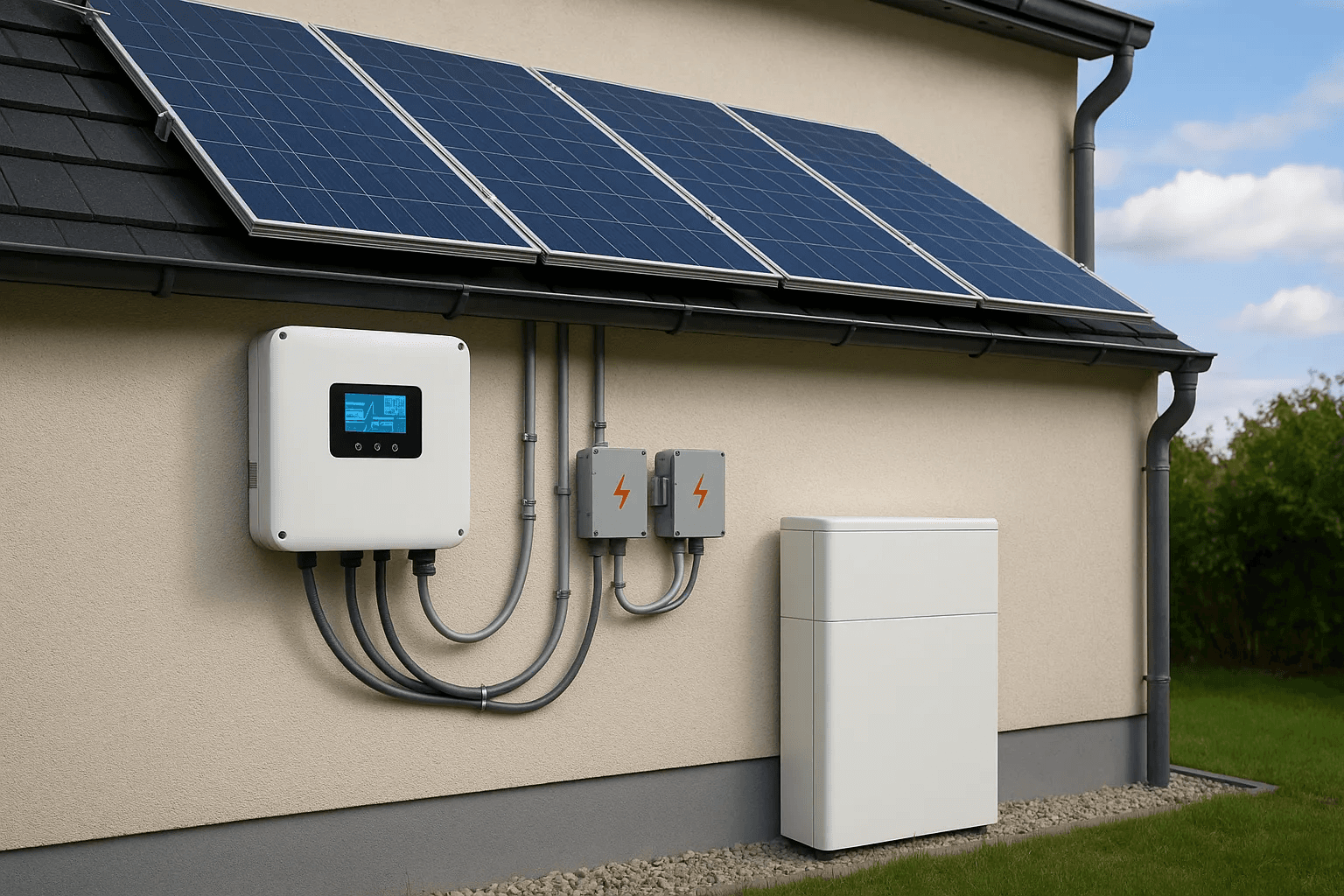
Optimisers are the middle ground. Each panel gets its own small DC converter, so a shaded panel no longer drags down its string, and you get panel-level monitoring. The power still goes through a central string inverter on the wall.
They make sense when:
- A handful of panels are shaded at certain times, by a tree, a chimney or a neighbouring building, and the rest are clear.
- You need to fit panels on two orientations but the inverter doesn't have enough inputs to keep them separate.
- You want panel-level monitoring to spot a failing panel early.
There are two broad approaches. Some systems need an optimiser on every panel and a matching inverter from the same manufacturer. Others let you fit optimisers only to the panels that need them. Tigo, for example, markets its TS4 optimisers for "selective deployment" on just the shaded modules (Tigo). That second approach can be a tidy fix on an existing system where one corner of the array is under a tree.
When microinverters are the better choice
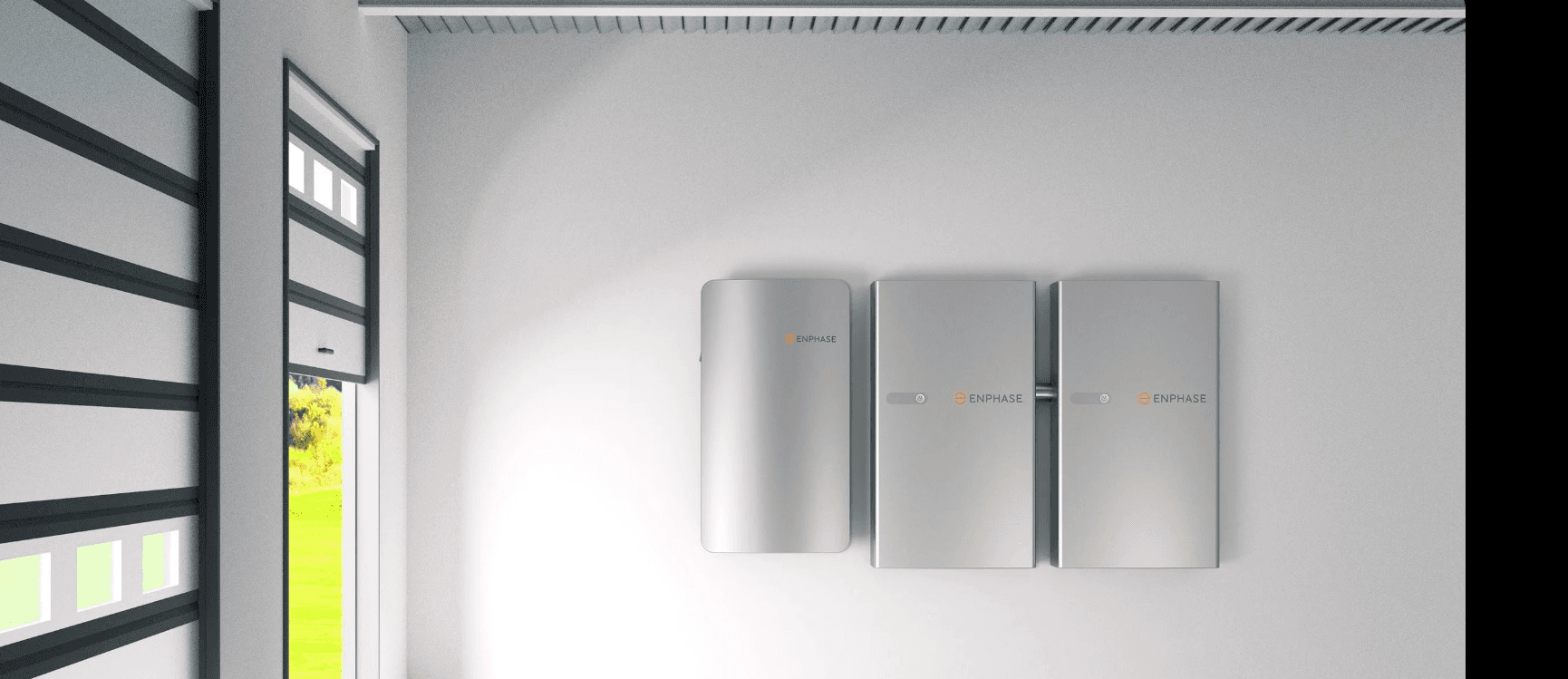
Microinverters go one step further. There's no central inverter at all; each panel has its own small inverter and the roof sends AC power down to the switchboard. Enphase is the name most people know, and it's one of the inverter brands we work with.
Microinverters suit:
- Roofs broken into lots of small faces, such as hips, dormers and skillions, where no two panels see quite the same sun.
- Heavy, patchy shade that moves across different panels during the day.
- Systems you want to grow a few panels at a time, because each panel is its own unit.
- People who value panel-level monitoring and want a failure to knock out one panel, not the whole system.
The trade-offs are cost, the amount of electronics on the roof, and batteries. With microinverters, a battery is added as a separate AC-coupled system, which works but adds a second inverter and often a second app. If you already have an Enphase system and you're happy with it, staying in that ecosystem for the battery is usually cleaner than fighting it.
Enphase vs string inverter: an honest comparison
This is one of the most common search questions we see, so here's our read.
Enphase (microinverters) wins on: shade tolerance, complex roofs, panel-level monitoring, no single point of failure, and long panel-mounted warranties.
A quality string inverter wins on: upfront cost, simplicity, fewer parts on the roof, easy access for service and replacement, and a direct upgrade path to a hybrid battery system.
On a clear, north-facing Sunshine Coast roof, a good string inverter will usually produce about the same energy for less money. On a hinterland roof with three faces and a big gum on the western boundary, microinverters or optimisers can recover energy a string system would lose. The roof decides, not the brand. For our wider shortlist, see our guide to the best solar inverters in Australia.
Fix the shade before you pay to manage it
Electronics can manage shade. They can't create sunlight. A panel sitting in a tree's shadow from 10am to 3pm will underperform whatever's bolted to the back of it.
Before paying for optimisers or microinverters, consider:
- Moving the panels. Leaving the worst-shaded spot empty and putting those panels on a clearer face often beats any electronics.
- Trimming the trees. Check your council's vegetation rules before cutting anything significant, because protection rules can apply and they vary from place to place.
- Accepting a smaller, cleaner array. Eight panels in full sun can beat ten panels in patchy shade.
How we assess shade on a site visit
On properties around Noosa and the hinterland, shade is usually the first thing we look at after the switchboard. We look at:
- What's casting shade, and when. Trees, neighbouring buildings, roof features and the ridge line of your own house.
- The winter sun. The low winter sun is when shade does the most damage, so we design for June as well as December.
- Tree growth. A young tree that clears the roof today might not in five years.
- Existing data. If you already have solar, your monitoring shows exactly when output drops, which tells us where the shadow falls.
Then we'll tell you straight whether you need module-level electronics on some panels, all of them, or none. Our residential solar installations page sets out what we fit and how a quote works.
Frequently asked questions
Do I need optimisers on my solar panels?
Only if some panels are shaded at different times from the rest, or if panels on different orientations have to share a string. On an unshaded roof, or where each roof face has its own inverter input, a standard string inverter performs just as well for less money.
Are microinverters better than a string inverter?
Better on shaded or complicated roofs, and for panel-level monitoring. Not better on a simple unshaded roof, where a quality string inverter usually produces about the same energy at a lower cost, with fewer electronics on the roof and an easier upgrade path to a hybrid battery.
How does shade affect solar panels?
Panels in a string share the same current, so shade on one panel can reduce the output of the whole string. Bypass diodes inside each panel limit the damage by switching out shaded sections, but those sections then produce nothing. The best fix is to keep panels in the same string under the same light.
Can you add optimisers to an existing solar system?
Often, yes. Some optimiser systems can be fitted to just the shaded panels and work alongside a range of string inverters, while others need a matching inverter from the same manufacturer. Whether it's worth doing depends on how much energy the shade is actually costing you, which your monitoring data can show.
Can I add a battery to a microinverter system?
Yes, as an AC-coupled battery. It sits alongside the microinverters rather than connecting to the panels directly. It works well, but it means a second system and often a second app, so if you're happy with your microinverters, a battery from the same ecosystem is usually the simplest option.