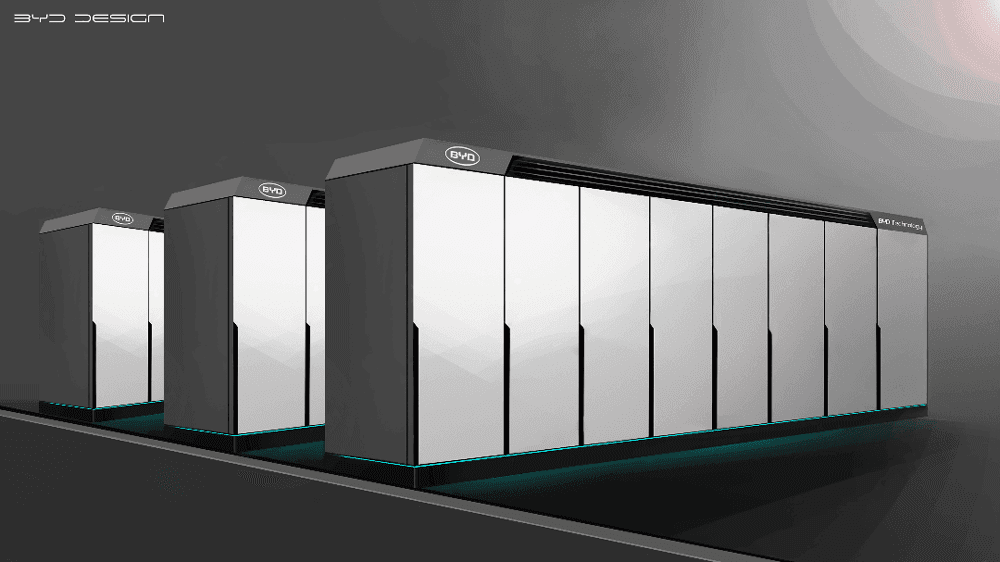

Search "BYD battery" and you'll mostly get cars. This review is about the other BYD product: the Battery-Box, a stackable home solar battery that's been on Australian walls for years and that we install on the Sunshine Coast. It's a battery only, not an all-in-one system, which is both its biggest strength and the thing most buyers don't realise until the quote arrives.
The BYD Battery-Box is a well-proven LFP home battery with a long track record and an honest Australian warranty, and it's one of the best choices when you want to pick the inverter separately. The Premium HVM stacks 2.76 kWh modules from 8.28 to 22.08 kWh per tower, the HVS stacks 2.56 kWh modules from 5.12 to 12.8 kWh, and the low-voltage LVS stacks 4 kWh modules all the way to 256 kWh for off-grid. The high-voltage models carry a 10-year warranty to 70% capacity. It typically costs more than Deye, and how well it backs up your house depends entirely on the inverter it's paired with.
Last updated: 26 October 2026. Specifications and warranty terms come from BYD's Australian datasheets and limited warranty documents on bydbatterybox.com. Check the current document for the exact model on your quote, because BYD revises them.
| Verdict at a glance | |
|---|---|
| Our rating | Proven, flexible LFP battery; best when you want inverter choice |
| Chemistry | Lithium iron phosphate (LiFePO4), cobalt-free |
| Main home models | Battery-Box Premium HVM, HVS (high voltage) and LVS (low voltage) |
| Warranty (AU) | 10 years. HVS/HVM to 70% capacity; LVS residential to 60% |
| Backup | Depends on the paired inverter |
| Weak spots | Not all-in-one, IP55 rather than IP65, typically priced above Deye |
Is this the BYD that makes cars?
Same group, different product line. BYD's own HVM datasheet leans on that history: "LFP cells developed in-house, proven in millions of EVs" and "LFP expertise since 2002." For Australian buyers the companies that matter are on the paperwork:
- The Australian warranty names Shenzhen BYD Electronics Co., Ltd as the warrantor.
- BYD Australia Pty Ltd is listed as the importer.
- Alps Power Pty Ltd is the authorised Australian service partner.
That chain matters more than the logo. When a module fails in year seven, Alps Power is who your installer deals with.
The BYD Battery-Box range explained
BYD sells several families, and they are not interchangeable. Here's what we see quoted for homes.
| Model | Module size | Per tower | Max system | Chemistry | Warranty (AU) | Backup |
|---|---|---|---|---|---|---|
| Premium HVM | 2.76 kWh | 3–8 modules: 8.28–22.08 kWh | 66.2 kWh (3 towers) | LFP | 10 yrs, 70% | Via compatible hybrid |
| Premium HVS | 2.56 kWh | 2–5 modules: 5.12–12.8 kWh | 38.4 kWh (3 towers) | LFP | 10 yrs, 70% | Via compatible hybrid |
| Premium LVS | 4 kWh | 1–6 modules: 4–24 kWh | 256 kWh (parallel) | LFP | 10 yrs, 60% (residential) | Via compatible inverter |
All figures from BYD's datasheets and website. A few other points from those documents:
- Usable = nominal. BYD quotes 100% depth of discharge, so an HVM 11.0 is 11.04 kWh usable. The datasheet adds that system usable energy "may vary with different inverter brands."
- Round-trip efficiency is listed as at least 96% for HVM and HVS, and at least 95% for LVS.
- Operating temperature is -10°C to +50°C, with power derating between -10°C and +5°C.
- Enclosure rating is IP55, indoor or outdoor.
- The HVM is floor-standing. A full eight-module tower is 2,160 mm tall and up to about 319 kg, so plan the spot before you plan the size.
High voltage or low voltage?
HVS and HVM connect their modules in series to run at high voltage, which pairs with high-voltage hybrid inverters. Lower current for the same power means less cable loss. This is what we fit for most grid-connected homes that choose BYD.
LVS runs at a nominal 51.2 V with modules in parallel. It pairs with low-voltage inverters, including the off-grid inverter-chargers we use from Selectronic and Victron, and it scales far bigger. That's why it turns up on rural blocks. Our off-grid battery sizing guide covers how big that bank needs to be.
There's also an LVL (15.4 kWh per unit, scalable to very large banks) aimed at bigger projects, which you're unlikely to see on a standard home quote.
What is the BYD battery warranty in Australia?
This is where BYD is more transparent than most, and where the fine print is worth five minutes.
High voltage (HVS and HVM): 10 years, with at least 70% of capacity retained, or a minimum energy throughput, whichever comes first. The Australian document lists the throughput per configuration:
| Configuration | Minimum throughput |
|---|---|
| HVS 5.1 / 7.7 / 10.2 / 12.8 | 15.41 / 23.12 / 30.82 / 38.53 MWh |
| HVM 8.3 / 11.0 / 13.8 | 25.62 / 34.15 / 42.69 MWh |
| HVM 16.6 / 19.3 / 22.1 | 51.23 / 59.77 / 68.31 MWh |
Low voltage (LVS residential): 10 years, but to 60% retained capacity, with throughput from 11.88 MWh (LVS 4.0) to 71.29 MWh (LVS 24.0). That 60% figure is lower than the 70% most brands quote, so factor it in if you're comparing LVS against other low-voltage batteries.
Conditions that can void a claim (from the HVS/HVM Australian warranty):
- Operating it with an inverter that's not on BYD's compatible inverter list
- Exposure to temperatures above 50°C or below -10°C
- Not installing it within one month of the invoice date
- Leaving it unused for six months or more
- Not notifying BYD or its service partner within 30 days of noticing a defect
- Refusing BYD access to the battery's performance data over the internet after you lodge a claim
- Unapproved modification or repair
The warranty covers repair or replacement of the faulty product. It's worth asking your installer in writing who pays for the site visit and labour on a claim, because battery warranties in general are clearer on parts than labour.
How long do BYD batteries last?
The warranty answers the minimum: 10 years to 70% for HVS/HVM, or the throughput above, whichever comes first. Do the division and each throughput figure works out to roughly 3,000 full cycles of that battery's capacity (an HVM 11.0: 34.15 MWh ÷ 11.04 kWh ≈ 3,090). A battery run flat and refilled every single day would reach that before year 10. Most Sunshine Coast homes don't fully cycle every day through winter, but if you're a heavy evening user on a small battery, that throughput line is the one to read.
Past that, LFP batteries fade gradually rather than stopping. CSIRO's Batteries for Homes guide gives lithium iron phosphate a lifetime of 3–15 years and 3,000–6,000 cycles, and we tell customers to expect 10–15 years of useful life from a well-installed LFP battery. Heat is the main thing that shortens it, which brings us to siting.
Siting a BYD battery on the Sunshine Coast
Two numbers from BYD's documents should drive where it goes:
- The warranty excludes temperatures above 50°C. A west-facing wall in full sun, or an unventilated metal shed in January, is a bad place for any battery and a warranty risk for this one.
- IP55, not IP65. IP55 is rated for outdoor use and protects against dust and water jets, but it's a step below the IP65 some competitors quote. Near the beach, keep it out of direct salt spray and rain-driven weather where you can, typically in a garage or under cover.
The HVM's floor-standing tower also needs a level, solid base and clearance around it. Australian battery installations follow AS/NZS 5139, which sets where a battery can go relative to doors, windows and habitable rooms. A good installer works that out before quoting, not on the day.
How much does a BYD battery cost?
BYD sells the battery, not the inverter, so a BYD quote always has two big hardware lines. Our published installed ranges for the Sunshine Coast (as at August 2026, before rebate) apply to battery systems generally:
| Storage | Installed price range (before rebate) |
|---|---|
| ~5 kWh | $8,500–$9,500 |
| ~10 kWh | $13,000–$14,500 |
| ~15 kWh | $17,500–$19,500 |
In our experience BYD tends to sit above Deye for the same capacity, because you're buying a premium battery and then a separate inverter. Switchboard upgrades and cable runs move any quote within a band.
The federal Cheaper Home Batteries discount comes off upfront: roughly $252 per usable kWh since 1 May 2026, so about $2,520 on 10 kWh, stepping down every six months. BYD's HVM datasheet lists CEC among its certifications; check that the exact model on your quote is on the current CEC approved list, because that's what the rebate relies on.
BYD vs Pylontech
These two get compared because both sell LFP battery modules designed to work with someone else's inverter.
| BYD Battery-Box | Pylontech | |
|---|---|---|
| Ranges | High voltage (HVS/HVM) and low voltage (LVS/LVL) | Several series; check the datasheet for the one quoted |
| Inverter | Third-party, from BYD's compatible list | Third-party, very wide compatibility |
| Typical use | Grid-connected homes with a hybrid; off-grid with LVS | Retrofits, off-grid, budget-first storage |
| Positioning | Premium, long track record | The cheapest credible route into storage |
Both are batteries we install. Pick BYD when you want a high-voltage stack on a quality hybrid and a well-documented warranty. Pick Pylontech when budget leads and the system is low voltage or off-grid. In both cases the inverter decides how good your backup is.
Is BYD a good battery? Who it suits
A BYD Battery-Box suits you if you:
- Want to choose your inverter separately, for example a specific hybrid brand or an off-grid inverter-charger
- Value a long track record and clear Australian warranty documents
- Need a large low-voltage bank for an off-grid or rural property (LVS)
- Want modular expansion in fairly small steps (2.56 or 2.76 kWh)
Look elsewhere if you:
- Want one box with the inverter built in, in which case Sigenergy or Powerwall 3 fit better
- Are chasing the lowest cost per kWh, where Deye usually wins
- Can only mount the battery somewhere hot and exposed
- Want a wall-mounted unit; the HVM is floor-standing
Recalls and safety notices
We checked ACCC Product Safety Australia (productsafety.gov.au) in October 2026 and didn't find a recall listed for BYD Battery-Box home batteries. That's a point-in-time check, so search the site yourself for the exact model before you buy. BYD's datasheets list IEC 62619 and VDE 2510-50 among the certifications.
Our verdict
The BYD Battery-Box is a good, honest battery. The LFP cells are BYD's own, the warranty documents are clear and specific, and the range covers everything from a 5 kWh retrofit to a large off-grid bank. Its trade-offs are structural: it isn't all-in-one, it costs more than Deye, and it's only as good as the inverter and installer behind it.
If you're comparing it with modular all-in-one options, read our Deye battery review and Sigenergy battery review, or see where BYD lands in our best solar battery shortlist. The chemistry question is covered in LFP vs NMC batteries. When you want it priced for your house, our team handles battery installation on the Sunshine Coast and will tell you whether BYD or something else fits better.
Frequently asked questions
Is the BYD Battery-Box a good battery?
Yes. It uses BYD's own LFP cells, comes in high- and low-voltage ranges, and carries a 10-year Australian warranty (70% retention for HVS and HVM). The catch is that it's a battery only: backup performance and the overall experience depend on the inverter you pair it with.
What is the BYD battery warranty in Australia?
For the Battery-Box Premium HVS and HVM it's 10 years to at least 70% capacity, or a minimum throughput that ranges from 15.41 MWh (HVS 5.1) to 68.31 MWh (HVM 22.1). The LVS residential warranty is 10 years to 60%. Conditions include using a BYD-compatible inverter and keeping the battery between -10°C and 50°C.
How long do BYD batteries last?
The warranty covers 10 years. LFP batteries then fade gradually rather than failing outright, and CSIRO gives lithium iron phosphate a lifetime of 3–15 years depending on use. With sensible siting out of the heat, 10–15 years of useful life is a reasonable expectation.
What's the difference between BYD HVS and HVM?
Both are high-voltage Battery-Box Premium models. The HVS uses 2.56 kWh modules for 5.12–12.8 kWh per tower; the HVM uses 2.76 kWh modules for 8.28–22.08 kWh per tower. The HVM suits bigger homes and higher power; the HVS suits smaller systems.
Is BYD better than Pylontech?
Neither is better across the board. BYD offers high-voltage stacks and a well-documented warranty at a higher price. Pylontech is the cheaper credible route into storage and works well for retrofits and off-grid. Both rely on a third-party inverter for backup.