
Most "best battery" lists rank ten brands by a score nobody can check. That's not how batteries get chosen in real life. A Sunshine Coast home with ducted air and a pool needs something different from a couple in a Noosa unit, and both need something different from a hinterland block with no grid. So instead of a fake top 10, here's the shortlist we actually work from, organised by the job the battery has to do.
There's no single best solar battery in Australia; the best one is the right type for your home, from a brand with solid Australian support, installed properly. For most Sunshine Coast homes our picks are: Sungrow SBR as the best all-rounder, Deye as the best value per kWh, Tesla Powerwall 3 for simple whole-home backup, Sigenergy for three-phase homes and EV owners, BYD's low-voltage LVS for off-grid, and an AC-coupled battery for a retrofit onto a healthy existing inverter. Whichever you choose, pick an LFP battery on the CEC approved list.
Last updated: 26 October 2026. We install Deye, Sigenergy, Sungrow, BYD, Pylontech, Alpha ESS, GoodWe and Tesla Powerwall (on request). Specs below come from manufacturers' published documents or our individual reviews, linked throughout.
The shortlist at a glance
| Use case | Our pick | Why | Watch out for |
|---|---|---|---|
| Best all-rounder | Sungrow SBR + Sungrow hybrid | Major brand, mature Australian support, wide VPP coverage, 3.2 kWh steps | Not the cheapest per kWh |
| Best value | Deye HV modules + Deye hybrid | Most storage and backup per dollar, 5.12 kWh steps | Thinner VPP coverage; needs a careful installer |
| Best for backup | Tesla Powerwall 3 | Whole-home backup from one unit, strong motor starting | Costs more per kWh; 13.5 kWh steps |
| Best for three-phase | Sigenergy SigenStor | Single inverter covers three-phase, optional DC EV charging | Premium price |
| Best off-grid | BYD Battery-Box LVS (or Pylontech) with Selectronic or Victron | Low-voltage LFP bank that scales very large | Needs proper off-grid design |
| Best for a retrofit | AC-coupled battery, e.g. Powerwall 3AC | Keeps your healthy existing inverter | Small efficiency loss vs DC-coupled |
How we judged them
We don't have a lab, and we're not going to invent failure rates. These picks rest on things you can check:
- Chemistry. Every pick uses LFP (lithium iron phosphate) cells, except where the manufacturer doesn't state it. Our LFP vs NMC guide explains why that matters.
- Australian support. A local distributor or service partner, spare stock, and a warranty you can actually claim here.
- Warranty terms. Years, retained capacity at the end, and any throughput limit.
- Backup design. Whether the inverter is built in, how much power it delivers, and whether it covers three phases.
- CEC listing. The exact model has to be on the Clean Energy Council approved list for the federal rebate.
- Our installer experience. What's easy to commission, support and expand in Sunshine Coast conditions.
Best all-rounder: Sungrow SBR
Sungrow's SBR is a high-voltage LFP battery built from 3.2 kWh modules, from 6.4 to 25.6 kWh per unit according to Sungrow. Paired with a Sungrow hybrid inverter you get one brand for battery and inverter, a mature Australian support network, and broad acceptance on VPP approved-device lists.
It isn't the cheapest per kWh and it isn't the flashiest. It's the one we'd recommend if you want a well-supported major brand, sensible expansion steps and few surprises. Full detail in our Sungrow battery review, and the head-to-head with the premium option is in Sungrow vs Sigenergy.
Best value: Deye
Deye's high-voltage modules are 5.12 kWh each, stack from one to six (5.12–30.72 kWh), use LiFePO4 cells and carry a 10-year warranty to 70%. Paired with a matched Deye hybrid it delivers the most storage and backup per dollar of anything we fit, and it's the battery we recommend most often for Sunshine Coast homes wanting 10 kWh or more.
The trade-offs: less brand recognition, thinner coverage on VPP approved-device lists, and it rewards a careful commissioning job. Our Deye battery review is the full write-up, and Deye vs Sigenergy compares it with the premium end.
Best for backup: Tesla Powerwall 3
Powerwall 3 stores 13.5 kWh, has a built-in solar inverter, and Tesla rates it to start loads up to 185 locked rotor amps, which is what gets compressors and pumps going in a blackout. Tesla's Australian page lists up to 10 kW of backup power "depending on local conditions." For a single-phase home that wants whole-home backup from one box with a polished app, it's hard to beat.
It costs more per kWh, its expansion steps are 13.5 kWh, Tesla's datasheet lists it as single phase, and the warranty requires it to stay online. As listed on tesla.com in October 2026, a single Powerwall 3 was $11,450 including GST, before installation. Our Tesla Powerwall 3 price guide has the details, including the Powerwall 2 recall.
If your backup needs are bigger than one Powerwall, a larger Deye or Sigenergy stack behind a bigger inverter is often the better-value way to get there.
Best for three-phase homes and EV owners: Sigenergy
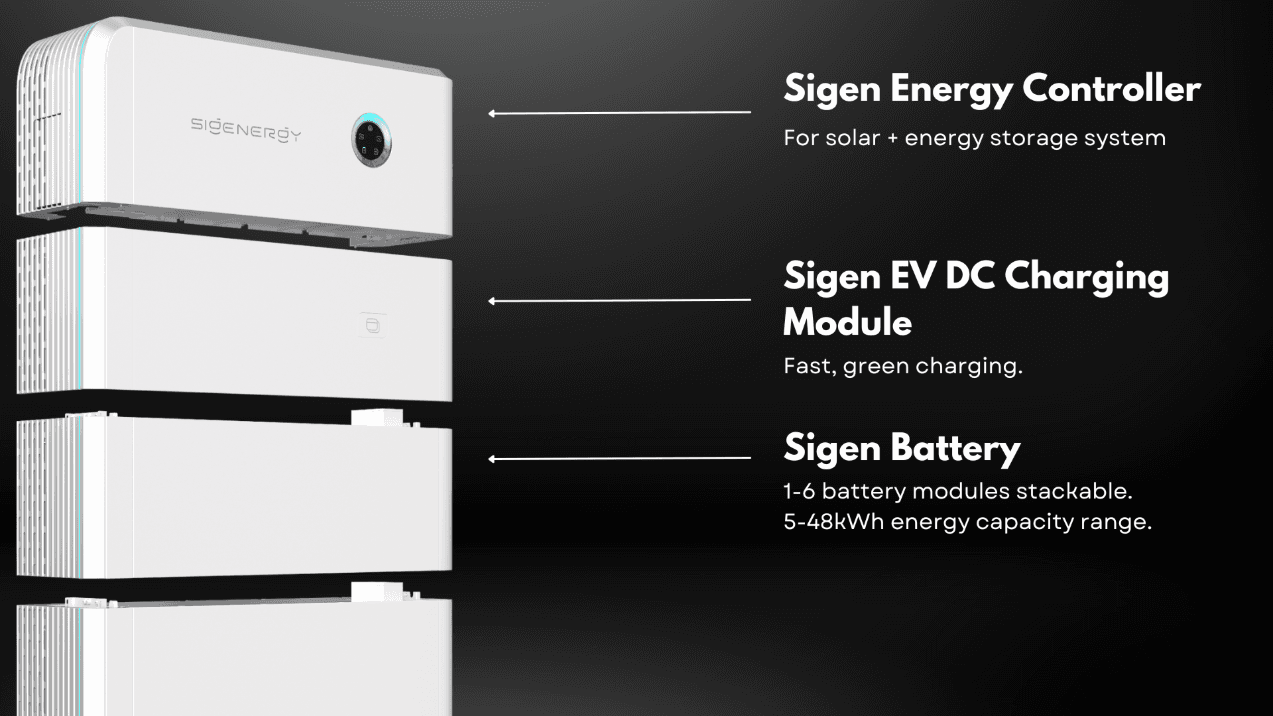
The SigenStor stacks one to six LFP modules on a single energy controller, with single-phase (3–12 kW) and three-phase (5–30 kW) versions, and an optional DC EV charging module in the same cabinet. It's the tidiest installation we do and the cleanest answer for a three-phase house with a pool and ducted air.
It's premium-priced, and Sigenergy had a November 2025 recall on certain single-phase controllers with quick-connect AC plugs. Our Sigenergy battery review covers the recall, the warranty conditions and who should skip it.
Best off-grid: BYD Battery-Box LVS (or Pylontech) with Selectronic or Victron
Off-grid is a different job: the battery bank has to carry you through your worst run of cloudy days, not an average evening. That calls for a low-voltage battery bank behind an off-grid inverter-charger.
BYD's Battery-Box Premium LVS uses 4 kWh LFP modules, 4–24 kWh per tower, scaling to 256 kWh in parallel according to BYD. Its residential warranty is 10 years to 60% retained capacity. Pylontech is the budget-first alternative we also fit. On the inverter side, Selectronic (Australian-made) and Victron are the names we trust. Read the BYD Battery-Box review, the Selectronic SP PRO review and our off-grid battery sizing guide.
Best for a retrofit: match the battery to your existing inverter
If you already have solar, the right battery depends more on your inverter than on any brand ranking:
- Healthy inverter, less than about 8 years old: keep it and add an AC-coupled battery. Tesla's Powerwall 3AC, for example, is a 13.5 kWh AC battery with no solar inputs, designed for standalone storage or AC-coupling, with a 5 kW output.
- Failing or out-of-warranty inverter, or you're adding panels: replace it with a hybrid and go DC-coupled, which is where Deye or Sungrow usually come in.
Our guide to adding a battery to existing solar walks through it.
Spec comparison of our picks
| Battery | Module / unit size | Expands to | Chemistry | Warranty | Backup |
|---|---|---|---|---|---|
| Sungrow SBR | 3.2 kWh modules | 6.4–25.6 kWh per unit | LFP | 10 years | Via Sungrow hybrid |
| Deye HV | 5.12 kWh modules | 30.72 kWh per stack | LiFePO4 | 10 yrs, 70% | Via matched Deye hybrid |
| Tesla Powerwall 3 | 13.5 kWh | Up to 3 Expansion Units; up to 4 Powerwalls | Not stated on AU datasheet | 10 yrs, 70% | Built-in inverter, single phase |
| Sigenergy SigenStor | 5.2 / 7.8 kWh usable (plus newer sizes) | 1–6 modules per controller | LiFePO4 | 10 yrs, 70% usable energy | Built-in, single or three phase |
| BYD HVM | 2.76 kWh modules | 22.08 kWh per tower, 66.2 kWh (3 towers) | LFP | 10 yrs, 70% | Via compatible hybrid |
| BYD LVS | 4 kWh modules | 24 kWh per tower, 256 kWh parallel | LFP | 10 yrs, 60% | Via compatible inverter |
Check the current datasheet and warranty for the exact model on your quote; manufacturers revise them.
The other brands we install
- GoodWe makes capable hybrids and batteries and sits in the middle of the market on price. See the GoodWe battery review.
- Alpha ESS is another brand we fit; our Alpha ESS battery review covers the range and how it compares with Tesla.
- Pylontech is the cheapest credible route into storage, good for retrofits and off-grid, lighter on integrated backup and app polish.
- BYD's high-voltage HVM and HVS suit buyers who want to choose the inverter separately from a long compatible-inverter list.
Brands we don't install as standard
We've reviewed these because people ask about them, and we've said plainly where we stand:
- Fox ESS: Fox ESS battery review
- SolaX: SolaX battery review
- Growatt: Growatt battery review
- Neovolt: Neovolt battery review. Note that the Clean Energy Council suspended several Neovolt models from its approved list in September 2026 over nameplate labelling; it says this wasn't a safety issue, and one model was relisted on 7 October 2026.
Not installing a brand as standard isn't a verdict that it's bad. It means we can't vouch for its local support from our own experience, so we'd rather fit something we can.
What does a good solar battery cost?
Our published Sunshine Coast installed ranges (as at August 2026, before rebate) apply across brands:
| Storage | Installed price range |
|---|---|
| 5 kWh | $8,500–$9,500 |
| 10 kWh | $13,000–$14,500 |
| 15 kWh | $17,500–$19,500 |
Deye sits towards the value end, Sigenergy and Powerwall towards the premium end. The federal Cheaper Home Batteries discount has been roughly $252 per usable kWh since 1 May 2026 (about $2,520 on 10 kWh), applied upfront and stepping down every six months. Most Sunshine Coast homes need 8–16 kWh, which is why 10 and 15 kWh are the sizes we quote most. Oversizing is the most common mistake we see.
Frequently asked questions
Which type of battery is best for a solar system?
An LFP (lithium iron phosphate) battery, sized to your evening and overnight use, matched to the right inverter. LFP is more thermally stable than NMC and handles daily cycling well. For a new solar and battery system, a DC-coupled hybrid is usually best; for an existing healthy inverter, an AC-coupled battery.
What are the top 5 battery brands in Australia?
We can't rank by sales because that data isn't published, but the five we recommend most often on the Sunshine Coast are Deye (best value), Sungrow (best all-rounder), Sigenergy (three-phase and EV), Tesla Powerwall (simple whole-home backup) and BYD (flexible and off-grid). All five have established Australian support.
What is the most reliable solar battery brand?
No one publishes independent failure rates across brands, so be wary of anyone who claims a number. Reliability comes from LFP chemistry, a manufacturer with a local distributor and spare stock, clear warranty terms, a CEC-listed model, and above all a careful installation. Sungrow, Deye, BYD, Sigenergy and Tesla all meet those tests in our experience.
What is the safest solar battery?
An LFP battery, certified to IEC 62619, listed by the Clean Energy Council, and installed to AS/NZS 5139 in a cool spot out of direct sun. Before buying, check productsafety.gov.au for recalls on the exact model.
What's the best battery for a Sunshine Coast home?
For most homes wanting 10 kWh or more, Deye or Sungrow; for three-phase with an EV, Sigenergy; for brand-first buyers, Powerwall 3. The right answer depends on your usage, phases and existing inverter, which is what our battery installation on the Sunshine Coast service works out before we recommend anything.