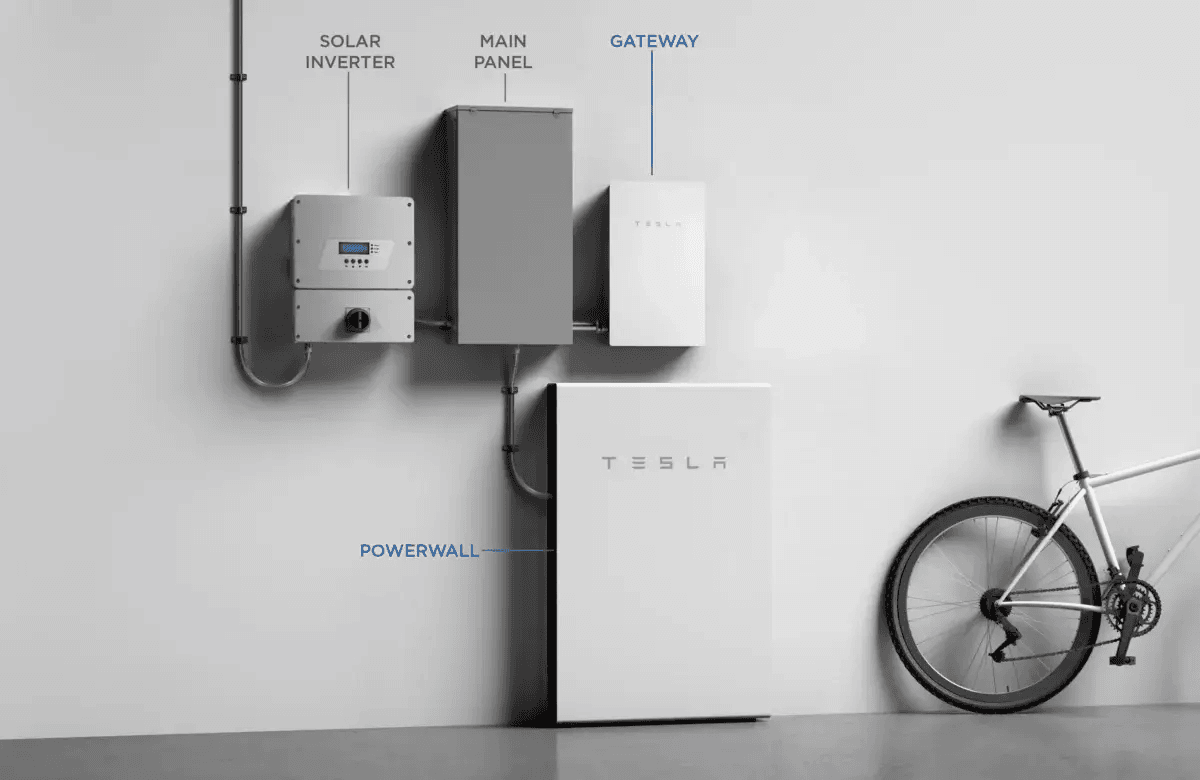

The Powerwall is the home battery most people have heard of, and "how much is it?" is usually the first question. The second is whether the badge is worth paying for. We install Powerwall on request alongside plenty of other brands, so here's a straight read on both.
As listed on tesla.com in October 2026, one Tesla Powerwall 3 costs $11,450 including GST, the Backup Gateway and accessories, but not delivery, installation or other costs. Tesla lists a Powerwall 3 plus one Expansion Unit at $20,050 and plus two Expansion Units at $28,650. Installation is quoted separately by a certified installer, and the federal Cheaper Home Batteries discount (roughly $252 per usable kWh since 1 May 2026) comes off the total. Per kilowatt-hour stored, Powerwall costs more than the modular batteries we usually install.
Last updated: 26 October 2026. Prices are Tesla's own Australian listing, checked in October 2026 (tesla.com/en_AU/powerwall/get). Specifications come from Tesla's Australian Powerwall 3 datasheet and the ACCC recall notice is linked below. Tesla can change its price at any time, so check the live page before you rely on these numbers.
How much does a Tesla Powerwall 3 cost in Australia?
Here's exactly what Tesla's Australian order page showed in October 2026:
| Configuration | Usable storage | Tesla listed price (Oct 2026) |
|---|---|---|
| 1 × Powerwall 3 | 13.5 kWh | $11,450 |
| 1 × Powerwall 3 + 1 Expansion Unit | 27 kWh | $20,050 |
| 1 × Powerwall 3 + 2 Expansion Units | 40.5 kWh | $28,650 |
Tesla's fine print: the price includes GST and the Gateway and accessories, but "does not include delivery, installation, or other costs and fees. Final price will be provided by a Certified Installer." Going by those listed figures, each Expansion Unit adds $8,600 of hardware.
What does Powerwall 3 installation cost?
Tesla doesn't publish an installation price, and neither do we for Powerwall specifically. The variables that move any battery quote are the same:
- Switchboard condition. Older boards often need upgrading before a battery and Gateway can go in.
- Cable run between the meter box and where the Powerwall can legally sit.
- Mounting. Powerwall 3 weighs 130 kg and can be floor or wall mounted.
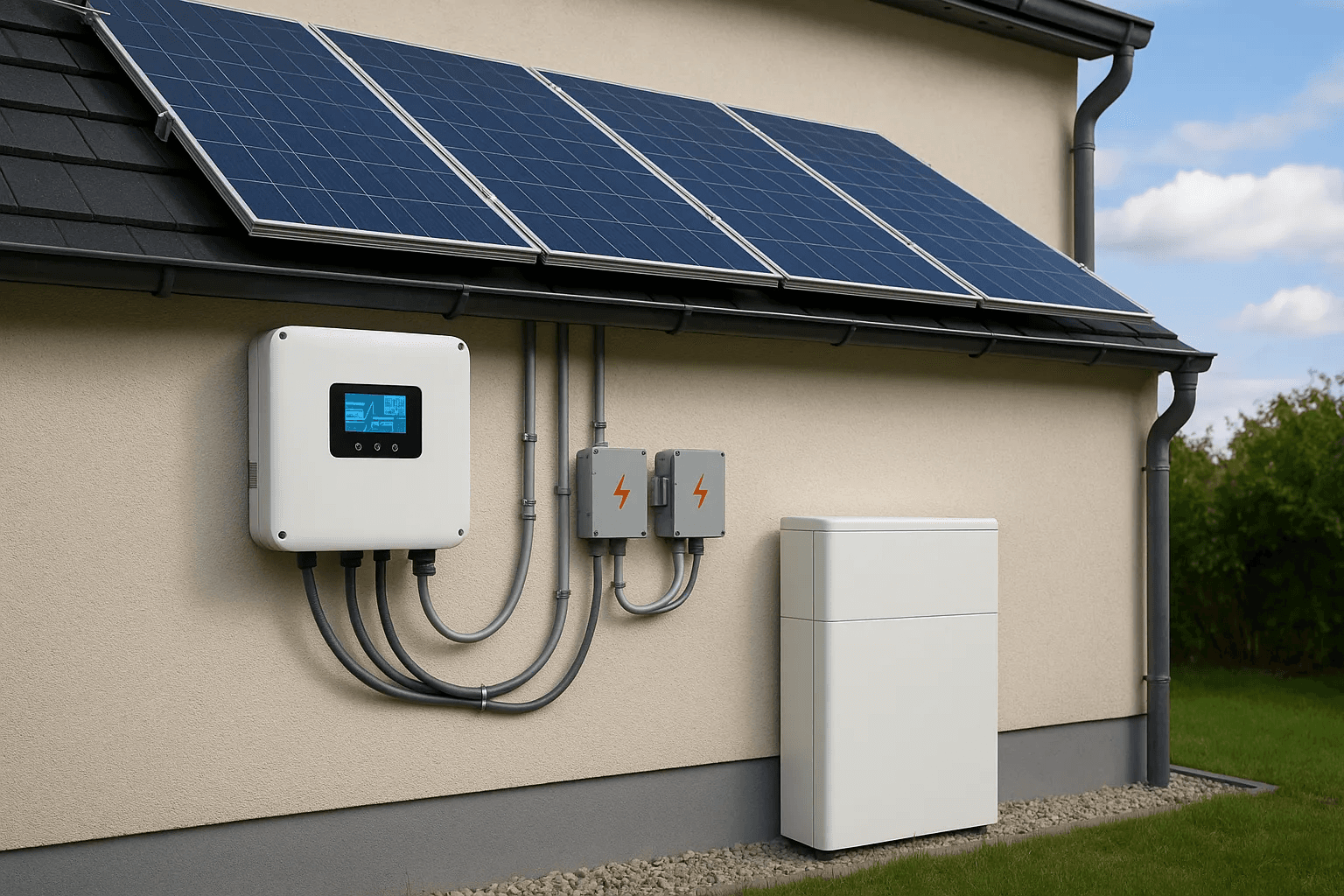
- Solar connection. New panels can connect straight to its built-in inverter; keeping an existing solar system changes the design.
- Backup scope. Whole-home and partial-home backup are wired differently.
- Network approval. The Energex (or Ergon) application is lodged before the install, and export limits are confirmed then.
For context, our published Sunshine Coast installed ranges for batteries in general (as at August 2026, before rebate) are $13,000–$14,500 for 10 kWh and $17,500–$19,500 for 15 kWh. A single 13.5 kWh Powerwall 3 sits between those sizes on storage but costs more per kWh, which is consistent with what we've always told people: you pay a premium for the brand and the integration. Get a written quote that shows the hardware, the installation and the rebate as separate lines.
How much is the battery rebate on a Powerwall 3?
The federal Cheaper Home Batteries Program has applied since 1 July 2025 and is taken off the price upfront by your installer. Since 1 May 2026 it has been worth roughly $252 per usable kWh, and it steps down every six months to the end of 2030, so the figure on your quote may be lower than this.
The first 14 kWh earns the full rate, the next 14 kWh (up to 28 kWh) earns 60%, and 28–50 kWh earns 15%. Applied to Powerwall configurations, that works out at roughly:
| Configuration | Usable kWh | Approximate rebate at ~$252/kWh |
|---|---|---|
| 1 × Powerwall 3 | 13.5 | about $3,400 |
| Powerwall 3 + 1 Expansion | 27 | about $5,500 (first 14 kWh full rate, the rest at 60%) |
The battery must be new, VPP-capable and installed by an accredited installer, and you only get one rebate per property. The step-downs and tiers are explained in our guide to the May 2026 battery rebate changes.
Powerwall 3 specifications (Australia)
From Tesla's Australian Powerwall 3 datasheet and the en_AU product page:
| Spec | Powerwall 3 (AU) |
|---|---|
| Usable energy | 13.5 kWh (14 kWh total) |
| Continuous output | Configured at 5, 10 or 11.04 kW; Tesla's AU page says "up to 10 kW, depending on local conditions" |
| Motor starting | 185 A locked rotor amps |
| Solar | Integrated inverter, 3 MPPTs, up to 20 kW DC of solar |
| Solar-to-home efficiency | 97.5% (89% solar-to-battery-to-home) |
| Grid type | Single phase, 230 V |
| Expansion | Up to 3 Expansion Units (13.5 kWh each), up to 4 Powerwall 3 units, max 7 units total |
| Operating temperature | -20°C to 50°C, may derate above 40°C |
| Ingress rating | IP67 battery and power electronics, IP55 wiring compartment |
| Size and weight | 1,105 × 609 × 193 mm, 130 kg |
| Warranty | 10 years |
| Country of manufacture | USA |
Two things the brochure doesn't shout about. The datasheet doesn't name the cell chemistry, so we've left it off rather than guess. Our LFP vs NMC battery guide explains why chemistry matters. And it lists the grid type as single phase: on a three-phase home, ask how backup will work across your phases before you sign.
There's also a Powerwall 3AC in Australia: same 13.5 kWh, but no solar inputs and a 5 kW output. Tesla positions it for standalone storage or AC-coupling to an existing solar system.
Can a Tesla Powerwall run an air conditioner?
Usually, yes, within limits. The two numbers that matter are power (kW) and surge.
- Surge: Tesla rates Powerwall 3 to start loads up to 185 locked rotor amps. That's what lets it kick over compressor motors that a weaker inverter would trip on.
- Running power: up to 10 kW continuous on Tesla's Australian page. Add up what you want running at once. A split system, the fridge, lights and a TV are a different proposition to ducted air, a pool pump and an oven together.
- Energy: 13.5 kWh is the tank. An air conditioner drawing 2 kW for five hours uses 10 kWh, which leaves very little for the rest of the night. Do the arithmetic for your own units using the input power on their compliance plates.
On a Sunshine Coast summer evening, pre-cool the house on solar in the afternoon and let the battery carry the shoulder. Whether the air conditioner is on a backed-up circuit in a blackout is decided at install, so say so up front.
What is the temperature range for the Powerwall 3?
Tesla's datasheet gives an operating range of -20°C to 50°C, with a footnote that performance may be derated above 40°C. Cold isn't our problem on the coast. Heat is.
A west-facing wall in full afternoon sun, or a tin shed that cooks in January, is exactly where you'd expect derating. Put it on a shaded southern or eastern wall, or in a ventilated garage. Tesla's page also says Powerwall can keep operating in "flooding in 0.6 metres of water", which is a fair point in favour of the design for low-lying blocks, though it's no reason to put it in a drainage line.
IP67 on the battery and electronics is a good dust and water rating. It isn't a salt-corrosion rating. If you're within a kilometre or so of the beach, siting out of direct salt spray still matters, as it does for every brand. Our guide to salt air and coastal solar covers the practical side.
What is the lifespan of a Tesla Powerwall 3?
Tesla's Australian warranty is 10 years, and it warrants the Powerwall retains 70% of its energy capacity at 10 years. For solar self-consumption, time-based control and backup it allows unlimited cycles. For any other use (or a mix that includes one) the limit is 37.8 MWh of throughput.
Read the conditions, because they matter:
- Tesla says it needs to update the Powerwall remotely; if it's offline "for an extended period" or not registered, "we may not be able to honor the full ten year warranty." Your Wi-Fi or ethernet is part of the warranty.
- Installation, repair or opening the casing by anyone other than Tesla or a Tesla certified installer can void it. Check that whoever quotes you is on Tesla's certified installer list.
- Moving it to another address without Tesla's written consent can void it.
Like any lithium battery it should keep working past the warranty with gradually less capacity; our general rule for home batteries is 10–15 years of useful life.
The Tesla Powerwall 2 recall in Australia
On 16 September 2025 Tesla Motors Australia and the ACCC published a recall of Powerwall 2 units (PRA 2025/20611 on productsafety.gov.au). The notice says certain lithium-ion cells from a third-party supplier, in a subset of Powerwall 2 systems, may fail and overheat, and that Tesla had reports of units smoking or emitting flames, causing minor property damage. No injuries were reported. The notice was updated on 13 April 2026 to extend the affected sale dates to 1 November 2020 – 23 August 2025, and again on 12 August 2026.
What Powerwall 2 owners should do, per the recall:
- Make sure your Powerwall 2 is online and check the Tesla app for a notification saying whether your unit is affected.
- If it is, Tesla will remotely discharge it (many already have been) until it's replaced. Affected units are replaced at no cost, and Tesla says it will consider compensation for lost savings case by case.
- Contact your original installer to schedule the replacement. If they're unavailable, Tesla's recall line is 1800 958 369.
The recall notice is for Powerwall 2. If you're buying a house with a Powerwall 2 on the wall, check its status in the app before settlement.
Tesla Powerwall 3 vs Sigenergy and Deye
These are the three batteries that most often end up on the same shortlist.
| Tesla Powerwall 3 | Sigenergy SigenStor | Deye (HV modular) | |
|---|---|---|---|
| Storage | 13.5 kWh per unit, Expansion Units of 13.5 kWh | Modules of 5.2 or 7.8 kWh usable (plus newer sizes), 1–6 per controller | 5.12 kWh modules, 1–6 per stack |
| Inverter | Built in, single phase | Built in, single or three phase | Matched Deye hybrid, single or three phase |
| Expand in steps of | 13.5 kWh | One module | 5.12 kWh |
| Extra | Polished app, wide VPP support | Optional DC EV charging in the stack | Lowest cost per kWh of the three |
| Warranty | 10 years, 70% | 10 years, 70% usable energy | 10 years, 70% |
Sigenergy and Deye figures are from our Sigenergy battery review and Deye battery review. Powerwall wins on simplicity and brand, Sigenergy on three-phase and EV integration, Deye on storage per dollar. And if 13.5 kWh is too little and 27 kWh too much, a modular battery lets you land on 15 or 20 kWh.
Who should buy a Powerwall 3?
It suits you if you:
- Want a name you recognise and a polished app, and are happy to pay for that
- Are installing new solar at the same time and want one box doing both jobs
- Need around 13.5 kWh, which is a sensible size for a lot of Sunshine Coast homes
- Want to join a VPP and value broad program support
- Need strong motor-starting for pumps or air conditioning in a blackout
Skip it if you:
- Want the lowest cost per stored kWh
- Have a three-phase home and want simple balanced backup across all phases
- Need something like 18–22 kWh, where the 13.5 kWh step size works against you
- Have unreliable internet where the battery goes, given the warranty conditions
Our honest take
The Powerwall 3 is a good product: the integrated inverter, motor starting and app are genuine strengths, and the 10-year, 70% warranty is in line with the market. It isn't good value per kWh, and the 13.5 kWh building block is coarse. We'll install one if you want it, and tell you if a modular battery gets you more for the same money. If you're still comparing brands, our best solar battery shortlist sorts them by use case. When you're ready to price your own house, start with our page on battery installation on the Sunshine Coast.
Frequently asked questions
What is the price of a Tesla home battery in Australia?
As listed on tesla.com in October 2026, one Powerwall 3 is $11,450 including GST, the Gateway and accessories. With one Expansion Unit it's $20,050 and with two it's $28,650. Delivery and installation are extra and quoted by a certified installer, and the federal battery rebate (roughly $252 per usable kWh since 1 May 2026) comes off the final price.
Can a Tesla Powerwall run an air conditioner?
Usually. Tesla rates Powerwall 3 at up to 10 kW continuous in Australia and 185 locked rotor amps for starting motors. The limit is energy: 13.5 kWh won't run air conditioning all night alongside everything else, and in a blackout it only runs if the air conditioner is on a backed-up circuit.
What is the lifespan of a Tesla Powerwall 3?
The Australian warranty is 10 years, with at least 70% of capacity retained at 10 years and unlimited cycles for self-consumption, time-based control and backup. Expect useful life beyond that with gradually reduced capacity, provided it stays online for firmware updates as the warranty requires.
What is the temperature range for the Powerwall 3?
Tesla's datasheet lists an operating range of -20°C to 50°C, and says performance may be derated above 40°C. On the Sunshine Coast that means keeping it out of afternoon sun and away from hot, unventilated spaces.
Was the Tesla Powerwall recalled in Australia?
Powerwall 2 was. The ACCC published the recall (PRA 2025/20611) on 16 September 2025 for units with certain third-party cells that may overheat, sold between 1 November 2020 and 23 August 2025. Owners should keep the system online, check the Tesla app, and contact their installer or Tesla on 1800 958 369 to arrange a free replacement.