
Neovolt is a name that comes up when people compare battery quotes, usually next to a low price, and the question we hear most is some version of a popular Reddit thread title: is it too good to be true? Fair question. Here's an honest look.
First, the disclosure. Neovolt isn't one of the brands we install as standard, so this is an installer's read of the hardware, the warranty paperwork and the regulatory record, not a long-term install record. We'll say what checks out, what doesn't, and what we'd install instead.
Neovolt is the home battery brand of Bytewatt Technology Co., Ltd. On paper the hardware is reasonable: LFP battery modules of 9.6 kWh (BW-BAT-9.6P) that parallel up to six high, IP65-rated, with a 10 or 12-year warranty to 70% depending on the model. The bigger issue in 2026 is paperwork. On 15 September 2026 the Clean Energy Council suspended several Neovolt battery models from its approved list over nameplate labels that didn't match the certification documents. It says the suspension was not about product safety. One model, the BW-BAT-9.6P, was relisted on 7 October 2026, but only stock with specific nameplate details is eligible for the rebate. Before you sign anything, check the exact nameplate.
Last updated: 26 October 2026. Status of the CEC suspension is as published on the Clean Energy Council's Neovolt suspension page on that date; it may change. Specifications come from Neovolt's Australian datasheets and warranty document at neovoltess.au.
Who makes Neovolt batteries?
Neovolt's Australian website is published by Bytewatt Technology Co., Ltd, and the CEC lists Bytewatt as the manufacturer of Neovolt-branded batteries. The CEC names Solar Capital Australia Pty Ltd as Neovolt's registered importer, and Bytewatt's Australian warranty document gives a local service contact in New South Wales.
You'll also see "VoltX Neovolt" on some listings. VoltX Energy is an online seller; we couldn't confirm the commercial relationship from Neovolt's own site. Whatever name is on the listing, the warranty that counts is the manufacturer's, so ask who holds it in Australia.
Neovolt specs: what we could verify
From Neovolt's Australian datasheets:
| Neovolt BW-BAT-9.6P | |
|---|---|
| Usable per module | 9.6 kWh (datasheet), see note below |
| Stackable to | 1–6 modules in parallel, 57.6 kWh nominal |
| Chemistry | LFP |
| Rated cycles | 10,000 (datasheet figure) |
| Ingress rating | IP65 |
| Operating temperature | Charge 0–50°C, discharge -10–50°C |
| Weight | 86 kg per module |
| Warranty | 12 years on the 9.6P datasheet; Bytewatt's AU warranty: 10 or 12 years by model, to 70% |
| Backup | Via Neovolt's BW-ESS hybrid inverter |
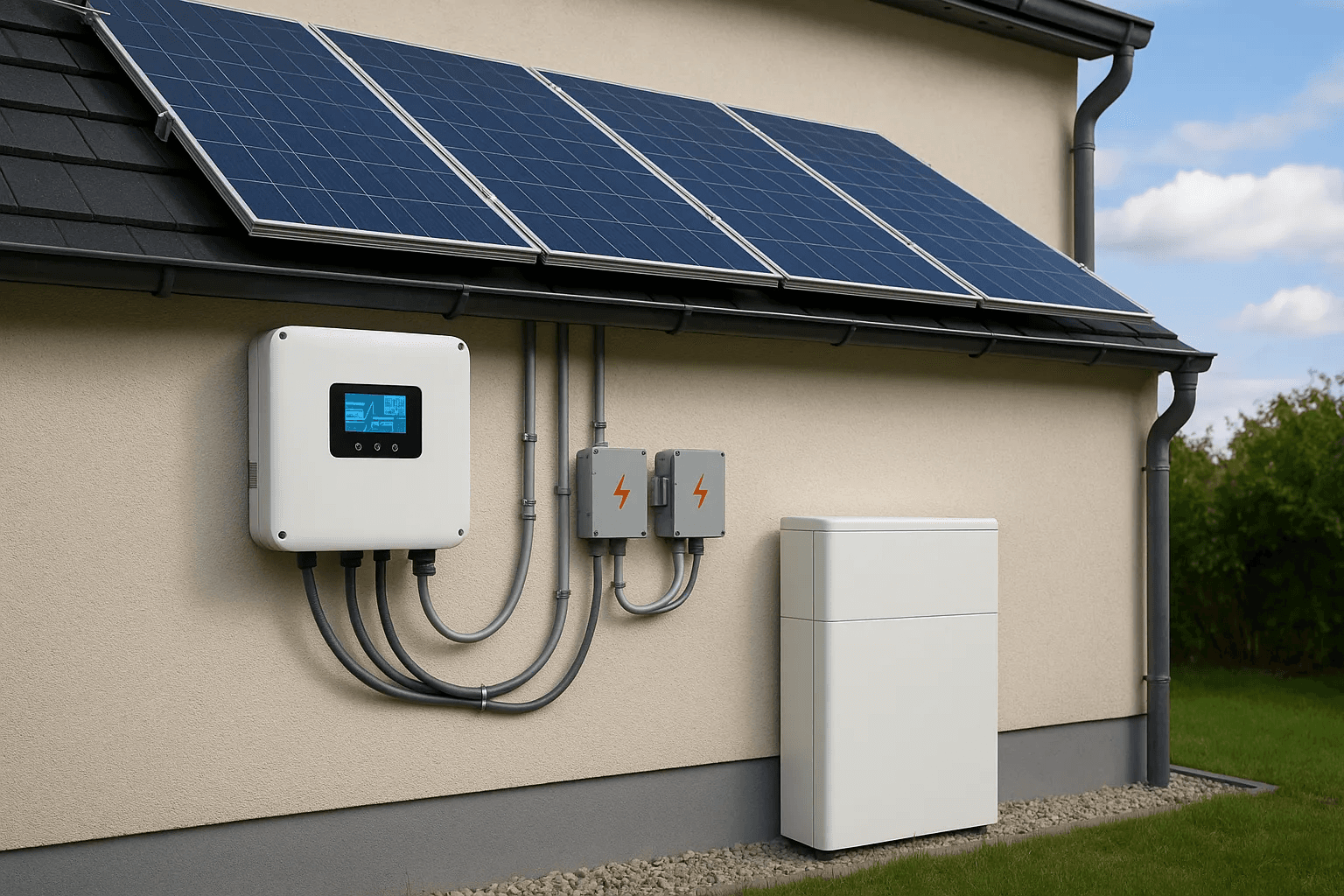
The matching single-phase BW-ESS system pairs the battery with a 3.68 kW or 5 kW hybrid inverter. Neovolt's datasheet lists rated backup power of 3.68 kVA or 5 kVA with a transfer time under 10 milliseconds, IP65, and a 10-year inverter warranty. There's also a three-phase BW-ESS range in the 4–12 kW class.
One thing that doesn't add up. The 9.6P datasheet lists 9.6 kWh usable for one module, but its parallel table shows 9.1 kWh per module usable (18.2 kWh for two, 54.6 kWh for six). Ask your installer which usable figure your quote and rebate are based on. The rebate is calculated per usable kWh, so the difference is real money on a large stack.
There's also a BW-BAT-10.1P (10.1 kWh) on Neovolt's site with a 10-year warranty on its datasheet, and a smaller 4.8 kWh module.
The 2026 CEC suspension, explained plainly
This is the part a cheap quote won't mention, so here's what the Clean Energy Council has published:
- 15 September 2026: the CEC suspended several Bytewatt (Neovolt) battery models "due to non-compliance with the CEC's Terms and Conditions." The reason given: nameplate labels on products supplied in Australia were inconsistent with the testing and certification documentation originally supplied.
- The CEC is explicit: "The suspension decision was not taken on the basis of a product recall or any identified product safety issue."
- 7 October 2026: the suspension was lifted for the BW-BAT-9.6P, after Bytewatt explained the different variants it had imported. Only BW-BAT-9.6P units with these nameplate details are eligible for STCs: working voltage range DC 90–105.6 V, max continuous charge/discharge current DC 52.5 A, and battery designation IFpP52/161/120/[(10S)3S]E/-10+50/90.
- Still suspended: BW-BAT-9.6P I, II, III, IV, V and VI.
- 14 December 2026: the CEC's deadline for the remaining corrective action. If it isn't met, it says those models will be de-listed from 15 December 2026.
What it means for you. A suspended model isn't eligible for STCs, which is how the federal battery rebate is paid. The CEC says installations of the 9.6P done during the suspension (15 September to 6 October 2026) are not eligible, and suspended products are also ineligible for programs or networks that require CEC-approved products.
If you already own one: the suspension isn't a recall and doesn't mean your battery is unsafe. Keep using it. If you're unsure whether your rebate was processed, ask your installer. For warranty or service questions, the CEC points owners to Neovolt and their installer.
Neovolt warranty: the fine print
Bytewatt's Australian and New Zealand warranty document covers its inverters and battery units:
- Term: 120 or 144 months (10 or 12 years) depending on the model listed in its appendix.
- Capacity: at least 70% of usable capacity retained for the term.
- Throughput: unlimited cycles for solar self-consumption, time-based control and backup; aggregate throughput limits apply to other uses.
- Temperature: the ambient temperature during operation must stay between -10°C and 50°C.
- Warrantor: Bytewatt Technology Co., Ltd, with a local contact listed in the document.
That's in line with the market on paper. What matters more for any newer brand is the practical chain: who answers the phone, where replacement stock sits, and whether the installer who sold it is still around. On the Sunshine Coast a battery is a 10-year relationship, and "the installer has gone quiet and nobody knows who holds the warranty" is a pattern we often see when people call us about systems we didn't install.
Is Neovolt a good battery?
The hardware specs are respectable: LFP chemistry, IP65, parallel stacking to large capacities and a fast backup transfer. We have no evidence the cells are poor, and the CEC has said the suspension wasn't about safety.
Where we'd be cautious:
- Rebate eligibility is model- and nameplate-specific right now. A quote that assumes the full rebate on a suspended variant is a quote that's going to change.
- The documentation has had inconsistencies, both the nameplate issue the CEC found and the usable-capacity figures on the datasheet.
- The local track record is shorter than the brands we install every week, and we can't vouch for support we haven't used.
So: not a scam, not a disaster, but not a battery we'd put first on a Sunshine Coast home today.
How to check any "too good to be true" battery deal
This checklist works for Neovolt and every other low-priced offer:
- Get the exact model and variant in writing, then look it up on the CEC approved product list on the day you sign. No listing, no rebate.
- Check the nameplate before install, and ask the installer to photograph it for you. In 2026 that's the whole Neovolt issue in one step.
- Find out who holds the warranty in Australia. A named local entity, with an address and phone number, not just an overseas email.
- Check the installer's accreditation and whether they'll be the one doing the work. Subcontracted installs and sales-only companies are where support falls apart.
- Read the VPP terms. Some cheap deals require you to join a specific virtual power plant for a fixed period. Know the exit terms and what control you're handing over.
- Separate the price lines. Hardware, installation, switchboard work and the rebate should be shown separately so you can compare solar quotes properly.
- Ask what happens in year seven. Who comes out, who pays for labour, and how long a replacement takes.
Our guide to choosing a solar installer on the Sunshine Coast goes deeper on the installer side.
What does a Neovolt battery cost?
We don't quote Neovolt and we don't repeat other companies' prices. For context, our Sunshine Coast installed ranges for batteries generally (as at August 2026, before rebate) are $8,500–$9,500 for 5 kWh, $13,000–$14,500 for 10 kWh and $17,500–$19,500 for 15 kWh. The federal rebate has been roughly $252 per usable kWh since 1 May 2026, so about $2,520 on 10 kWh, if the product is eligible.
If a Neovolt quote is dramatically below those ranges, work out how much of the gap is the rebate being assumed, and whether that rebate is actually available on the model and nameplate being supplied.
What we'd install instead
For most Sunshine Coast homes we'd point you to one of these, all brands we install and support locally:
- Sungrow SBR with a Sungrow hybrid if you want a major brand with a mature Australian support network. See our Sungrow battery review.
- Deye if value per kWh and strong backup lead. Our Deye battery review covers the range.
- Sigenergy if you want a premium all-in-one stack with three-phase or EV charging. See the Sigenergy battery review.
The full comparison is in our best solar battery shortlist.
Who might reasonably still choose Neovolt: someone quoted by an established local installer who stocks it, on a relisted BW-BAT-9.6P with the correct nameplate confirmed in writing, who understands the warranty chain. That's a defensible purchase. A door-knock deal with no model number isn't.
If you'd like a second opinion on a quote, or a price on one of the alternatives, our team handles battery installation on the Sunshine Coast and will look at what you've been offered.
Frequently asked questions
Is Neovolt a good battery?
The hardware looks reasonable on paper: LFP modules, IP65, stackable to six, and a 10 or 12-year warranty to 70%. The concern in 2026 is regulatory: the CEC suspended several Neovolt models in September 2026 over nameplate inconsistencies (not safety), and only correctly labelled BW-BAT-9.6P units are rebate-eligible again.
Who makes Neovolt batteries?
Bytewatt Technology Co., Ltd. The Clean Energy Council lists Bytewatt as the manufacturer and Solar Capital Australia Pty Ltd as the registered importer.
Is Neovolt eligible for the battery rebate?
Only some of it. From 7 October 2026 the BW-BAT-9.6P is relisted, but only units with the specific nameplate details published by the CEC are eligible for STCs. The 9.6P I to VI variants remain suspended, with a 14 December 2026 deadline before they're de-listed. Check the CEC's page on the day you sign.
Was Neovolt recalled?
No. The CEC states its suspension "was not taken on the basis of a product recall or any identified product safety issue." It's a listing compliance matter.
What is the Neovolt battery warranty?
Bytewatt's Australian warranty covers 10 or 12 years depending on the model, with at least 70% of usable capacity retained, unlimited cycles for self-consumption and backup, and an operating ambient temperature between -10°C and 50°C.