
Sungrow and Sigenergy are two of the batteries we install, and they land on the same shortlist more often than not. They're both good. They're built on quite different ideas, though, and which one suits you depends on what you want the system to do in five years, not just tonight.
Sungrow vs Sigenergy: which is better?
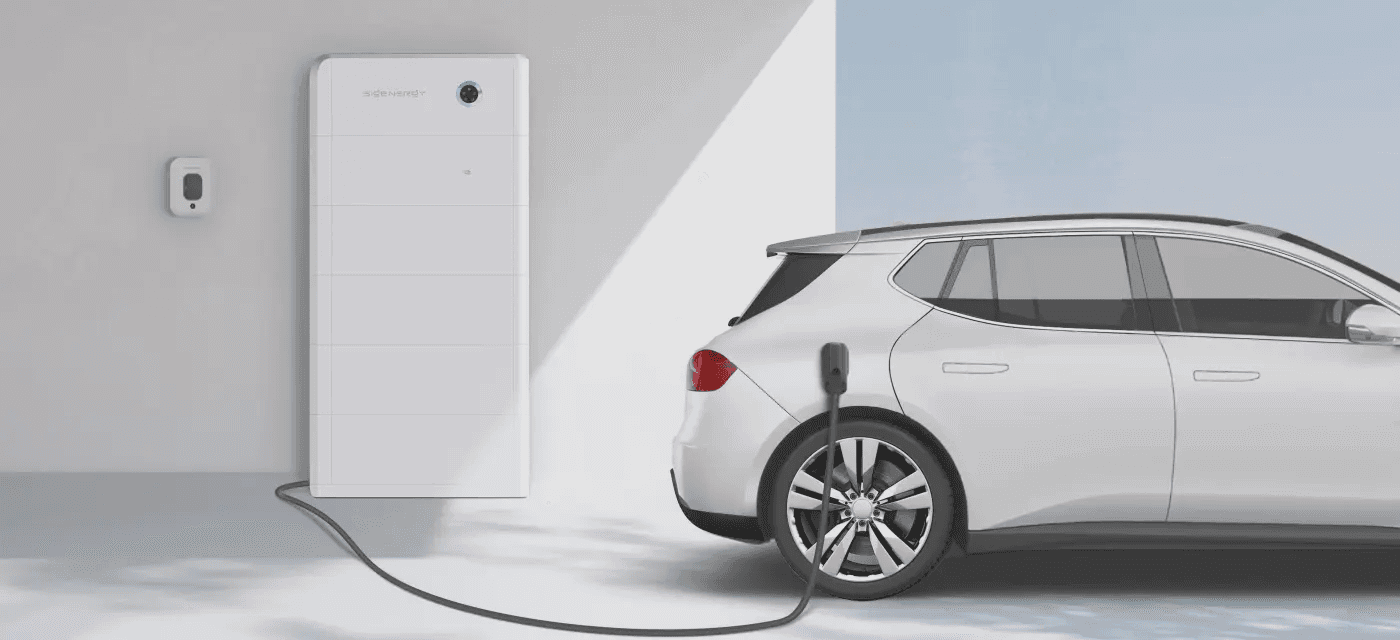
Neither wins outright. Sungrow is the value pick: a major brand with a big Australian support network, LFP batteries that pair with its own SH hybrid inverters, and a price that usually sits on the value side of our range. Sigenergy is the premium pick: an all-in-one stack with the inverter, battery modules and an optional EV DC charger in one cabinet, at a higher price per kWh. If budget and a well-established brand matter most, Sungrow. If you want the tidiest single system, three-phase up to 30 kW in one stack, or EV charging built in, Sigenergy.
Both use lithium iron phosphate cells, both carry 10-year Australian warranties to 70% capacity, both stack in modules, and both cover single and three-phase homes. Both warranties also expect the system to stay online.
Last updated: 26 October 2026. Specs come from Sungrow's and Sigenergy's Australian datasheets and warranty documents; prices are Sunshine Coast installed bands as at August 2026. Check the current datasheet for the exact model on your quote.
Sungrow vs Sigenergy at a glance
| Sungrow (SBR / SBH + SH hybrid) | Sigenergy SigenStor | |
|---|---|---|
| Chemistry | LFP | LFP |
| Module size (usable) | 3.2 kWh (SBR) or 5.0 kWh (SBH) | 5.2 kWh (BAT 5.0) or 7.8 kWh (BAT 8.0) |
| Stack size | SBR 6.4 to 25.6 kWh; SBH 15 to 40 kWh per stack, up to 4 stacks | 1 to 6 modules per energy controller |
| Inverter | Separate Sungrow SH hybrid | Built into the stack (Sigen Energy Controller) |
| Inverter sizes (AU) | Single-phase SH-RS; three-phase SH5/10T and SH15/20/25T | 5 to 12 kW single-phase, 5 to 30 kW three-phase |
| Backup switchover | Under 10 ms on the SH8.0/10RS datasheet | 0 ms disruption on the datasheet |
| Enclosure rating | SBH IP55; SH hybrids IP65/C5 | IP66 system rating |
| Battery warranty | 10 years, 70% of initial capacity | 10 years, 70% usable energy or minimum throughput |
| EV charging | Not in the battery stack | Optional EV DC charging module |
| Our positioning | Value from a major brand | Premium, integrated, EV-ready |
Where Sungrow wins
Price per kWh. For a comparable size, a Sungrow quote usually lands lower in our installed bands than a Sigenergy one. You're buying a battery and a hybrid inverter, not a five-in-one cabinet.
A mature local support network. Sungrow runs an Australian office, an online claim portal and a published service rebate for installers, so a claim has a clear path even if the original installer is no longer around.
Finer sizing steps on the SBR. With 3.2 kWh modules, the SBR lets us build 9.6, 12.8 or 16 kWh rather than jumping in 5 or 8 kWh blocks.
Big stacks on the SBH. The SBH goes to 40 kWh in one stack, and up to four stacks in parallel, which suits acreage and big three-phase homes.
Full-house backup on the bigger single-phase hybrid. Sungrow's SH8.0/10RS datasheet lists a built-in 63 A bypass for full-house backup.
Where Sungrow loses
- No built-in EV charging in the battery stack.
- Two boxes, not one. A separate inverter and battery stack takes a bit more wall and floor space than a single SigenStor.
- Warranty labour is part-funded. Sungrow pays installers a standard service rebate toward labour; travel and other on-site costs aren't covered by the standard warranty.
Where Sigenergy wins
One integrated system. The SigenStor stack puts the hybrid inverter, battery modules and, optionally, an EV DC charger in a single cabinet. One brand, one app.
Three-phase in one stack. Sigenergy's Australian datasheet lists three-phase energy controllers from 5 to 30 kW, and a backup peak of 150% for 10 seconds in off-grid mode.
EV charging. If an EV is on the way, building the charger into the same system is a genuine advantage.
Labour cover. Our Sigenergy battery review covers the warranty conditions in detail; valid claims there cover on-site labour and basic travel, which is better than many battery warranties.
Where Sigenergy loses
- Price. It's the premium end of what we install.
- Locked to one ecosystem. The modules work with Sigenergy's own controllers and hybrids.
- A recall on the record. See the next section.
The 2025 Sigenergy recall
On 19 November 2025 the ACCC published a voluntary recall by Sigenergy Australia (PRA 2025/20703) of SigenStor EC 8.0, 10.0 and 12.0 kW single-phase energy controllers fitted with quick-connect AC plugs, sold from 4 March to 18 November 2025 (ACCC Product Safety). The AC plugs may overheat and become damaged, posing a fire risk. The notice says incidents have occurred, with no property damage, injuries or deaths reported.
What owners should do, per the notice:
- Keep the system connected to the internet so it gets the firmware update, which lets Sigenergy temporarily reduce AC output at sustained full load.
- Expect contact from your retailer or a Sigenergy service partner to arrange a free replacement controller with an updated AC plug. Affected owners are notified in the mySigen app.
- Affected customers get an additional two years of warranty on the product.
Our read: a recall isn't a reason to write off a brand, and it was limited to specific single-phase controllers, not the battery modules or three-phase range. If you're buying now, ask for written confirmation the controller has the updated AC plug. If it makes you uneasy, Sungrow is a reasonable alternative.
What is the price difference between Sigenergy and Sungrow?
We don't publish brand-specific prices, because inverter size, backup wiring, EV charging and switchboard work swing a quote more than the badge does. Every battery we install falls into these installed bands, as at August 2026:
| Battery size | Installed, before rebate | After the federal rebate |
|---|---|---|
| 5 kWh | $8,500 to $9,500 | about $7,240 to $8,240 |
| 10 kWh | $13,000 to $14,500 | about $10,480 to $11,980 |
| 15 kWh | $17,500 to $19,500 | about $13,821 to $15,821 |
Sungrow usually sits toward the lower end of each band for a comparable size, and Sigenergy toward the upper end, with the EV DC module as an extra. On a 10 kWh system that's the difference between the bottom and top of a $13,000 to $14,500 band; on a 15 kWh system, $17,500 to $19,500. The rest of the gap depends on what's in the quote.
The federal rebate doesn't care about brand. Since 1 May 2026 it's about $252 per usable kWh for the first 14 kWh and 60% of that from 14 to 28 kWh. Because module sizes differ, the usable total does too. Illustrative arithmetic:
- Sungrow SBR128 (12.8 kWh): 12.8 × $252 = about $3,226
- Sigenergy 2 × BAT 8.0 (15.6 kWh): 14 × $252 = $3,528, plus 1.6 × $151.20 = $242, for about $3,770
Compare quotes on usable kWh, not module count. The rate steps down every six months, and it's confirmed in writing on our quotes. Our guide to solar battery cost on the Sunshine Coast has the full working.
Warranty conditions compared
| Sungrow (AU) | Sigenergy (AU & NZ) | |
|---|---|---|
| Battery term | 10 years from install, or 126 months from manufacture | 10 years |
| Retention | 70% of initial capacity; unlimited cycles for self-consumption and backup | 70% of usable energy, or a minimum throughput |
| Online requirement | Battery must be monitored in iSolarCloud | Must stay online; enters Safe Operation Mode after 90 days offline |
| Inverter | SH hybrids: 10 years from install, max 11 from manufacture | Energy controller: 10 years |
The common thread: both brands expect the system online. On a rural block with patchy signal, sort the connection before the install, whichever you choose.
Are Sungrow inverters of good quality?
Yes, in our experience. Sungrow has an Australian office and claim portal, and its Australian warranty lists the SH hybrid range at 10 years from installation, transferable with proof of purchase. The datasheet specs are solid too: IP65/C5 on the SH8.0/10RS and SH-T ranges, and four MPPTs on the SH8.0/10RS for multi-face roofs. Our full Sungrow battery review goes through the range.
Sigenergy vs GoodWe
GoodWe comes up as the other mid-priced alternative. Its Lynx Home F G2 battery, per GoodWe's published datasheet, uses 3.2 kWh LFP modules, two to nine per tower for 6.4 to 28.8 kWh usable, IP55, and pairs with GoodWe's own hybrid inverters. Like Sungrow, that's a separate battery and inverter rather than an all-in-one stack, and it doesn't include an EV charger in the battery tower. So the Sigenergy vs GoodWe decision runs along the same line as Sungrow: do you need the all-in-one cabinet and EV charging, or is a separate battery and hybrid inverter enough? Our GoodWe battery review covers it in more depth.
The Sunshine Coast angle
- Salt air. On paper, Sigenergy's IP66 system rating beats the SBH's IP55. In practice, on a beachfront home we install either one under cover, out of salt spray.
- Heat. Sungrow's battery warranty excludes operation outside -20°C to 50°C ambient. Shade matters for both.
- Storms and three-phase. If you have a three-phase air conditioner or pool heat pump you want running in a blackout, you need a three-phase hybrid or controller. Both brands make one.
- Local support. Whichever you pick, the installer who answers the phone in year seven matters more than the brand.
Who should buy which?
| If you are... | We'd usually point you to... | Why |
|---|---|---|
| Wanting strong value from an established brand | Sungrow | Lower in our bands, mature local support |
| Building new and wanting the tidiest install | Sigenergy | One cabinet, one app |
| Buying an EV in the next few years | Sigenergy | EV DC charging can sit in the stack |
| On three-phase with big loads | Either | Sungrow SH-T or Sigenergy three-phase controller |
| Needing 25 to 40 kWh in one stack | Sungrow SBH (or Sigenergy with 8 kWh modules) | Large stacks on both |
| Uneasy about the 2025 recall | Sungrow | A well-established alternative; check productsafety.gov.au for any brand you're quoted |
| Chasing the lowest cost per kWh overall | Look at Deye too | Our default on value; see Deye vs Sigenergy |
Before you sign, check these
- The exact model numbers, and that they're on the current Clean Energy Council approved list
- The usable kWh on the quote, since that's what the rebate is calculated on
- Which circuits are backed up, and on which phase
- The federal battery rebate, itemised at the rate for your install date
- How labour is handled under the battery warranty
For a side-by-side quote on your own house, our battery installation on the Sunshine Coast team can price Sungrow and Sigenergy together.
Frequently asked questions
Which is better, Sungrow or Sigenergy?
It depends on what you value. Sungrow is the value pick with a mature Australian support network and batteries that pair with its own SH hybrids. Sigenergy is the premium pick, with an all-in-one stack, three-phase controllers up to 30 kW and optional built-in EV charging. Budget buyers tend to suit Sungrow; EV owners and anyone wanting one tidy cabinet tend to suit Sigenergy.
What is the price difference between Sigenergy and Sungrow?
Both fall within the same installed bands on the Sunshine Coast, as at August 2026: $13,000 to $14,500 for 10 kWh and $17,500 to $19,500 for 15 kWh before the rebate. Sungrow usually sits toward the lower end and Sigenergy toward the upper end, with EV charging as an extra. The federal rebate is the same per usable kWh for both.
Are Sungrow inverters of good quality?
Yes. Sungrow has an Australian office and warranty portal, and the SH hybrid range carries a 10-year Australian warranty from installation (capped at 11 years from manufacture). The SH8.0/10RS adds full-house backup through a 63 A bypass and an IP65/C5 rating.
Was there a Sigenergy battery recall?
Yes, on certain single-phase SigenStor EC 8.0, 10.0 and 12.0 kW energy controllers with quick-connect AC plugs, sold between 4 March and 18 November 2025 (PRA 2025/20703). The fix is a firmware update, a free replacement controller and two extra years of warranty. The battery modules weren't part of the recall.
Is GoodWe or Sigenergy better?
They suit different buyers. GoodWe's Lynx Home F G2 is a separate battery tower (6.4 to 28.8 kWh) paired with a GoodWe hybrid, while Sigenergy puts the inverter, battery and optional EV charger in one stack. Sigenergy is the more integrated, premium choice; if you don't need the single cabinet or EV charging, a separate GoodWe battery and hybrid is a simpler setup.